OTTAWA/CANBERRA, — June 22, 2026 : Canada has signed a government-to-government agreement with Australia worth AUD 2.5 billion (USD 1.8 billion) to acquire an advanced Over-the-Horizon Radar (OTHR) system, a major step in strengthening surveillance and security across Canada's Arctic and northern regions.
The agreement, signed in Canberra by Canada's Secretary of State for Defence Procurement Stephen Fuhr and Australia's Deputy Prime Minister and Minister for Defence Richard Marles, represents the largest defence export contract in Australian history. The acquisition forms the core of Canada's Arctic Over-the-Horizon Radar (A-OTHR) program, a key element of the country's efforts to modernize continental defence and enhance monitoring of its northern approaches.
The A-OTHR system is designed to provide long-range surveillance capable of detecting and tracking airborne and maritime threats approaching Canada through the Arctic. The capability is expected to improve domain awareness and provide military and government authorities with earlier warning time for the defence of Canadian and North American airspace.
The project also marks the first time Canada has led the development of a major capability within the binational North American Aerospace Defense Command (NORAD) framework alongside the United States.
Based on Australia's JORN Technology
The radar technology being acquired is derived from Australia's Jindalee Operational Radar Network (JORN), a long-range surveillance system used by the Australian Defence Force for air and maritime monitoring, border security, disaster response, and search-and-rescue missions.
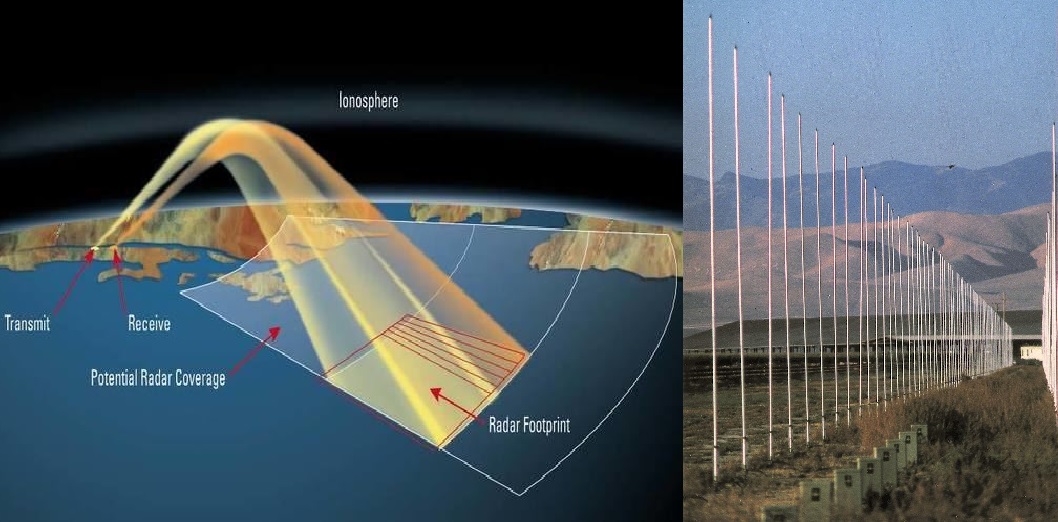
Unlike conventional radar systems that are limited by the Earth's curvature, OTHR technology uses high-frequency radio signals transmitted into the ionosphere. The signals are refracted back toward the Earth's surface, allowing the radar to detect and track targets beyond the horizon.
This capability enables the system to monitor aircraft, ships, and missile threats at distances of up to 3,000 kilometres or more, making it suitable for covering Canada's vast Arctic region and northern approaches.
Program Enters Delivery Phase
With the signing of the agreement, Canada's A-OTHR program officially enters the delivery phase. BAE Systems Australia, the developer of JORN technology and the primary industry partner for the project, is scheduled to begin work on July 1, 2026.
Canada aims to achieve Initial Operational Capability (IOC) by December 2029. In addition to the acquisition agreement, Canada signed an OTHR Rights Agreement and a comprehensive Industrial and Technological Benefits (ITB) agreement with BAE Systems Australia.
Infrastructure Planned in Ontario
Preliminary locations for the radar infrastructure have been identified in southern Ontario.
The transmitting station is planned for a 163-hectare site in the Kawartha Lakes region, while the receiving station will be located on a 288-hectare site in Clearview Township near Wasaga Beach.
Economic Benefits
The agreement is expected to support approximately 300 high-value technical jobs in Australia.
In Canada, officials estimate the A-OTHR program will create and sustain around 2,270 jobs annually between 2026 and 2033 while contributing nearly CAD 290 million annually to the country's Gross Domestic Product (GDP) through industrial participation and technology development.
Strengthening Bilateral Defence Cooperation
The agreement builds on a technology partnership signed in June 2025 and follows commitments by Canadian Prime Minister Mark Carney and Australian Prime Minister Anthony Albanese to deepen defence cooperation.
Richard Marles described the contract as the largest defence export agreement in Australia's history and highlighted the long-standing partnership between the two countries.
For BAE Systems Australia, the contract represents the first international export of Australia's Over-the-Horizon Radar technology. CEO Craig Lockhart said the company is prepared to support the delivery, installation, and long-term sustainment of the system.
The project will strengthen collaboration between Canada and Australia within the Five Eyes intelligence-sharing alliance and support future cooperation in long-range surveillance and defence technology development.
——— End of Article ———