WASHINGTON — The U.S. Navy's planned fleet of 15 nuclear-powered guided-missile battleships would cost an estimated $275 billion through 2056, according to a report released Wednesday by the Congressional Budget Office (CBO).
The nonpartisan budget office estimated that the lead ship of the Trump-class (BBGN) would cost $23.4 billion, while the remaining 14 ships would average about $18 billion each. The estimates are based on 2026 dollars and cover ships expected to be ordered between 2028 and 2056.
The planned battleships are part of the Navy's broader Golden Fleet initiative, announced in December 2025, and represent a major shift toward larger, heavily armed surface combatants.
Nuclear Propulsion Increases Program Cost
According to the CBO, the projected cost of the nuclear-powered fleet is significantly higher than the Navy's earlier estimates for a conventionally powered design.
The Navy had previously estimated that the first conventionally powered battleship would cost $15.1 billion, with the second and third ships averaging $10.2 billion each. The CBO estimated that a fleet of 15 conventionally powered ships would cost about $243 billion.
By switching to nuclear propulsion, the acquisition cost increases by about $32 billion, or 13 percent, bringing the total estimated program cost to $275 billion.
The CBO noted that nuclear propulsion could reduce long-term operating costs by eliminating the need to purchase and transport conventional fuel. However, it said there is not enough information at this stage to estimate those savings because the ship's final design and propulsion requirements have not yet been finalized.
The Navy has indicated that the battleships would use a reactor plant similar to the one installed on the Gerald R. Ford-class aircraft carriers.
Largest Surface Combatant Planned Since World War II
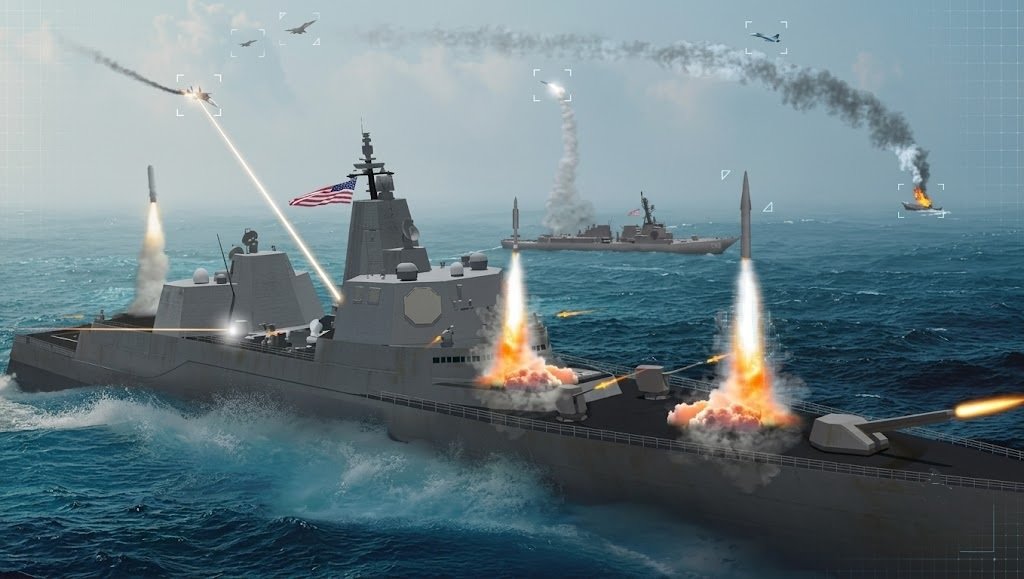
If built as planned, the Trump-class BBGN would become the largest surface combatant in the world and the largest surface warship constructed for the U.S. Navy since World War II.
The Navy expects each ship to displace at least 35,000 tons at full load and measure between 840 and 880 feet in length.
According to the Navy's current plan, the battleship would carry:
- 128 Mark 41 vertical-launch system (VLS) cells
- 12 Conventional Prompt Strike (CPS) hypersonic missiles
- Nuclear-armed sea-launched cruise missiles (SLCM-N)
- High-powered laser systems
- An electronic rail gun
- Defensive weapon systems
The Trump-class would replace the Navy's planned DDG(X) destroyer, which was expected to displace about 14,500 tons.
The Navy has said the larger battleship design avoids the "undesirable capability and weapon system compromises" associated with the smaller DDG(X) concept.
Cost Comparable to Aircraft Carriers
The CBO noted that the lead Trump-class battleship's projected $23.4 billion cost is close to the estimated $22 billion price of future Ford-class nuclear-powered aircraft carriers included in the Navy's fiscal 2027 shipbuilding plan.
It also estimated that one Trump-class battleship would cost about the same as five DDG-51 Arleigh Burke-class destroyers. However, the CBO noted that those destroyers would require more sailors, maintenance, and fossil fuel over their operational lives.
Construction Timeline Faces Challenges
The Navy's fiscal 2027 shipbuilding plan proposes ordering the first three battleships beginning in 2028, followed by approximately one ship every other year.
However, the CBO questioned whether construction can realistically begin in 2028 because the battleship remains in the early stages of design.
The report noted that beginning construction before completing the design has historically increased the risk of cost growth, schedule delays, and expensive rework.
Current U.S. Navy shipbuilding programs already face extended construction timelines. According to the CBO, attack submarines, destroyers, and large amphibious ships now require nine to 11 years to build, compared with five to six years during the early 2000s.
The Navy has said it intends to reduce schedule and cost risks by using modern digital engineering, advanced production practices, and artificial intelligence-enabled design tools. However, the CBO pointed to delays affecting the Constellation-class frigate program as an example of the challenges facing current naval shipbuilding efforts.
Industrial Base Under Pressure
Because the Trump-class will use nuclear propulsion, Newport News Shipbuilding is expected to perform final assembly, as it is currently the only U.S. shipyard certified to build nuclear-powered surface ships.
Bath Iron Works and Ingalls Shipbuilding could manufacture non-nuclear modules for the ships, but final integration would take place at Dock 12 at Newport News, the same facility used for aircraft carrier construction.
The CBO warned that adding a new class of 35,000-ton nuclear-powered battleships to the existing workload could increase pressure on the shipyard, which is already building three aircraft carriers and several submarines.
Final Cost Depends on Ship Size
The CBO said the final cost of the lead ship will depend heavily on its final size and configuration.
According to the report:
- Reducing displacement to 30,000 tons could lower the lead ship's cost by about 13 percent.
- Increasing displacement to 41,000 tons could raise the lead ship's cost by about 16 percent.
The report also stated that additional weapon integration and higher survivability requirements could further increase acquisition costs.
Part of a Larger Fleet Expansion Plan
The Trump-class program forms part of the Navy's broader plan to expand its large surface combatant fleet.
Under the fiscal 2027 shipbuilding plan, the Navy proposes operating 72 large surface combatants, compared with 51 in the 2025 shipbuilding plan.
To support that expansion, average annual funding for large surface combatants would increase from $6.9 billion to $15.2 billion. Total annual funding for both large and small surface combatants would rise from about $11 billion to $19 billion.
The plan also calls for annual construction output of large surface combatants to increase from approximately 16,000 tons to 35,000 tons by 2035, placing additional demand on the U.S. shipbuilding industrial base.
According to the information released, the first ship is expected to be named USS Defiant. The program was announced by President Donald Trump in December 2025 as the centerpiece of the Golden Fleet initiative. Congress has not yet fully authorized the program. The Navy's fiscal 2027 budget request includes approximately $1 billion for advance procurement and $837 million for research and development related to the Trump-class battleship program.
——— End of Article ———