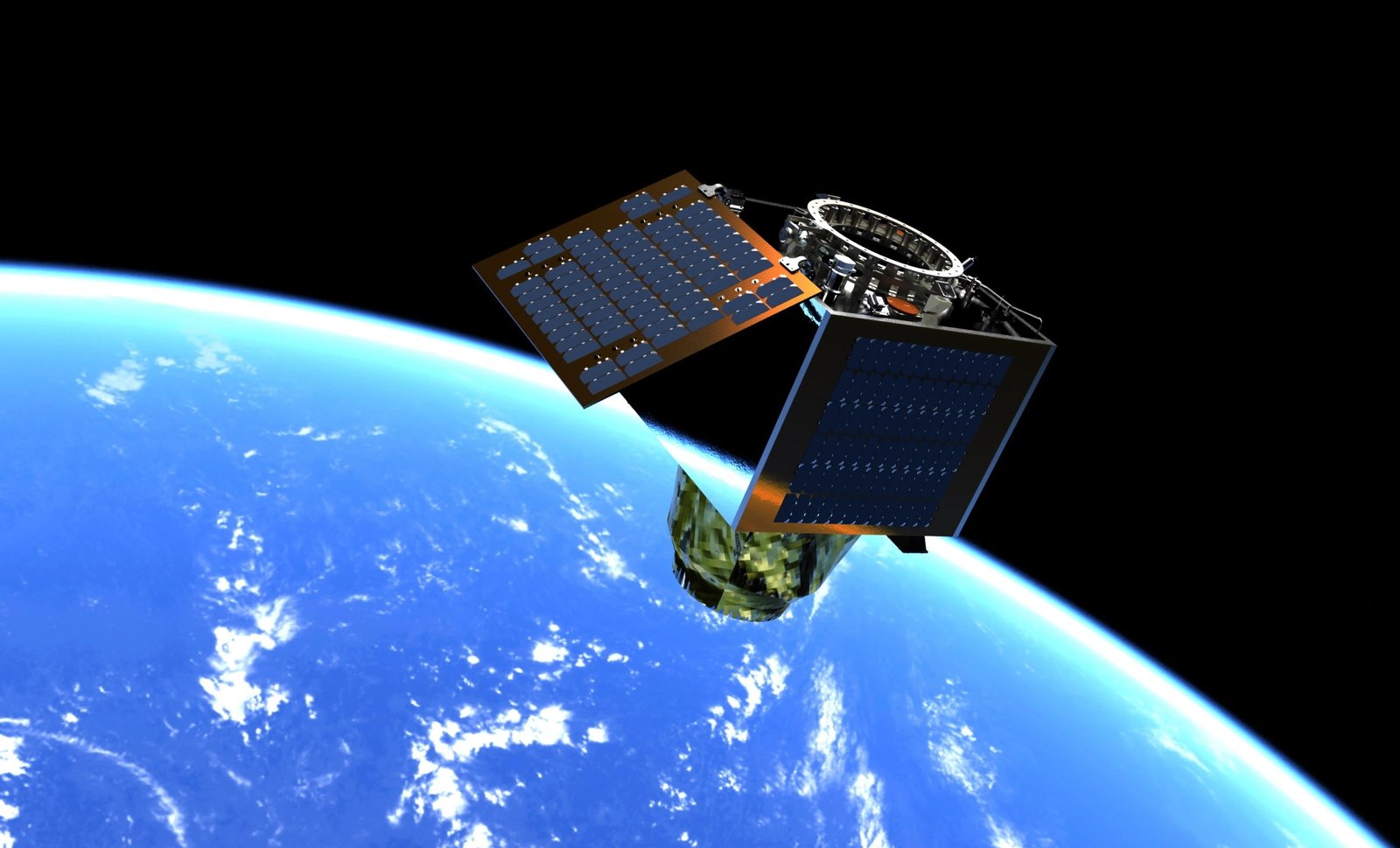
EL SEGUNDO, Calif., June 26, 2026 — The U.S. Space Force has awarded Boeing a fixed-price-incentive contract valued at up to $2.002 billion to design, develop, manufacture, and deliver two next-generation narrowband military communications satellites under the Mobile User Objective System Service Life Extension (MUOS SLE) program.
The contract, valued at up to $2,002,862,607, covers the development, production, system integration, launch support, and on-orbit testing of Space Vehicles 6 and 7. Boeing will manufacture the satellites at its facility in El Segundo, California. The first satellite is scheduled for delivery in 2031, with launches planned no earlier than 2031 and 2032, while all contract work is expected to conclude by September 2035.
The MUOS Service Life Extension (MUOS SLE) program is intended to extend the operational life of the existing constellation through 2035, ensuring uninterrupted narrowband satellite communications for U.S. military users as current spacecraft approach the end of their service lives.
Supporting Global Military Communications
MUOS is the U.S. military's primary narrowband satellite communications network, providing secure ultra-high-frequency (UHF) voice and data services to personnel on land, at sea, and in the air. The system enables military users equipped with portable terminals to communicate beyond the range of conventional terrestrial networks.
Operating in the UHF band allows the network to maintain reliable communications in difficult terrain, dense urban environments, and severe weather conditions where higher-frequency communications may be less effective. The system supports deployed troops, naval vessels, aircraft, and Special Operations forces with secure voice communications and essential data services.
Built on commercial Wideband Code Division Multiple Access (WCDMA) technology adapted for military use, MUOS also remains compatible with legacy UHF terminals. More than 67,000 UHF terminals across the Department of Defense currently rely on the network.
Boeing Selected for Next Phase
The MUOS program was originally developed by the U.S. Navy in the early 2000s to replace aging military satellite communications systems. Responsibility for the constellation transferred to the U.S. Space Force in 2023. The current constellation consists of four operational satellites and one on-orbit spare, originally built by Lockheed Martin.
The Space Force launched the MUOS SLE competition in 2024, awarding Boeing and Lockheed Martin Phase 1 contracts for risk reduction and preliminary design work. Boeing has now been selected for Phase 2 to develop and deliver the new satellites.
The company will build the spacecraft using its 702MP medium-class satellite platform, leveraging an active production line to support manufacturing efficiency and schedule predictability. The new satellites are designed to increase communications capacity, reduce signal interference, and improve overall connectivity while remaining compatible with the existing MUOS architecture.
The addition of Space Vehicles 6 and 7 will extend the operational life of the MUOS constellation through 2035, helping prevent capability gaps as existing satellites age. The upgraded spacecraft will continue providing secure UHF voice and data communications for military personnel operating worldwide, supporting joint forces, Special Operations units, and coalition partners in demanding operational environments.
——— End of Article ———