TOKYO, June 26, 2026 — Airbus has signed a Memorandum of Understanding (MoU) with Japan's Kawasaki Heavy Industries (KHI) to study the development of a Japanese maritime anti-submarine warfare (ASW) variant of the Eurodrone, also known as the U950. The agreement marks the first collaboration between a Japanese heavy industry company and a major foreign defense manufacturer on an unmanned aerial system, strengthening defense-industrial cooperation between Europe and Japan.
The proposed variant will adapt Europe's first Large Long Endurance Remotely Piloted Aircraft System (RPAS) to meet the Japanese Ministry of Defense's maritime surveillance and anti-submarine warfare requirements.
Meeting Japan's Maritime Security Requirements
Japan has participated in the €7 billion ($8 billion) Eurodrone programme as an official observer since November 2023. As an island nation responsible for monitoring vast maritime areas, Japan requires long-endurance surveillance platforms capable of supporting persistent maritime security operations.
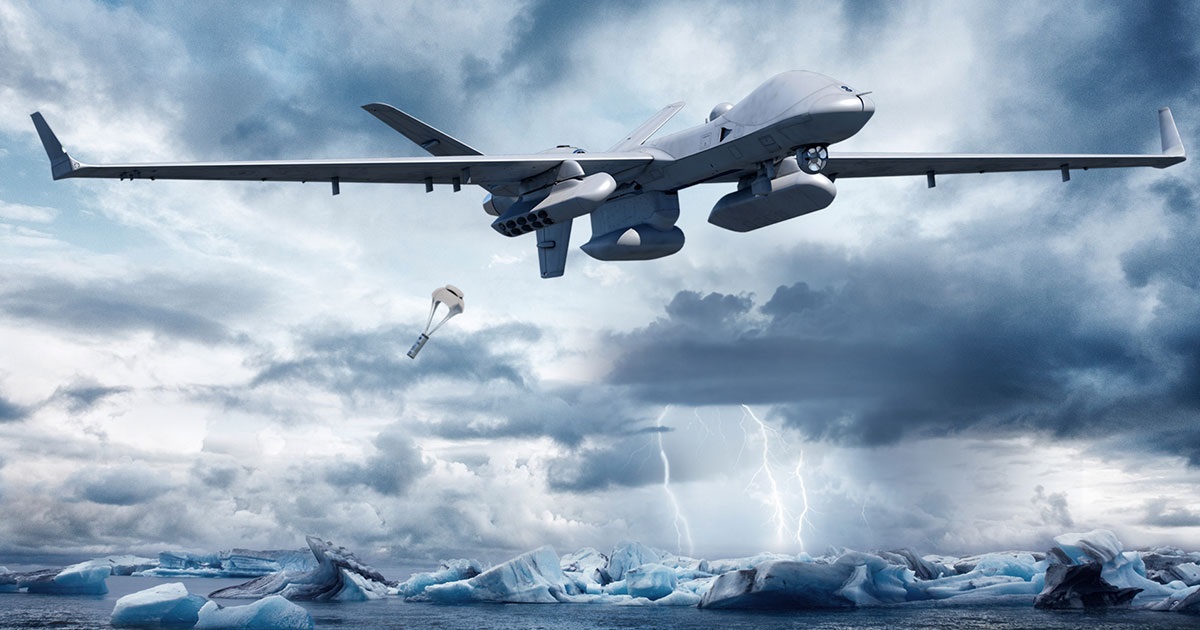
According to Airbus, the Eurodrone offers advantages over comparable systems through its long endurance and large payload capacity. The aircraft can remain airborne for up to 40 hours while carrying a mission payload of up to 2.3 tonnes, excluding fuel.
The payload capacity allows the integration of anti-submarine warfare equipment, including sonobuoys and lightweight torpedoes. Operating alongside Japan's existing Kawasaki P-1 maritime patrol aircraft, the unmanned platform could provide persistent surveillance and strengthen anti-submarine warfare operations while reducing reliance on crewed aircraft for routine patrols.
Focus of the Partnership
The MoU establishes a framework for Airbus and Kawasaki Heavy Industries to begin discussions on the design, development and commercialization of a Japan-specific maritime variant of the Eurodrone.
Key areas of cooperation include:
- Integrating Japanese-developed sensors, effectors and ASW mission systems.
- Defining industrial workshare for local manufacturing, production and long-term sustainment.
- Ensuring Japan can independently operate, maintain and support the aircraft without operational restrictions if it proceeds with procurement.
Airbus said the engineering and operational experience gained during the development of the Japanese variant could also support future European naval versions of the Eurodrone.
Eurodrone Programme
The Eurodrone is a joint programme involving Germany, France, Italy and Spain, managed by the Organisation for Joint Armament Cooperation (OCCAR). Airbus Defence and Space serves as the industrial prime contractor alongside Leonardo and Airbus Defence and Space Spain, while Germany is the lead nation. India also participates as an official observer.
The programme has completed its Critical Design Review, with the aircraft's maiden flight currently planned for 2029.
Platform Specifications
The twin-engine U950 Eurodrone is designed for long-endurance operations over land and sea. It measures approximately 16 metres in length, has a 26-metre wingspan, and a maximum take-off weight of around 13 tonnes. Powered by two General Electric Catalyst turboprop engines, the aircraft is designed with high levels of redundancy for extended over-water missions and is intended to be certified for operations in unsegregated civil airspace.
Beyond anti-submarine warfare, the Eurodrone can perform a wide range of missions, including:
- Intelligence, Surveillance and Reconnaissance (ISR)
- Intelligence, Surveillance, Target Acquisition and Reconnaissance (ISTAR)
- Maritime patrol
- Fleet protection
- Early warning
- Signals Intelligence (SIGINT)
The Airbus-Kawasaki agreement represents an important step in expanding the Eurodrone programme beyond Europe while supporting the development of a maritime RPAS tailored to Japan's operational requirements. Further discussions between the two companies will determine the technical configuration, industrial responsibilities and future roadmap for the proposed Japanese ASW variant.
——— End of Article ———