BENGALURU, — June 15, 2026 : The Aeronautical Development Agency (ADA) has officially postponed the pre-bid meeting for the development phase of India's Advanced Medium Combat Aircraft (AMCA) programme. According to Corrigendum-1 issued on June 5, 2026, the meeting will now be held on June 22 instead of the previously scheduled date.
The pre-bid meeting was originally scheduled for June 10 but has now been moved to June 22, giving participating companies an additional 12 days to review the tender documents and prepare technical and commercial queries. The adjustment does not indicate a significant delay to the AMCA fighter programme itself, as it only affects the consultation stage of the tender process. The meeting allows shortlisted bidders to seek clarifications from ADA before submitting their proposals. Given the complexity of the project, which involves stealth technologies, advanced sensors, propulsion integration, and manufacturing partnerships, the additional time is expected to help industry participants better assess the requirements outlined in the Request for Proposal (RFP).
The revision applies to tender reference COM_IND_E066_2026-2027/SU and was approved by the Director (Materials Management) at ADA, Bengaluru. All other terms and conditions of the tender remain unchanged.
This is the first visible schedule adjustment in the current AMCA tendering process since the RFP was issued to shortlisted private-sector industry teams in May 2026. The tender covers major work packages related to prototype development, systems integration, manufacturing support, testing infrastructure, and preparation for eventual production.
The RFP was issued to three shortlisted private-sector bidders: Tata Advanced Systems, an L&T–Bharat Electronics Limited consortium, and a Bharat Forge-led consortium that includes BEML and other partners. Hindustan Aeronautics Limited (HAL) was not included in the shortlist for the prototype development phase.
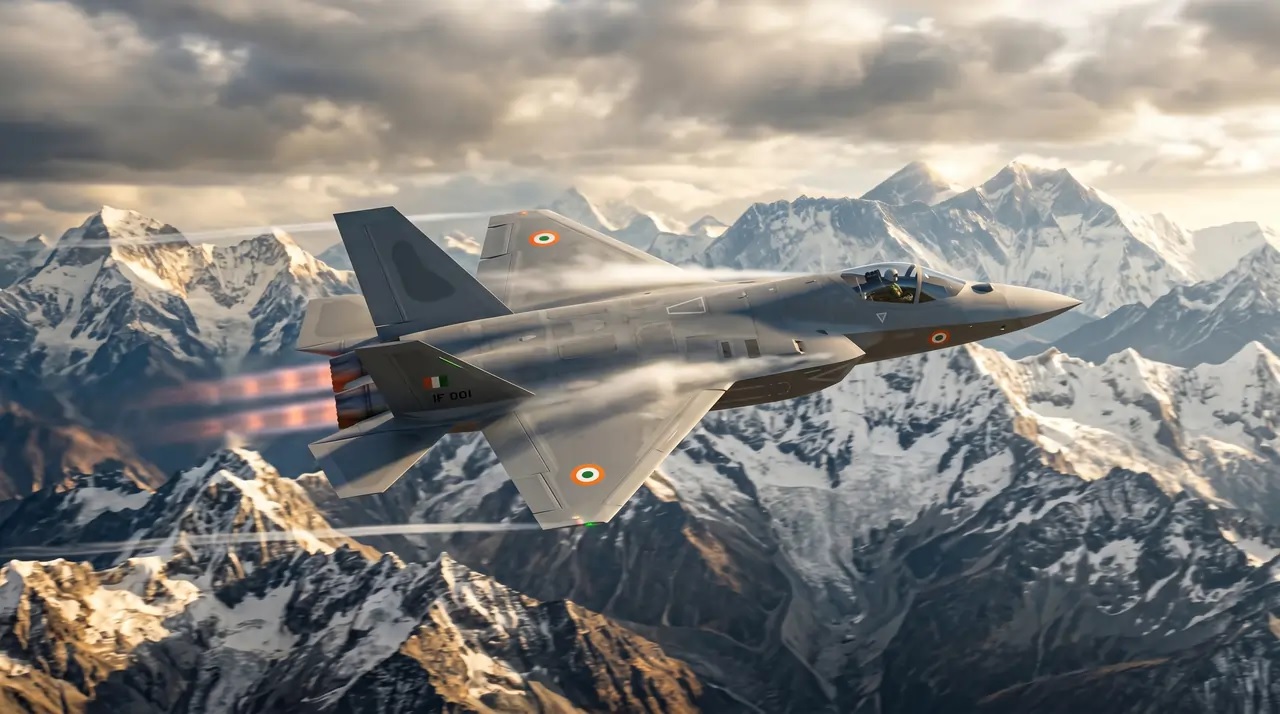
The AMCA programme aims to develop India's first indigenous fifth-generation stealth fighter aircraft. The medium-weight, twin-engine platform is being designed with features including supercruise capability, advanced sensors, sensor fusion, internal weapons carriage, and low-observable characteristics. The aircraft is expected to have a maximum take-off weight of around 25–27 tonnes.
ADA, under the Defence Research and Development Organisation (DRDO), is leading the programme. Significant progress has already been achieved in configuration finalisation, wind tunnel testing, radar cross-section modelling, and intake design validation.
For the initial AMCA Mk1 variant, the GE F414 engine has been selected as the interim powerplant. Future Mk2 variants are expected to use a more powerful engine being developed through international collaboration and indigenous participation.
The selected industry partner will be required to establish a Special Purpose Vehicle (SPV) for programme execution. Current plans include the development of five flying prototypes along with supporting test infrastructure.
Industry observers note that minor schedule adjustments are common in large aerospace and defence programmes and do not necessarily indicate changes to the overall development timeline. The AMCA programme continues to advance through parallel activities in design, testing, and industrial partnership formation, with further developments expected following the rescheduled pre-bid meeting on June 22.
——— End of Article ———