
World
In what marks another significant step in the global shift away from the dominance of the U.S. dollar, Ethiopia is reportedly in advanced negotiations with China to convert nearly $10 billion of its external debt from U.S. dollars to Chinese yuan. The move, if finalized, would make Ethiopia the second major African nation after Kenya to officially embrace yuan-based transactions for debt repayment and new financial inflows. This development is more than just an accounting adjustment—it’s a reflection of how the global financial order is being quietly redrawn, with the yuan emerging as an alternative for countries weary of the dollar’s political strings and Western-controlled lending institutions. The First African Nation to Ditch the Dollar The first African country to make a similar transition was Kenya, which earlier this year began settling a portion of its trade with China in yuan instead of U.S. dollars. Nairobi’s decision came amid mounting dollar shortages that drove up import costs and destabilized its domestic currency. Kenya also accused Western lenders, particularly the IMF and World Bank, of imposing harsh fiscal conditions in exchange for financial aid — conditions that often constrained local economies. Following Kenya’s lead, Ethiopia now seeks not just relief from the dollar’s volatility but a strategic partnership with China, which offers loans, infrastructure, and trade deals without political lectures about domestic policies. Why Ethiopia is Turning to the Yuan Ethiopia’s pivot is driven by several interlinked economic and political motivations.The country’s foreign currency reserves have been under severe pressure, worsened by global inflation and rising U.S. interest rates that strengthened the dollar. Paying back loans in dollars became more expensive, while local importers struggled to access foreign currency. China, Ethiopia’s largest creditor, already holds a significant share of its external debt—estimated at over $13 billion. By converting its $10 billion debt portfolio into yuan, Ethiopia can ease its repayment burden, stabilize its foreign exchange market, and gain access to additional funding under Beijing’s Belt and Road framework. The yuan-denominated trade and lending system is also seen as more predictable, allowing Ethiopia to bypass the constant fluctuations of the dollar and the financial influence exerted by U.S.-aligned institutions. How the U.S. Misused Its Financial Power Ethiopia’s decision, like that of many others, stems from long-standing frustrations with how the U.S. has managed its global financial power. For decades, Washington has used the dollar not only as the world’s reserve currency but also as a foreign policy weapon. Through economic sanctions, trade restrictions, and access control to SWIFT (the global payments network), the U.S. has repeatedly punished countries that refused to align with its political agenda. Nations from Russia and Iran to Venezuela and Cuba have been cut off from the global financial system — not by market forces, but by political decisions made in Washington. Even non-sanctioned countries have felt the impact. The IMF and World Bank, often steered by U.S. influence, attach policy conditions to loans that push developing countries into austerity: slashing subsidies, freezing wages, and privatizing state assets. These measures often stifle growth and fuel resentment among emerging economies, who see themselves as trapped in an unequal system. Dollar as a Weapon Against Sovereignty To many nations, the dollar has become less a symbol of stability and more a tool of control. Once the U.S. can freeze a country’s dollar reserves or cut off its access to the global banking system, the message is clear: sovereignty ends where dollar dependency begins. This perception has pushed even long-time U.S. partners to explore alternatives. The fear of financial vulnerability — that one policy dispute with Washington could lead to economic strangulation — has made the yuan, gold reserves, and bilateral currency swaps increasingly attractive. A Global Trend of De-Dollarization Ethiopia’s move adds momentum to a growing global de-dollarization trend. Russia has shifted most of its energy exports to rubles and yuan, following Western sanctions. China now conducts over 50% of its trade with Asia, Africa, and Latin America in local currencies or yuan. Saudi Arabia has openly discussed accepting yuan payments for oil, potentially altering decades of “petrodollar” dominance. Brazil, Argentina, Iran and Indonesia have also begun exploring currency-swap agreements with China to settle trade in their own currencies. Africa, long seen as the periphery of global finance, is emerging as an important testing ground for this new financial multipolarity. As more African economies grow weary of IMF austerity models and Western control, China’s yuan-based financing looks increasingly appealing. What the U.S. Got Wrong Washington’s repeated overreliance on financial coercion has eroded global trust in the dollar-based system. The aggressive use of sanctions, coupled with the perception that the IMF and World Bank operate as extensions of U.S. foreign policy, has alienated many developing nations. Instead of fostering stability, the dollar has become a symbol of dependency and vulnerability. Countries like Ethiopia now prefer to engage with partners offering “no-strings-attached” development models—even if that means greater Chinese influence. For Ethiopia, the decision to ditch the dollar is both a financial necessity and a political statement. It signals a desire for economic sovereignty, reduced exposure to Western pressure, and deeper alignment with the emerging China-led financial bloc. However, the move also carries risks. Dependence on China could expose Ethiopia to new forms of leverage, as Beijing becomes both its major creditor and trading partner. Still, for many developing nations, the yuan’s embrace feels less constraining than the dollar’s grip. The world’s financial landscape is changing fast. With Ethiopia’s decision, the message from the Global South is becoming clear: the era of dollar dominance is no longer absolute, and the age of currency diversification has begun.
Read More → Posted on 2025-10-21 09:27:48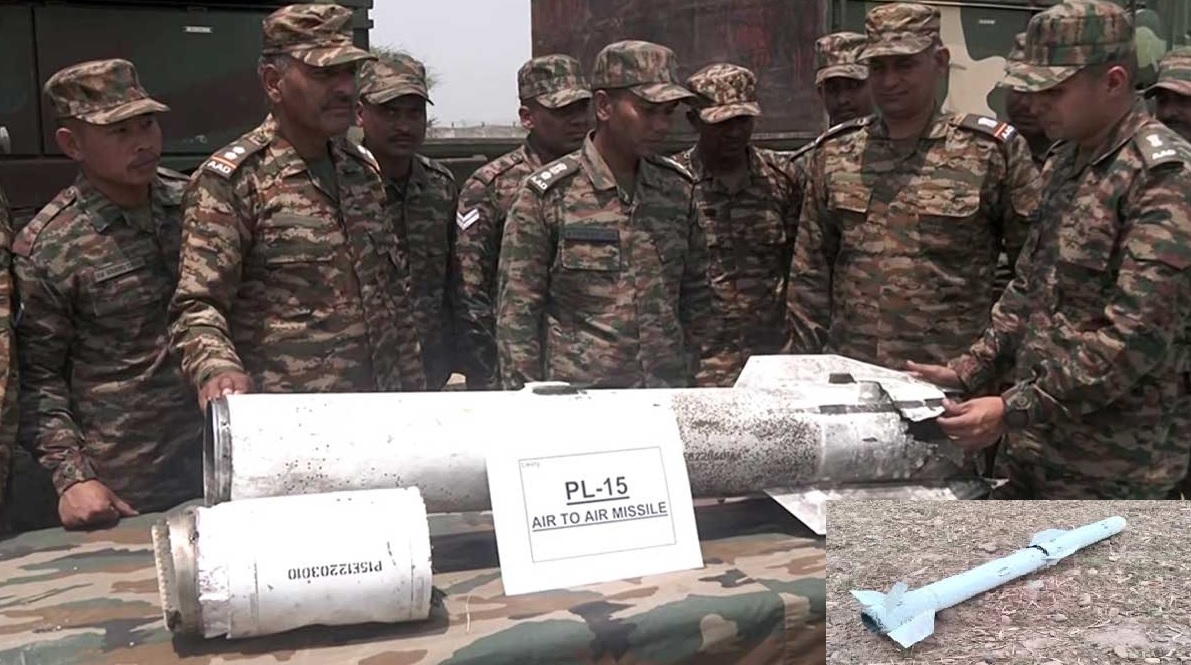
India
When parts of a Chinese PL-15 long-range air-to-air missile were recovered in India during the May 2025 clashes (widely reported in media coverage of Operation Sindoor), two parallel stories immediately appeared. One: a sober, technical effort inside DRDO and allied labs to disassemble, analyse, and understand the weapon so India could defeat it if used again. Two: sensational headlines claiming DRDO would simply graft PL-15 technology into India’s Astra Mk-2/Mk-3 programmes. The truth is the first story is the realistic one — reverse-engineering a captured missile is overwhelmingly about defeat and resilience, not quick cloning. What India Actually Recovered — and What Forensic Analysis Gives You Open-source reporting from the May 2025 engagements documents that export variants of the PL-15 were used by Pakistani fighters, and that wreckage and debris were recovered inside India. That recovery made it possible for Indian labs to do hands-on forensic work: identify seeker type and likely radar waveforms, inspect guidance and datalink hardware, characterise propellant residue and plume signatures, and examine fuze and autopilot design. In short, the debris provides fingerprints — the very information defenders need to design effective countermeasures and to tune sensors and tactics. Why does that matter? Because modern BVR (beyond-visual-range) missiles are defeated not only by out-riding them with a better missile, but by making them ineffective through a layered response: improved warning and tracking, electronic countermeasures (ECM) tuned to the missile’s seeker, better chaff/flare signatures, optimized engagement doctrine, and coordinated sensor fusion (airborne-to-airborne and ground-based). A reverse-engineering exercise supplies the data needed to implement those countermeasures quickly and accurately. Reverse-Engineering ≠ Cloning: The Engineering Reality There’s a persistent misconception in some media and social posts: that if you take a foreign seeker or propulsion unit, you can bolt it onto your missile and instantly match its performance. That’s not how complex aerospace systems work. A seeker’s hardware and software are deeply coupled to the missile’s guidance algorithms, datalink design, airframe aerodynamics, thermal environment, and manufacturing processes. Integrating a foreign subsystem requires years of systems-level re-engineering, flight qualification, and supply-chain adaptation. So while reverse-engineering can produce valuable design insights, turning those into a production-worthy component for Astra Mk-2 or Mk-3 would be a long-term, resource-intensive process — not a shortcut. The Pragmatic Objective: Build Countermeasures, Protect Platforms DRDO’s immediate priority after recovering a foreign missile is defensive: how to stop it. Practical outputs from forensic work include: Seeker-waveform signatures that let RWRs (radar-warning receivers) and MAWS (missile approach warning systems) detect the missile earlier. ECM waveforms tuned against that seeker’s weaknesses. Chaff/decoy profiles and dispense logic optimized to fool the missile’s radar tracker. Tactics and rules of engagement that minimize exposure to the missile’s no-escape zone, with cooperative jamming and sensor fusion support. These defensive improvements raise the cost and risk for an adversary relying on the PL-15 family — often more quickly and effectively than trying to copy a foreign design. Analysts reviewing the May 2025 events confirmed that India’s focus was on threat defeat and hardening, not imitation. On Claims That Astra Mk-2 / Mk-3 Already Surpass PL-15 or Meteor There are two key threads that often get mixed together: Open claims and expert analysis: Several Indian defence research platforms and analysts — including reports cited by the Indian Defence Research Wing (IDRW) — have stated that Astra Mk-3, built around an advanced ramjet/ducted rocket propulsion system, is designed to match or even exceed the European Meteor missile. The missile’s improved seeker, high-energy motor, and advanced guidance algorithms reportedly give it greater accuracy and sustained speed at long ranges. These sources indicate that Astra Mk-2 and Mk-3 are not only closing the gap but are technologically ahead of both PL-15 and Meteor in key performance areas like target-lock precision and no-escape zone. The honey-trap espionage revelation: In 2023–24, during an investigation into a DRDO honey-trap case, a senior scientist reportedly disclosed in his private chat with a foreign operative that Astra’s guidance and strike accuracy are superior to Meteor’s. This conversation — later part of the investigation record — revealed that even within DRDO’s internal assessments, the Astra missile’s precision systems outperform Meteor’s in real-world targeting capability. The revelation confirmed what many within India’s defence community had already believed: the Astra program has achieved a technical maturity surpassing its Western counterpart in accuracy and reliability. During the May 2025 conflict, the Chinese-origin PL-15 missiles used by Pakistani fighter jets were observed to be largely ineffective against Indian Air Force aircraft, failing to achieve the expected engagement success rate. Several intercept attempts reportedly missed or were countered by Indian electronic warfare systems, advanced sensor fusion, and tactical manoeuvres that neutralized the missile’s long-range advantage. This operational outcome exposed performance limitations of the PL-15’s seeker and datalink under real combat conditions. Following these setbacks, Pakistan reportedly began exploring other countries’ BVR missile options, a move that itself underscores growing doubts about the reliability and overall quality of PL-15 technology in high-intensity engagements. The Astra Mk-2 160-kilometre variant weighs 175 kilograms, while the PL-15E has a 150-kilometre range and weighs 210 kilograms, so despite offering a longer stated reach the Astra is about 35 kilograms lighter, which implies better mass-efficiency in propulsion, propellant energy or structural/design packaging and likely a more optimized integration of seeker/avionics and warhead; on these simple mass-to-range metrics the Astra Mk-2’s figures suggest a more advanced, better-optimized design than the PL-15E. Why the “DRDO Will Copy PL-15 Into Astra” Headlines Are Misleading After Operation Sindoor, some websites and social media posts claimed DRDO’s forensic work was an attempt to harvest PL-15 technology to accelerate Astra development. Those takes miss two core facts: The most immediate and actionable gains from analysing a captured missile are defensive — improving countermeasures and tactics, not cloning. Any effort to transplant foreign seeker or propulsion designs into Astra would require a multi-year engineering program, create supply dependencies, and contradict India’s emphasis on indigenisation. Calling the forensic effort “reverse-engineering to copy PL-15 into Astra” is a misleading oversimplification that serves a sensational narrative, not technical accuracy. India’s hands-on analysis of PL-15 wreckage after Operation Sindoor was a textbook defensive strategy: gather real-world threat data, reduce uncertainty, and enhance electronic warfare (EW) defences to neutralize the missile’s effectiveness. That approach protects aircraft and pilots far more effectively than trying to import foreign design elements. Claims that Astra Mk-2/3 already dominate PL-15 or Meteor, or that DRDO copied PL-15 technology, are either premature or misleading when measured against the real technical timelines and goals of India’s missile development program.
Read More → Posted on 2025-10-20 10:22:08
India
India is advancing a groundbreaking initiative to develop compact 200 MW nuclear reactors, designed not only for land-based industrial power generation but also for deployment on large commercial ships, marking a major milestone in the country’s nuclear and maritime innovation journey. According to a senior official familiar with the project, scientists at the Bhabha Atomic Research Centre (BARC) are currently developing two types of Bharat Small Modular Reactors (BSMRs) — one rated at 55 MW and another at 200 MW. These reactors are designed to provide flexible, clean, and reliable energy to energy-intensive sectors, such as steel, cement, and chemical industries, as well as to merchant navy and cargo vessels. “Nuclear power is generated by causing nuclear fission to create heat that leads to electricity production. You can put the reactor wherever you want, even on a ship,” said a senior official, highlighting the modular and mobile design philosophy behind the new reactors. Compact, Safe, and Versatile: The Bharat Small Modular Reactor (BSMR) The BSMR design represents the next phase in India’s civil nuclear program, emphasizing compactness, enhanced safety, and modular construction. Unlike traditional large-scale reactors that require extensive infrastructure and long build times, these modular units can be factory-built and transported to the deployment site, significantly reducing cost and construction timelines. BARC officials note that the BSMRs feature passive safety systems, self-contained coolant loops, and fail-safe shutdown mechanisms, making them capable of operating safely even in the event of external disruptions. The design ensures that the reactors can be deployed in remote industrial zones, islands, or aboard large ocean-going vessels, offering strategic flexibility. The potential for maritime deployment is particularly significant. While India already operates 83 MW reactors on its Arihant-class nuclear submarines, the new 200 MW units could power merchant ships, icebreakers, or special-purpose naval support vessels, enabling months of operation without refueling. Expanding India’s Nuclear Energy Footprint Currently, India operates 24 nuclear reactors across seven power stations, generating around 8.8 GW of electricity. However, under Prime Minister Narendra Modi’s Vision 2047, the government aims to scale this capacity to 100 GW — a tenfold increase — by mid-century. To achieve this, the government is pursuing a multi-pronged approach: Introducing Small Modular Reactors (SMRs) for decentralized and industrial power generation. Encouraging private sector participation in nuclear power through legislative reforms. Diversifying fuel sources, including exploring thorium-based fuel cycles, where India holds one of the world’s largest reserves. Legal and Policy Framework: Opening the Nuclear Sector To facilitate this transformation, the government plans to amend the Atomic Energy Act (AEA), 1962, to allow private players to participate in both construction and operation of nuclear power plants. This marks a major policy shift from the current state-monopoly model under the Nuclear Power Corporation of India Limited (NPCIL). The proposed amendments also include provisions for: Allowing private operators to source nuclear fuel from foreign suppliers under international safeguards. Introducing a take-back clause for spent fuel, where supplier countries will retrieve used material to prevent proliferation risks. Revising the Civil Liability for Nuclear Damage Act (CLND) to limit supplier liability, encouraging greater participation from foreign technology partners. Officials indicate that these legal changes are in the final stages of inter-ministerial consultations before being introduced in Parliament. Strategic and Economic Significance The development of compact nuclear reactors aligns with India’s twin goals of energy security and strategic autonomy. As global energy demand rises, modular reactors can supply consistent, carbon-free power to industries and transport sectors that are otherwise dependent on fossil fuels. For the maritime sector, nuclear propulsion offers a transformative capability — enabling long-range commercial shipping with zero emissions, drastically reducing operational costs and dependence on marine fuel. Strategically, the BSMR program also strengthens India’s expertise in miniaturized nuclear propulsion, a technology crucial for next-generation submarines, unmanned undersea vehicles, and future aircraft carriers — though officials have avoided confirming any direct military applications. India’s move to develop 55 MW and 200 MW compact nuclear reactors represents a technological leap that bridges the gap between civilian energy needs and strategic capability. With the Bharat Small Modular Reactor (BSMR) program, India joins a select group of nations — including the United States, Russia, and China — pursuing modular nuclear power for both industrial and maritime applications. If successfully implemented, these reactors could revolutionize India’s energy architecture, turning nuclear power from a centralized utility into a flexible, mobile, and exportable solution — powering both factories and fleets in the decades to come.
Read More → Posted on 2025-10-20 09:46:42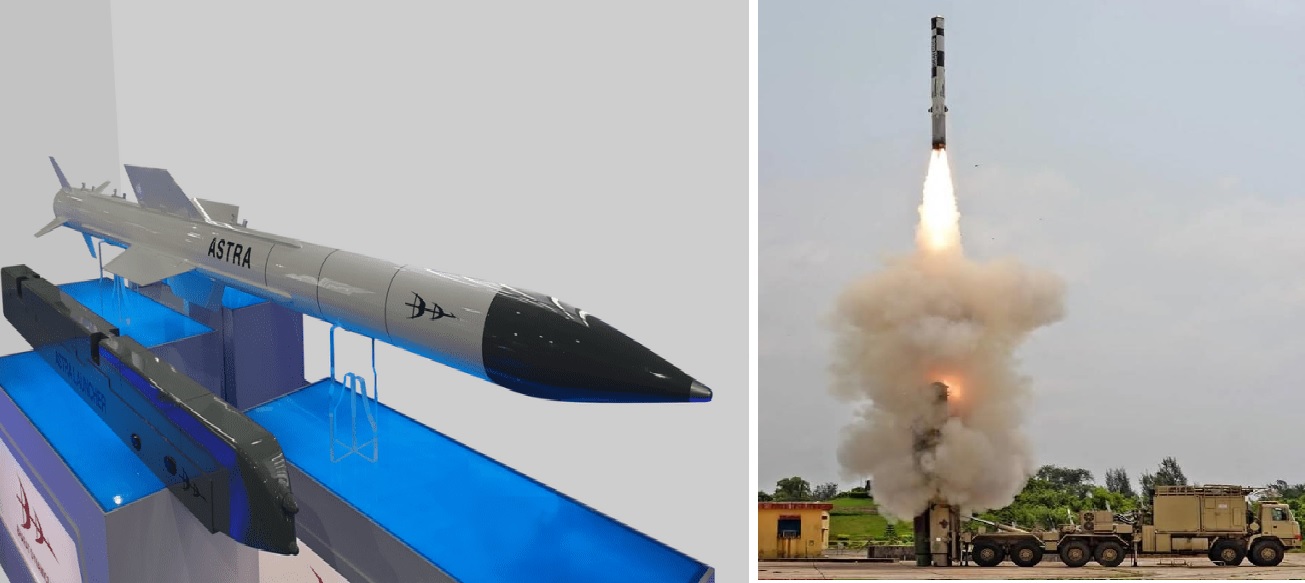
India
India’s missile arsenal is poised for a major leap in range, precision, and lethality. The country is set to induct the new 800-kilometre-range BrahMos supersonic cruise missile within the next two years, alongside the Astra Mark-2 beyond-visual-range (BVR) air-to-air missile, which will enter serial production by 2026–27. Together, these systems mark a decisive step toward India’s goal of strategic self-reliance and technological dominance in precision-guided weaponry. The Next-Generation BrahMos: Doubling the Reach, Sharpening the Accuracy According to top defence sources cited by The Times of India, developmental trials are currently underway for the 800-km BrahMos, featuring a modified ramjet engine and enhanced avionics. These upgrades aim to significantly extend range and improve precision, while maintaining the missile’s hallmark speed of Mach 2.8—nearly three times the speed of sound. The missile, built jointly by India’s Defence Research and Development Organisation (DRDO) and Russia’s NPO Mashinostroyenia, has evolved from its original 290-km variant into a formidable multi-platform strike weapon. The current 450-km BrahMos already serves as the primary conventional precision-strike system across the Indian Armed Forces. It has reportedly been used in real combat conditions, including Operation Sindoor (May 2025), where Sukhoi-30MKI fighters carried out deep-penetration strikes inside Pakistan. “The 800-km BrahMos is nearly ready, pending a few more tests to validate the combination of its inertial navigation system (INS) and external global navigation satellite systems (GNSS). These will ensure unmatched accuracy and resistance to electronic jamming,” a senior defence official said. Software Upgrade to Extend Naval and Ground Versions One of the major advantages of the 800-km variant is that existing BrahMos systems can be upgraded without major hardware changes. The missile’s airframe and launcher remain the same; only the software, fire-control interface, and guidance logic require modification. This means that Indian Navy warships and Army mobile launch batteries, which currently field the 450-km version, can transition to the new variant with minimal downtime. Sources confirm that the Navy and Army will be the first to induct the extended-range BrahMos, with the air-launched version for the IAF following later. At present, about 20 frontline warships, including the Visakhapatnam-class destroyers and Shivalik-class frigates, are equipped with vertical-launched BrahMos systems. The induction of the longer-range variant will extend India’s maritime strike envelope deep into the Indo-Pacific. Astra Mark-2: Extending the IAF’s Beyond-Visual-Range Punch Parallel to the BrahMos upgrade, DRDO is advancing the Astra Mark-2 air-to-air missile, extending its range to over 200 kilometres, up from the 160 km achieved during initial trials. The improvements are driven by trajectory shaping, enhanced propulsion systems, and refined guidance algorithms. “The propulsion upgrade provides greater thrust and sustained burn time. If current trials succeed, production can begin within six months,” a source revealed. The Indian Air Force has already placed orders for around 700 Astra Mark-2 missiles, which will equip its Sukhoi-30MKI and Tejas Mk1A fighters. Meanwhile, over 280 Astra Mark-1 missiles with 100-km range are in induction phase. DRDO is also developing the Astra Mark-3, powered by a solid-fuel ducted ramjet (SFDR), which could reach ranges up to 350 km—placing it in the same class as China’s PL-15 and Europe’s Meteor missiles. The Astra-3 is expected to be operational by 2028. Strategic Impact: A Step Toward Complete Missile Self-Reliance The Astra missile family is designed to replace expensive imported beyond-visual-range missiles such as the Russian R-77, French MICA, and Israeli Derby. Once fully operational, the Astra series will become India’s standard BVR missile across all fighter platforms, reducing foreign dependence and cutting operational costs significantly. The BrahMos program, meanwhile, has already become the cornerstone of India’s precision-strike capability. With contracts worth over ₹58,000 crore, the Indo-Russian joint venture BrahMos Aerospace has delivered missiles to the Army, Navy, and Air Force, as well as secured its first export orders—notably from the Philippines, which is inducting the shore-based coastal defence system. In March 2024, the Defence Ministry inked a ₹19,519 crore contract for over 220 BrahMos missiles for the Indian Navy—the largest-ever such deal. Following Operation Sindoor, the Defence Acquisition Council (DAC), chaired by Defence Minister Rajnath Singh, also cleared procurement of 110 air-launched BrahMos missiles for the IAF, valued at around ₹10,800 crore. 2027 and Beyond By 2027–28, India’s strike and air combat capabilities will look markedly different. The BrahMos 800-km variant will give India the ability to strike deep into adversary territory—from the Arabian Sea to the Tibetan plateau—without crossing the border. Meanwhile, the Astra Mk-2 and Mk-3 will allow Indian fighters to engage enemy aircraft long before they are detected by radar. Together, these systems embody India’s “Long-Range Precision” doctrine, emphasizing deterrence, flexibility, and autonomy. As Defence Minister Rajnath Singh recently remarked, “Every inch of Pakistan is within BrahMos range—and soon, every threat in the sky will be within Astra’s reach.”
Read More → Posted on 2025-10-20 09:31:30
World
The United States has reached an unprecedented financial milestone as its national debt hits $37.9 trillion, according to the latest figures from the U.S. Department of the Treasury. This is officially the highest debt level in world history for a single nation. What is even more alarming is the speed at which it is growing — currently increasing by around $25 billion per day, a pace that is faster than during the Biden administration. Experts warn this trend could have serious implications for the U.S. economy, fiscal policy, and global financial stability. The U.S. government’s total public debt combines two components — debt held by the public through Treasury securities and intragovernmental holdings such as Social Security and other trust funds. The figure stood at $37.9 trillion in mid-October 2025, marking an increase of more than $2.2 trillion in a single fiscal year. At this rate, the U.S. could surpass $40 trillion in debt by 2026, a level that was once projected to occur only near the end of the decade. The often-quoted “$25 billion per day” figure refers to the average pace of debt growth over recent weeks. While this varies with Treasury borrowing schedules and cash flow timing, it reflects an accelerating deficit trend. Analysts calculate that the U.S. is now adding roughly $1 trillion in new debt every five months, compared to about $1 trillion every ten months during Biden’s presidency. So, why is this happening faster now? The answer lies in a combination of larger fiscal deficits, higher interest costs, tax cuts, new spending programs, and structural economic pressures. In fiscal year 2025, the federal government spent about $7 trillion but collected only around $5.2 trillion in revenues — leaving a deficit of roughly $1.8 trillion. This gap must be financed through borrowing, which adds directly to the national debt. A key factor is the rising cost of interest payments. As debt accumulates and interest rates remain high, the U.S. government is now spending more than $1 trillion annually just on interest — more than it spends on defense or Medicare individually. This creates a compounding problem: the government must borrow more money simply to pay interest on existing debt, leading to an accelerating debt spiral. Policy choices under Donald Trump’s administration have also drawn criticism from economists and fiscal experts. The large-scale tax cuts and tariff policies, while politically popular, have reduced long-term revenue without offsetting spending reductions. The International Monetary Fund (IMF) has warned that the combination of tax cuts and higher discretionary spending could add over $4 trillion to U.S. deficits over the next decade. Although tariffs have generated record customs revenues, they are volatile and cannot sustainably offset massive fiscal shortfalls. By contrast, while Biden’s era saw explosive debt growth during the pandemic, much of that increase was tied to emergency COVID-19 relief, infrastructure, and stimulus programs that had a defined endpoint. The current debt surge, however, is structural — built into ongoing tax and spending frameworks. This is why many economists argue that today’s situation is more concerning, as the U.S. is adding debt even during a period of economic expansion. The IMF and Congressional Budget Office (CBO) both project that if current trends continue, the U.S. debt-to-GDP ratio could rise from about 125% in 2025 to over 140% by 2030, putting America’s fiscal path among the most unsustainable in the developed world. The risk is that rising interest costs could crowd out investment in key areas like education, infrastructure, and innovation. Moreover, sustained borrowing could eventually undermine investor confidence in U.S. Treasury bonds, which are currently the backbone of the global financial system. Critics say the Trump administration’s approach to fiscal policy — large tax reductions without matching spending cuts, combined with new domestic programs and military commitments — has accelerated the problem. Supporters, however, argue that tax cuts stimulate growth, increasing overall revenues in the long run. Yet, data from the Treasury Department show federal receipts from corporate taxes have actually declined in 2025, while expenditures continue to rise. Demographics also play a major role. The aging U.S. population is putting increasing pressure on Social Security and Medicare, which now consume the majority of federal spending. Without reforms to these entitlement programs, analysts warn that debt growth will remain uncontrollable regardless of which party governs. Economically, this rising debt means the U.S. is approaching a dangerous inflection point. As the government borrows more, it risks pushing up interest rates, which can reduce private investment and slow growth. A heavier debt load also limits Washington’s ability to respond to future crises, such as recessions or wars, because fiscal space becomes constrained. This is why many economists believe the U.S. is entering a phase of “debt fatigue,” where even small policy shifts could have large financial repercussions. For now, markets remain confident in the stability of U.S. Treasuries, largely because of the dollar’s status as the world’s reserve currency. But history shows that confidence can erode quickly once investors begin to question long-term sustainability. The Treasury Department itself has acknowledged that interest costs could exceed $12 trillion over the next decade if current borrowing patterns persist. America’s debt clock is not just ticking — it’s racing.
Read More → Posted on 2025-10-19 16:31:00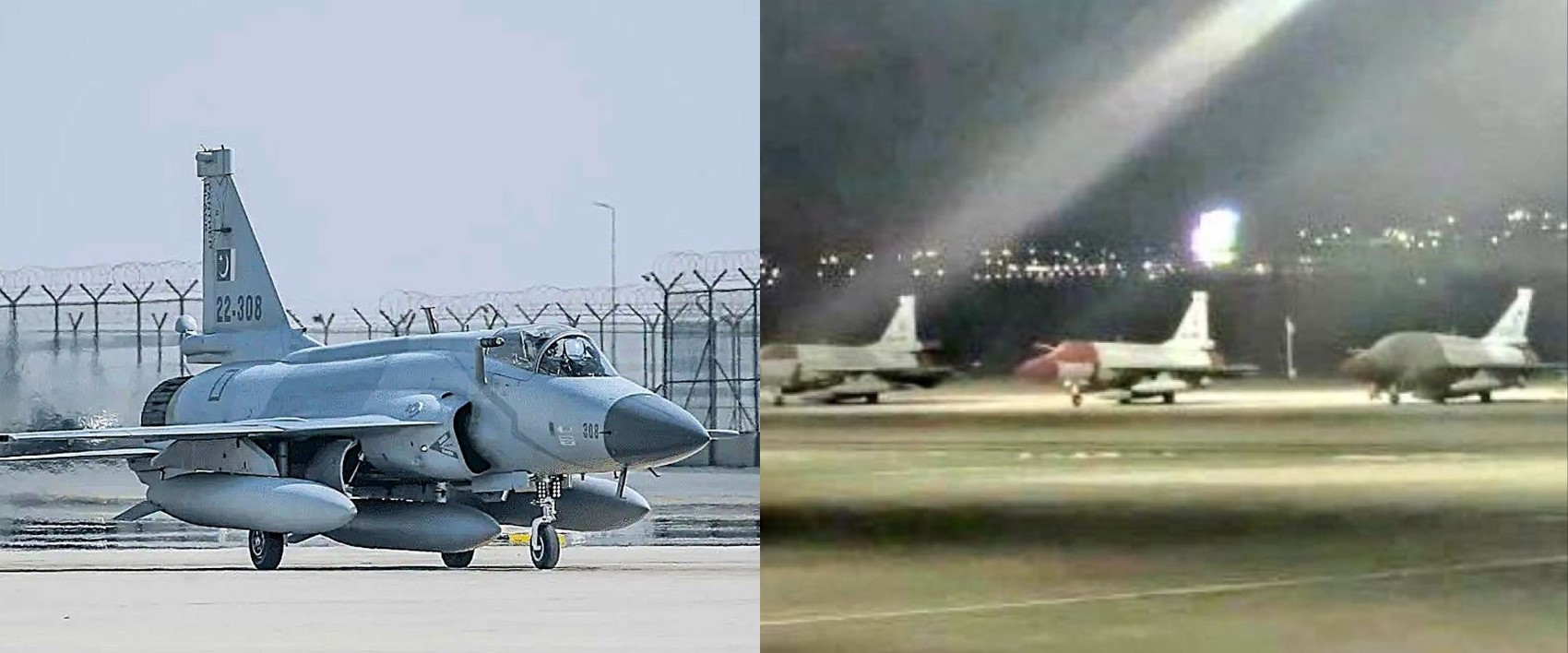
World
Pakistan has officially deployed its most advanced JF-17 Block III multirole fighters to Azerbaijan for the “Indus Shield Alpha” aerial combat exercise, marking a major step forward in the rapidly growing defense partnership between the two countries. The deployment, confirmed by the Pakistan Air Force (PAF) on its official X (Twitter) account, comes just months after Baku and Islamabad finalized a $4.6 billion deal for the purchase of 40 JF-17 Block III aircraft, supported by a $2 billion joint investment program in aerospace and defense industries. Clarifying the Confusion: Exercise, Not Delivery On October 19, 2025, images circulated online showing JF-17 Block III fighters stationed at an Azerbaijani airbase. Speculation quickly spread that Azerbaijan had begun receiving its first batch of jets from Pakistan. However, the PAF later clarified that the aircraft were deployed temporarily to participate in the bilateral Indus Shield Alpha exercise, a new chapter in operational collaboration between the two air forces. The deployment demonstrated long-range operational capability — the jets flew non-stop from Pakistan, supported by in-flight refueling from a PAF IL-78 aerial tanker. This showcased the JF-17’s extended range and interoperability in real-world scenarios, strengthening Pakistan’s image as a mature aerospace exporter and regional power with credible air logistics capability. Azerbaijan’s Fighter Recapitalization Drive Azerbaijan has long sought to modernize its air combat fleet, which mainly comprises aging MiG-29s and Su-25s. Following its 2020 war with Armenia, Baku prioritized acquiring new-generation fighters capable of network-centric operations, electronic warfare, and precision strike missions. The JF-17 Block III, jointly developed by Pakistan Aeronautical Complex (PAC) and China’s Chengdu Aircraft Corporation (CAC), offers a cost-effective solution featuring an AESA radar, integrated electronic warfare suite, advanced data link, and compatibility with beyond-visual-range (BVR) missiles like the PL-15. The $4.6 billion package reportedly includes aircraft, training, ground systems, weapons integration, and maintenance support, with Pakistan expected to assist in establishing local assembly and sustainment infrastructure in Azerbaijan. This makes Azerbaijan the first foreign operator of the JF-17 Block III, marking a milestone in Pakistan’s emergence as a global defense exporter. Strategic Implications: The “Three Brothers” Alliance Strengthens The growing military partnership underscores the strategic alignment among Pakistan, Azerbaijan, and Turkey — three nations united by shared regional interests and deep cultural ties. Branded the “Three Brothers Alliance,” the grouping has evolved from symbolic cooperation into a genuine military bloc involving joint exercises, drone technology transfers, and strategic coordination. Pakistan’s JF-17 deployment, therefore, carries political symbolism beyond mere training — it signifies Islamabad’s expanding influence in the South Caucasus, a region traditionally shaped by Russian and Iranian power. For Baku, cooperation with Pakistan provides affordable access to advanced airpower, diversifying its defense sources while strengthening its hand in the regional balance of power. Armenia’s Likely Response The deployment of JF-17 Block III fighters in Azerbaijan is a clear signal to Armenia, which now faces a widening airpower gap. To counter this shift, Armenia is reportedly planning to acquire additional 8 to 12 Su-30 fighters from India, leveraging Hindustan Aeronautics Limited’s (HAL) licensed production line for the Su-30MKI. Armenia already operates a limited number of Su-30SM fighters sourced from Russia, but the Indian-built Su-30s offer a more advanced avionics suite and better upgrade potential. The deal, if finalized, would deepen the growing Armenia–India defense partnership, which already includes Pinaka rocket systems, radar technology, and anti-drone equipment. By turning to India, Armenia seeks not only to modernize its air fleet but also to balance the expanding Pakistan–Azerbaijan–Turkey defense axis. Regional Impact and Future Outlook The Indus Shield Alpha exercise represents a turning point — the first overseas deployment of the JF-17 Block III, demonstrating both Pakistan’s export maturity and Azerbaijan’s readiness to embrace new-generation platforms. For Pakistan, the deployment is a diplomatic success, reinforcing its position as a defense technology provider in the Muslim world and beyond.For Azerbaijan, it offers operational experience and visibility as it prepares to induct its new fleet.For Armenia, it is a strategic warning — a sign that regional air superiority is evolving rapidly, and keeping pace will require urgent modernization and new alliances. The JF-17 Block III’s arrival in Azerbaijan under the Indus Shield Alpha banner goes far beyond a joint exercise — it marks the emergence of a new power equation across South Asia and the Caucasus.As Pakistan, Azerbaijan, and Turkey consolidate a triangular defense axis, Armenia is turning toward India for advanced fighters to safeguard its airspace and strategic balance. The skies over the Caucasus are entering a new era — one defined by exported technology, shifting alliances, and rapid modernization.Pakistan’s jets have landed in Azerbaijan, but their presence has already reshaped the region’s defense calculus.
Read More → Posted on 2025-10-19 15:49:00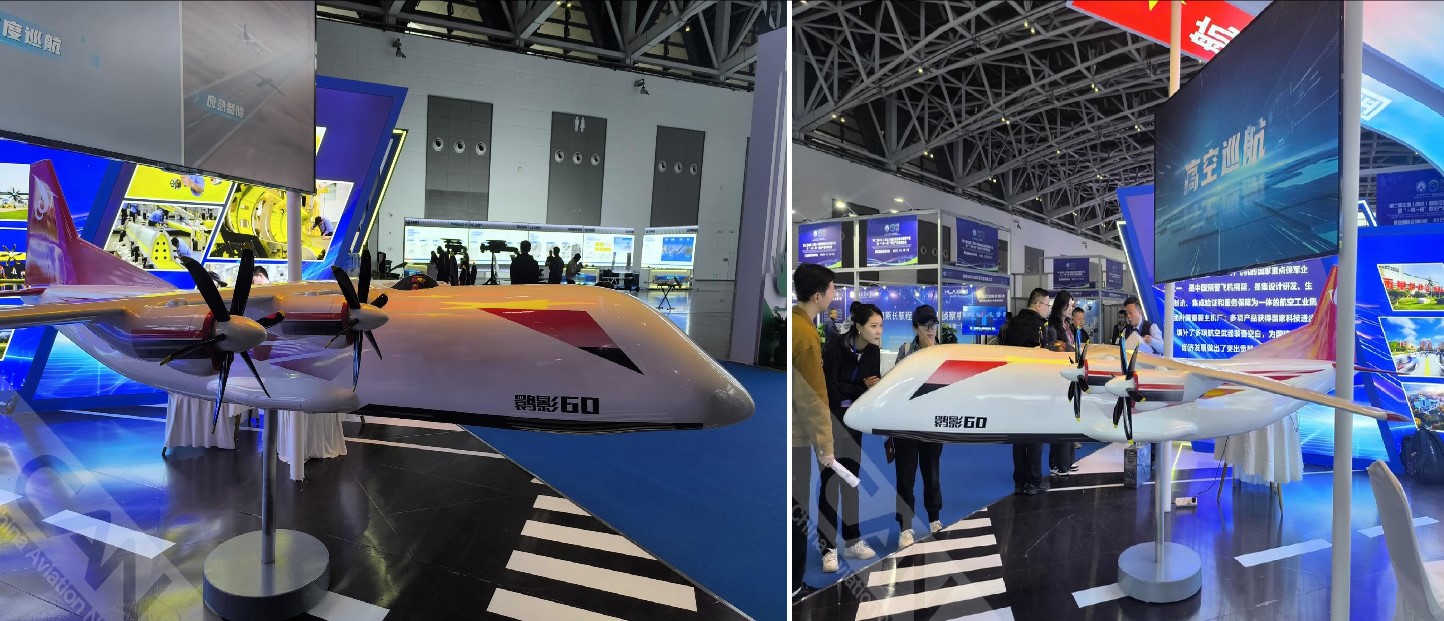
World
At the 7th China Helicopter Exposition held in Tianjin in October 2025, China introduced a groundbreaking concept: the Ibis Shadow 60, an unmanned cargo aircraft poised to become the world's largest of its kind. This ambitious project underscores China’s commitment to revolutionizing logistics and tactical airlift capabilities through unmanned systems. Design and Specifications The Ibis Shadow 60 is an unmanned variant of the Shaanxi Y-9, a medium-lift military transport aircraft. Retaining the Y-9's robust airframe, the Ibis Shadow 60 is reconfigured without a cockpit or crew compartments, enabling it to achieve a maximum take-off weight exceeding 60 tons. This substantial payload capacity positions it as a formidable asset for transporting large military vehicles, helicopters, and potentially fighter aircraft, especially in contested or hard-to-access environments. While detailed performance metrics remain undisclosed, the Y-9's specifications provide a reference point: Length: Approximately 35 meters Wingspan: Approximately 38 meters Maximum Takeoff Weight: Over 60 tons Payload Capacity: Up to 20 tons Cruising Speed: 500–550 km/h These dimensions suggest that the Ibis Shadow 60 will have a similarly imposing presence, capable of carrying oversized cargo over extended distances. Development and Manufacturing The Ibis Shadow 60 is being developed by Shaanxi Aircraft Corporation, a subsidiary of the state-owned Aviation Industry Corporation of China (AVIC). AVIC has a history of producing unmanned aerial vehicles (UAVs) for both military and civilian applications. The development of the Ibis Shadow 60 aligns with China’s broader strategy to integrate unmanned systems into logistics, surveillance, and combat operations. Budget and Program Status While specific budgetary allocations for the Ibis Shadow 60 program have not been publicly disclosed, the project's scale and ambition suggest significant investment. The development of such a large UAV involves substantial costs related to research and development, testing, and manufacturing. Given China's increasing defense budget and emphasis on technological advancement, it's likely that the Ibis Shadow 60 is part of a broader initiative to enhance unmanned capabilities within the People's Liberation Army (PLA). As of October 2025, the Ibis Shadow 60 remains in the concept phase, with no confirmed timeline for its first flight or operational deployment. However, its unveiling at the China Helicopter Exposition indicates that the project is progressing, and further developments can be anticipated soon. Strategic Implications The introduction of the Ibis Shadow 60 represents a significant advancement in unmanned aviation, particularly in heavy-lift logistics. Its potential to transport large and heavy cargo autonomously could transform military logistics, enabling rapid deployment of equipment and personnel in areas where traditional manned aircraft might be vulnerable or less efficient. Furthermore, the development of such advanced UAVs positions China at the forefront of unmanned aviation technology, setting a benchmark for other nations. The Ibis Shadow 60 exemplifies China's growing capabilities in autonomous systems and its strategic focus on enhancing military logistics and operational flexibility.
Read More → Posted on 2025-10-19 14:35:41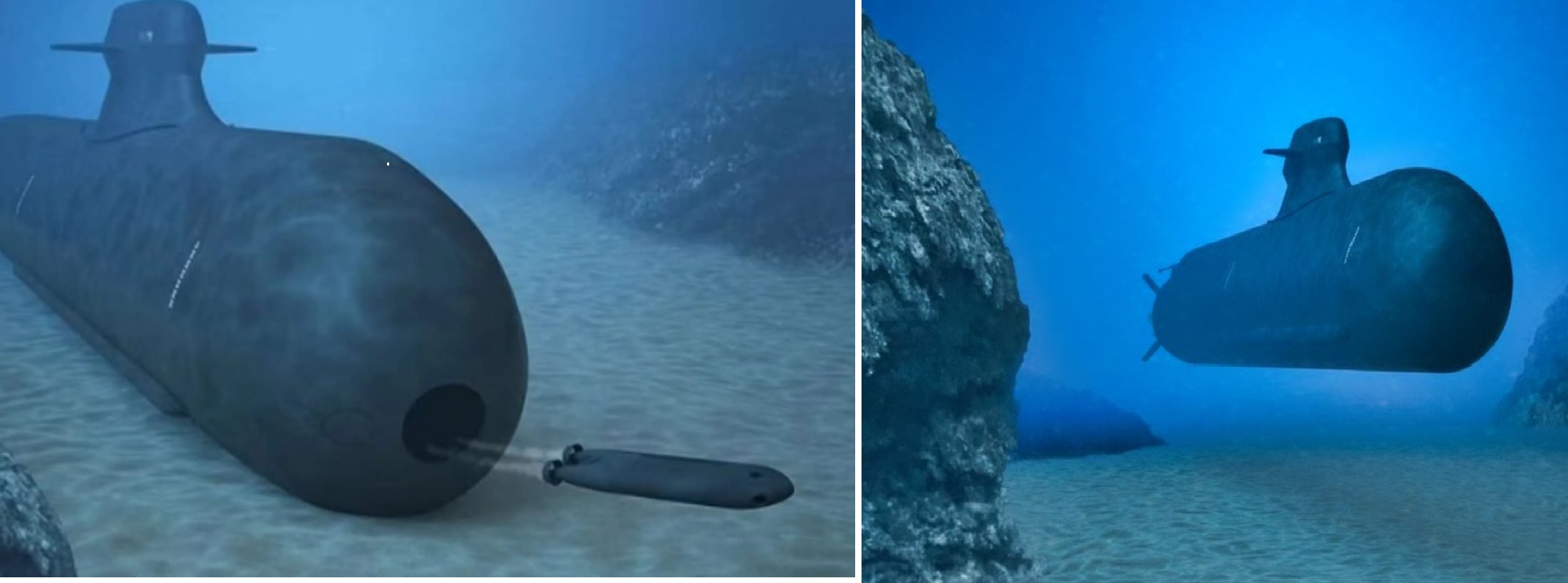
World
On October 13, Saab announced that it had signed a major contract with the Swedish Defence Materiel Administration (FMV) to proceed with the final production phase of the Blekinge-class (A26) submarines—Sweden’s most advanced and ambitious undersea warfare program to date. The new order, valued at approximately 9.6 billion Swedish kronor (USD 1 billion), covers the procurement of additional materials, systems integration, and services related to the two submarines previously commissioned by the Swedish government. Deliveries under this phase are expected to occur primarily between 2026 and 2032. A Milestone for Sweden’s Submarine Force The A26 Blekinge-class represents the next generation of conventional submarines, designed to replace Sweden’s aging Gotland-class and Västergötland-class vessels. These submarines, originally commissioned between the 1980s and 1990s, have served as the backbone of Sweden’s undersea defense capability but are now nearing the end of their operational lifespan. Micael Johansson, President and CEO of Saab, underscored the significance of this partnership, stating: “Saab is currently building the world’s most advanced conventional submarines for Sweden. Thanks to the excellent cooperation between Saab and FMV, we have ensured that Sweden will have a next-generation submarine capability that will help keep our nation’s waters secure for decades to come.” The A26 program is central to the modernization of the Swedish Navy, reinforcing Sweden’s maritime deterrence in the increasingly strategic Baltic Sea region. Program Delays and Revised Timelines While progress continues, recent updates from the Swedish Armed Forces indicate a schedule adjustment, pushing the expected delivery of the two A26 submarines—HMS Blekinge and HMS Skåne—from the original 2026–2030 window to 2031–2035. A recent defense budget report noted that the revised timeline will require renegotiations of both cost and delivery schedules, as the delay could impact Sweden’s short-term submarine availability. The Swedish Armed Forces are currently assessing the operational implications and working with Saab to mitigate long-term capability gaps. Sustaining Capability Through Fleet Upgrades To maintain readiness amid delays, the Swedish Navy has initiated a mid-life modernization program for its existing submarines. In February 2025, Saab completed upgrades for all three Gotland-class submarines—HMS Gotland, HMS Uppland, and HMS Halland—along with HMS Södermanland of the Västergötland class. This modernization effort, valued at USD 116 million, involved the replacement or upgrade of over twenty core systems, including sensors, sonar suites, command-and-control architecture, and navigation technologies. Notably, several of these upgraded components are identical to those intended for the upcoming A26 class, effectively serving as real-world validation platforms. Inside the A26 Blekinge-Class: Cutting-Edge Features The A26 Blekinge-class submarines are being constructed at Saab Kockums’ shipyard in Karlskrona, a site with a rich legacy of submarine manufacturing. Key features of the A26 class include: Air-Independent Propulsion (AIP) based on Stirling engine technology, allowing for extended submerged endurance. Modular design enabling flexible mission configurations, from intelligence gathering to special operations. Multi-Mission Portal (MMP) —a unique lock system that allows divers, unmanned vehicles, or special forces to deploy underwater without surfacing. Advanced stealth technologies, including acoustic dampening and radar-absorbing coatings, making it one of the quietest non-nuclear submarines in service. Future-proof systems integration, allowing for rapid upgrades and compatibility with emerging digital warfare systems. These attributes collectively make the A26 one of the most sophisticated diesel-electric submarines under development globally—often compared favorably to Japan’s Taigei class and Germany’s Type-212CD. Strategic Significance for the Baltic and Beyond Sweden’s renewed focus on undersea capabilities comes amid heightened security tensions in the Baltic Sea, especially after joining NATO in 2025. The A26 submarines will play a vital role in enhancing Sweden’s deterrence posture, securing undersea communication cables, and safeguarding maritime trade routes. With the A26 project, Saab is not only meeting national defense requirements but also positioning itself for potential export opportunities. Nations like Poland, the Netherlands, and Australia have previously expressed interest in A26-derived technologies, potentially expanding Saab’s footprint in the global submarine market. Conclusion The new 9.6 billion SEK contract marks a decisive step toward delivering the Blekinge-class submarines, ensuring that Sweden maintains a modern and capable undersea force well into the mid-21st century. Despite delays, the ongoing collaboration between Saab and FMV underscores Sweden’s long-term commitment to maintaining technological sovereignty in naval defense manufacturing. As the program advances toward its final production phase, Saab’s A26 submarines stand as a testament to Swedish innovation, engineering excellence, and strategic foresight in an increasingly complex maritime security environment.
Read More → Posted on 2025-10-19 14:23:23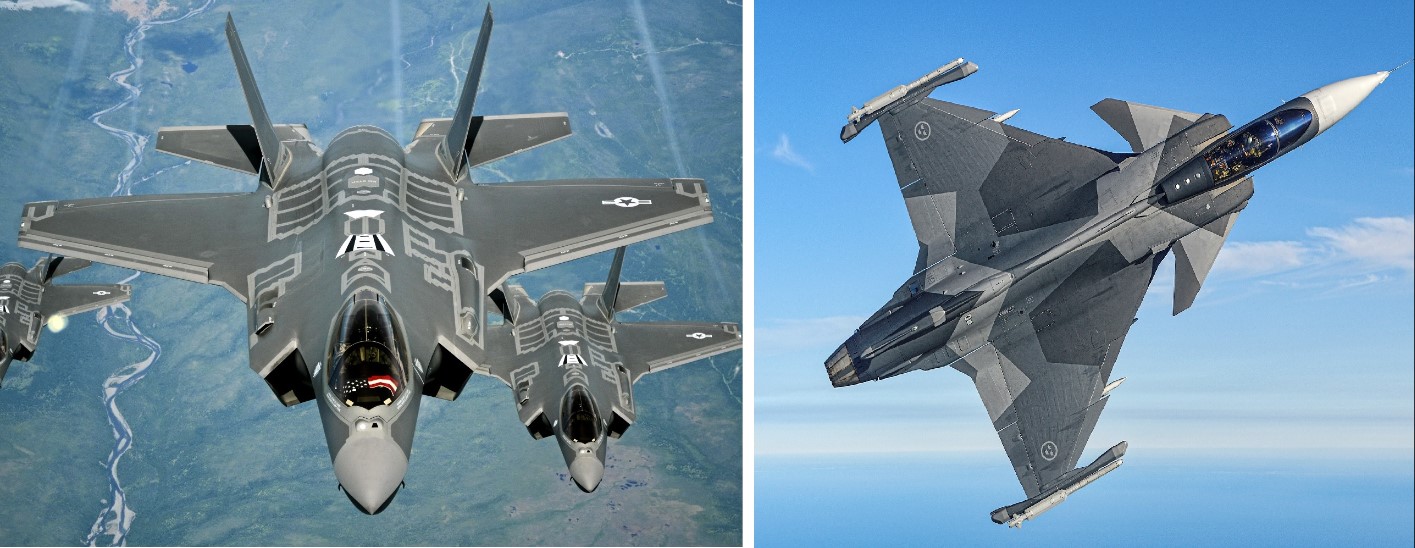
World
Canada’s fighter jet replacement program is under review as the government seeks improved economic returns before finalizing its contract with Lockheed Martin. The $27.7 billion deal for 88 F-35A Lightning II jets is being reassessed, with Industry Minister Mélanie Joly noting that the fleet could be reduced or supplemented with Sweden’s Saab Gripen E if better terms are not agreed. The original plan, announced in January 2023, aimed to replace the Royal Canadian Air Force’s aging CF-18 Hornets with fifth-generation F-35A fighters. The contract, initially valued at approximately CAD 19 billion (around USD 14 billion), covered aircraft procurement, training, and infrastructure. The first jets were scheduled for delivery in 2026, with full operational capability expected by 2032. Subsequent reviews indicated that the total program cost, including support and maintenance over the aircraft’s lifetime, could reach CAD 27.7 billion. Why Canada Is Reviewing the Order Canada’s concerns go beyond cost. The government has emphasized the need for stronger domestic economic benefits from the purchase, including local jobs, technology transfer, and industrial participation for Canadian firms. Lockheed Martin and the U.S. government are expected to demonstrate that the contract delivers value for money and measurable long-term economic benefits for Canada’s aerospace and defense industries. Other factors contributing to the review include operational readiness and infrastructure challenges. The Auditor General’s reports highlighted delays in specialized hangars, training systems, and pilot preparation. Maintaining the F-35 also requires a skilled workforce and complex logistics, raising questions about long-term sustainment and cost management. The review also reflects Canada’s interest in diversifying defense suppliers. While relations with the U.S. remain strong, officials have noted the importance of maintaining autonomy over defense equipment and avoiding overreliance on a single supplier. Why Canada Is Considering the Gripen Saab’s Gripen E has emerged as a potential alternative, having previously offered a package of 88 aircraft, local assembly lines, technology transfer, and an in-country maintenance and upgrade center, potentially located in Montreal. The Gripen is also well-suited to operations from shorter and Arctic runways, a factor relevant to Canada’s northern territories. Compared with the F-35, the Gripen offers lower operating costs and easier maintenance. It also allows Canada greater control over software, upgrades, and sustainment, which some analysts view as increasing strategic and industrial independence. A mixed fleet of F-35s and Gripen E aircraft is under consideration, where F-35s would serve high-end missions such as NATO and NORAD operations, while Gripen jets could handle patrol and regional defense. Benefits and Considerations Supporters of the F-35 note that it provides interoperability with U.S. and NATO forces, advanced sensors, and capabilities not available in other aircraft. Canadian companies already participating in the F-35 industrial base could maintain ongoing manufacturing and maintenance contracts, ensuring some domestic economic benefit. Switching to another aircraft would involve new procurement processes, certification, and infrastructure development, which could affect timelines for replacing the aging CF-18 fleet. Canada’s government is therefore balancing operational capability, industrial participation, cost, and long-term strategic independence in making its decision. Current Status The government has indicated that it is seeking contract adjustments addressing cost management, industrial participation, and maintenance rights. If negotiations do not result in improved terms, Canada may reduce its F-35 order, allowing Saab or other manufacturers to contribute to the fighter fleet. The review reflects Canada’s approach to aligning defense procurement with both operational needs and domestic industrial objectives, while also maintaining flexibility to adjust strategy as conditions and costs evolve.
Read More → Posted on 2025-10-19 14:18:10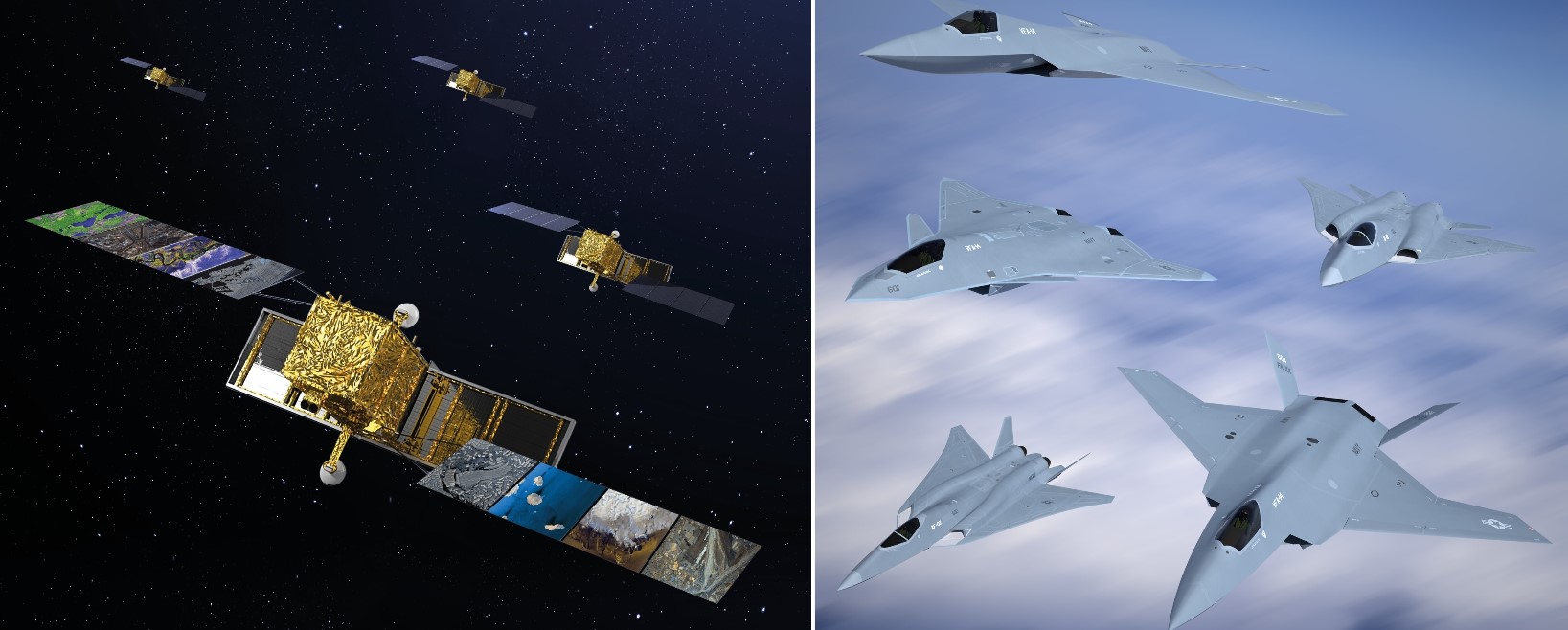
World
Stealth aircraft such as the U.S. F-22 Raptor, F-35 Lightning II, and reconnaissance drones like the RQ-170 are designed to avoid detection by conventional radar systems. They achieve this through radar-absorbing materials and carefully contoured surfaces that scatter radar waves away from the transmitter. Yet stealth technology is not absolute — it works best against specific radar frequencies. Traditional air-defense radars operating in the X-band or Ku-band (centimeter wavelengths) struggle to detect stealth aircraft, but longer-wavelength radars, especially in the VHF or UHF range, can partially defeat these features. When radar wavelengths approach the size of an aircraft’s wings or fuselage, the aircraft’s stealth shaping becomes less effective, producing detectable reflections even from highly advanced stealth platforms. The Concept Behind China’s Dual-Radar Satellite China’s dual-radar satellite concept leverages this principle by combining two complementary radar technologies into a single space-based system. The lower-frequency radar — operating in VHF or UHF bands — acts as a wide-area detector, scanning for anomalies in radar returns that may indicate the presence of stealth aircraft. Once a potential target is identified, the high-frequency Synthetic Aperture Radar (SAR) takes over to refine the image, enhance positional accuracy, and help classify the target. Essentially, the low-frequency radar provides the “eyes,” while the high-frequency radar provides the “focus.” Together, they form a networked detection chain capable of spotting stealth jets and drones from orbit. How Dual-Radar Satellites Work in Practice Detecting stealth aircraft from space is not simply a matter of turning up the radar power. Spaceborne radar must overcome the enormous signal loss caused by distance and atmospheric interference. To compensate, China’s approach may use multistatic and bistatic radar configurations, where one platform transmits radar pulses while another receives the reflections from different angles. This geometry makes it much harder for stealth aircraft to deflect all incoming energy. Moreover, researchers are exploring passive radar techniques that use signals from existing satellite constellations, such as communication or navigation networks, to detect disturbances caused by moving objects. When multiple satellites share data, they can fuse weak signals into coherent tracks, turning faint blips into reliable detections. Signal Fusion and the Role of Artificial Intelligence A major enabler of this technology is data fusion — integrating inputs from multiple radar bands, optical satellites, and infrared sensors to form a composite picture. Low-frequency radar might indicate the presence of a stealth aircraft, while higher-frequency SAR can confirm its shape and movement. Artificial intelligence (AI) plays a crucial role here, using algorithms to filter out noise and distinguish aircraft signatures from environmental clutter. Chinese academic studies over the past few years have detailed the use of machine learning and micro-Doppler analysis to enhance weak-signal detection. This allows satellites to detect subtle oscillations or reflections that betray the presence of aircraft otherwise invisible to conventional radar. Engineering Challenges and Technical Constraints Despite the theoretical promise, building an operational dual-radar satellite faces serious obstacles. Low-frequency radar requires very large antenna apertures to achieve useful resolution, which makes satellite design complex and costly. Long wavelengths are also affected by the ionosphere, introducing distortions that complicate signal processing. Because radar returns are extremely weak from orbital altitudes, high-powered transmitters, large receiving arrays, and sophisticated onboard computing are essential. Even if detection occurs, achieving precise tracking in real time remains difficult, especially when stealth aircraft employ tactics like flying low, using terrain masking, or deploying decoys and jamming. China’s Progress and Strategic Motivation China has steadily increased its investment in radar-based space technology. Academic papers and state-affiliated research institutions have discussed long-wavelength SAR imaging, dual-frequency radar models, and AI-based weak-signal extraction techniques. Although many details remain classified, these studies indicate that China aims to integrate its space-based radar with ground-based VHF systems as part of a larger anti-stealth network. Strategically, this fits within China’s anti-access/area-denial (A2/AD) doctrine, intended to monitor and restrict U.S. stealth operations near its borders, particularly in the South China Sea and Taiwan Strait. A functioning dual-radar satellite constellation would allow China to detect, track, and potentially target stealth aircraft over vast regions previously considered safe from surveillance. Other Countries Pursuing Similar Technologies China is not alone in this pursuit. Russia has a long history of developing meter-wave radar systems such as the Nebo-M and Konteiner over-the-horizon radar, capable of detecting stealth aircraft at long ranges. While Russia’s experiments with space-based long-wavelength radar are less public, its expertise in ground-based systems remains unmatched. The United States and NATO nations are taking a different approach, focusing on networked radar systems, distributed sensors, and AI-enhanced data fusion to detect stealth threats. U.S. research into quantum and photonic radar aims to improve sensitivity to faint radar reflections, although these technologies are still at the experimental stage. India, through its Defence Research and Development Organisation (DRDO), is developing VHF radar and exploring photonic radar principles, while European countries such as France and the UK are integrating long-wavelength radar data into their space and air surveillance frameworks. Limitations and Countermeasures Even with advanced radar constellations, stealth aircraft are unlikely to become obsolete. Detection does not automatically translate to tracking or engagement capability. Stealth designers are already working on broadband radar-absorbent materials (RAM) that can suppress reflections across multiple frequency bands. In addition, electronic warfare systems, deception jamming, and decoy drones can overwhelm radar networks with false targets. Operational tactics, such as emission control or low-altitude flight, will continue to complicate satellite-based detection. Thus, while dual-radar satellites can narrow the stealth advantage, they do not eliminate it entirely. The Global Race Between Stealth and Detection The contest between stealth and radar is evolving into a broader race between concealment and awareness. China’s dual-radar satellite represents an ambitious attempt to extend radar coverage beyond the atmosphere, merging spaceborne sensing with terrestrial systems. Yet the same concept — combining low-frequency detection with high-frequency imaging and advanced processing — is now being explored worldwide. The next decade will likely see more hybrid sensing architectures, where satellites, ground radars, and airborne sensors work in coordination. In the end, stealth will remain valuable but increasingly contested. Just as radar once reshaped warfare in the 20th century, multi-frequency, space-based radar may define the surveillance environment of the 21st. China’s dual-radar satellite program is a signal of that future — one where the balance between invisibility and detection becomes a high-technology struggle fought not only in the skies but across the electromagnetic spectrum itself.
Read More → Posted on 2025-10-19 13:59:29
World
On October 18, 2025, the United States witnessed an unprecedented wave of dissent as over 7 million people participated in more than 2,700 protests across all 50 states. This massive mobilization, dubbed the "No Kings" protests, stands as the largest single-day demonstration in American history. The events unfolded in cities ranging from New York and Los Angeles to smaller towns, marking a significant moment in the nation's political landscape. What Sparked the Protests? The "No Kings" protests were organized in response to what many perceive as authoritarian actions by President Donald Trump during his second term. Critics have raised concerns over increased federal crackdowns on free speech, militarization of cities, and threats to democratic institutions. The demonstrations were coordinated by a coalition of over 200 progressive organizations, including the 50501 movement, Indivisible, the ACLU, and MoveOn. These groups have been vocal in opposing policies they view as undermining democratic norms. Who Were the Organizers? The protests were spearheaded by grassroots movements such as the 50501 movement, which stands for "50 protests, 50 states, 1 movement." This organization has been actively mobilizing against the Trump administration's policies since its inception in early 2025. Other key organizers included Indivisible, the ACLU, and MoveOn, all of which have been instrumental in coordinating nationwide actions. U.S Government Response and Public Reaction The federal government's response to the protests varied across different locations. In some cities, demonstrations were met with a heavy police presence, particularly near federal facilities. Authorities emphasized the importance of maintaining order, while some protesters expressed concerns about the militarization of local law enforcement. Despite these tensions, the majority of protests remained peaceful, with participants emphasizing their commitment to nonviolent expression. Public reaction to the protests has been polarized. Supporters view the demonstrations as a vital exercise of democratic rights, highlighting the importance of holding elected officials accountable. Opponents, including some Republican leaders, have criticized the protests, framing them as unpatriotic or radical. This division underscores the deepening political polarization in the country. Significance of October 18 The choice of October 18 for the protests was symbolic. It followed a significant day in U.S. politics, with the "No Kings" movement aiming to draw attention to what organizers perceive as an erosion of democratic norms. The date also coincided with other major political events, amplifying the public's focus on issues of governance and accountability. The October 18 protests have set a new precedent for civic engagement in the United States. While the immediate impact on policy remains to be seen, the sheer scale of participation signals a significant shift in public willingness to engage in political activism. As the nation moves forward, the "No Kings" protests may serve as a touchstone for future movements advocating for democratic values and accountability. For more detailed coverage and firsthand accounts of the protests, you can refer to reports from The Guardian and Time.
Read More → Posted on 2025-10-19 09:40:16
World
The October 2025 clashes between Pakistan and Afghanistan along their volatile border have evolved into the most violent confrontation between the two since the fall of Kabul in 2021. What began as a series of targeted airstrikes and retaliatory shelling soon escalated into a mini-war, with both sides suffering casualties and material losses. The fog of war, however, has obscured the full picture, as both Islamabad and Kabul have issued sharply conflicting reports about deaths, destroyed positions, and captured military assets. According to Afghan government officials under the Taliban administration, the border fighting on October 12, 2025, resulted in the deaths of around 58 Pakistani soldiers, alongside the destruction or capture of seven Pakistani border posts and multiple vehicles. The Taliban’s spokesperson, Zabihullah Mujahid, claimed Afghan forces carried out “retaliatory operations” after Pakistan conducted airstrikes inside Afghan territory targeting alleged Tehrik-e-Taliban Pakistan (TTP) hideouts. Kabul also released statements asserting that Afghan units destroyed two armored personnel carriers, three military trucks, and damaged several artillery pieces used by Pakistan during cross-border shelling. None of these claims have been independently verified, but Afghan sources portrayed the operation as a significant defensive victory. Pakistan’s narrative tells a different story. The Inter-Services Public Relations (ISPR), the media arm of Pakistan’s military, confirmed that 23 Pakistani soldiers were killed in the week-long clashes, including seven in a suicide bombing in North Waziristan on October 17. However, Islamabad downplayed reports of equipment losses, saying only that two forward observation posts were temporarily overrun and later retaken. Pakistani officials rejected Afghan claims of destroyed tanks or armored vehicles, labeling them as “exaggerations meant for propaganda.” Instead, Pakistan claimed to have eliminated over 200 militants, many allegedly linked to the TTP and operating with Afghan assistance. Satellite imagery and third-party defense analyses offer a more balanced view. A European defense monitoring group, Conflict Armament Survey (CAS), using open-source satellite images, identified at least four damaged Pakistani border structures near Spin Boldak and Kurram, along with burned-out vehicles consistent with light armor or supply trucks. No conclusive evidence of tank destruction was found, but analysts confirmed “visible signs of bombardment” and “localized structural damage” along the frontier. Independent sources, including Reuters and Al Jazeera, documented Pakistan’s immediate tactical losses as moderate but noted a higher degree of material depletion than Islamabad admitted publicly. Journalists stationed near Chaman observed wreckage from two Humvee-type vehicles and reported that one mortar battery had been abandoned after coming under heavy retaliatory fire. Afghan media outlets, by contrast, circulated footage of what they claimed were captured Pakistani helmets, weapons, and ammunition from abandoned posts — though these have not been independently authenticated. The human toll extended beyond combatants. The United Nations Assistance Mission in Afghanistan (UNAMA) stated on October 16 that at least 18 civilians were killed and over 360 injured, mostly from artillery and rocket fire. The UN report focused on the humanitarian cost rather than military figures, emphasizing the displacement of hundreds of Afghan families from Kandahar and Helmand provinces. From a strategic standpoint, analysts believe Pakistan’s losses in manpower and material were limited but symbolic. Two border posts destroyed or heavily damaged, several light vehicles lost, and a few artillery pieces disabled suggest a localized tactical setback rather than a full-scale defeat. Yet, the psychological impact of Afghan forces briefly capturing Pakistani outposts has fueled public debate inside Pakistan. The country’s opposition parties have criticized the military for “strategic complacency,” while state media have sought to project strength through images of retaliatory air operations. By October 15, a temporary 48-hour ceasefire was reached after mediation attempts by Qatar and China, both urging restraint and dialogue. Though direct fighting subsided, tensions remain high. Islamabad continues to demand that Kabul prevent the TTP from using Afghan soil to stage attacks, while Kabul insists that Pakistan respect Afghan sovereignty and halt cross-border air incursions. As of late October, the verified Pakistani military losses stand at approximately 23 soldiers killed, two posts damaged or temporarily lost, four to six vehicles destroyed, and minor equipment losses, including artillery and logistics assets. The Afghan claim of 58 Pakistani deaths and seven posts captured remains unverified by any neutral organization. In truth, the real numbers may never be known with certainty. The border regions of Khyber Pakhtunkhwa and Balochistan are among the most difficult areas in the world to independently monitor, and both governments tightly control information. For now, the October 2025 clashes highlight the perilous balance between military posturing and miscalculation — and how quickly a localized border incident can escalate into a dangerous regional crisis. What remains undeniable is that Pakistan, while not suffering catastrophic battlefield losses, endured measurable human, territorial, and material costs — a reminder that even limited wars along the frontier can exact a heavy toll in blood, equipment, and diplomacy.
Read More → Posted on 2025-10-19 08:53:06
World
Colombian President Gustavo Petro on Saturday issued a sharp rebuke of the United States, accusing it of violating Colombia’s sovereignty and committing what he called an “act of murder” during a recent anti-drug-trafficking military operation in the Caribbean Sea. In a statement posted on the social media platform X (formerly Twitter), Petro alleged that U.S. military forces operating in Colombian territorial waters were responsible for the death of Alejandro Carranza, a Colombian fisherman who, according to Petro, had no connection to narcotics trafficking or criminal organizations. “U.S. government officials have committed murder and violated our sovereignty in our territorial waters. Fisherman Alejandro Carranza had no ties to drug traffickers and his daily activity was fishing,” the Colombian president wrote. Incident Details The incident reportedly occurred in September 2025, when U.S. forces were conducting a maritime interdiction operation targeting drug-smuggling vessels in the Caribbean. According to video testimony from Carranza’s family members—shared by Petro on X—the fisherman’s boat was struck during a nighttime assault by a U.S. aircraft or ship operating under anti-narcotics authority. Family members stated that Carranza, a long-time fisherman from the northern Caribbean coast, was returning from a routine fishing trip when the strike occurred. His body was later recovered by local fishermen, who alerted authorities. Colombian officials have reportedly demanded a formal explanation from Washington regarding the operation and its legal basis within Colombian waters. The Colombian Navy has also opened an investigation to verify the exact coordinates of the strike and to determine whether it indeed occurred within the country’s Exclusive Economic Zone (EEZ) or inside recognized territorial waters—a crucial distinction in international maritime law. Diplomatic Tensions Rising The allegations come amid growing friction between Bogotá and Washington over security cooperation and the U.S. role in Latin America’s anti-drug operations. President Petro, Colombia’s first leftist leader, has been a vocal critic of the traditional U.S.-led “War on Drugs”, calling it a failure that has devastated local communities while doing little to curb drug demand in North America. In recent months, Petro has sought to redefine Colombia’s counter-narcotics strategy, emphasizing social investment, crop substitution, and rural development rather than heavy militarization. His administration has also increased scrutiny of foreign military presence and operations in Colombian territory and waters. Washington Yet to Respond As of Sunday, the U.S. Embassy in Bogotá and the Pentagon had not issued an official statement addressing Petro’s accusations. However, U.S. officials in past briefings have defended such Caribbean operations as part of multinational efforts to interdict cocaine shipments bound for North America, often conducted in coordination with partner nations under joint agreements. If confirmed, the incident could strain U.S.–Colombia relations, which have traditionally been among the strongest in the region. Colombia has long been one of Washington’s key allies in South America, receiving billions in military and development assistance under Plan Colombia and its successor programs. A Test for Bilateral Relations Analysts suggest the killing of Carranza—if proven to have occurred within Colombian jurisdiction—could force a reevaluation of bilateral military cooperation and lead to new discussions over rules of engagement and accountability in joint anti-narcotics missions. President Petro’s firm response signals his intent to assert national sovereignty and civilian oversight over foreign military activity in Colombian territory. “Colombia is not a U.S. colony,” Petro has said in previous speeches, emphasizing that his administration will not tolerate unilateral actions that violate international law. As investigations continue, the death of Alejandro Carranza threatens to become not just a local tragedy but a symbolic flashpoint in the ongoing debate over U.S. interventionism and Latin American sovereignty in the name of counter-narcotics operations.
Read More → Posted on 2025-10-19 08:38:01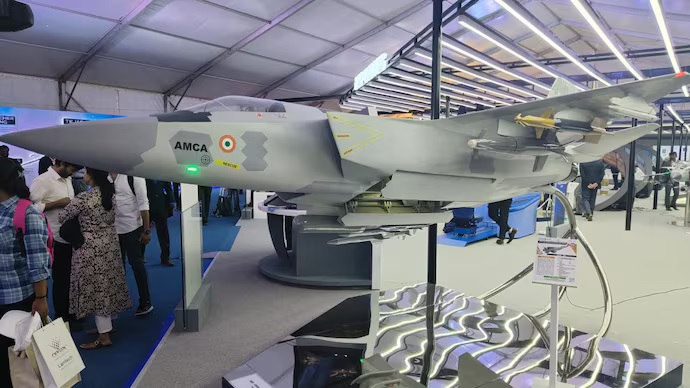
India
The Defence Research and Development Organisation (DRDO), through its Centre for Military Airworthiness and Certification (CEMILAC), has granted PTC Industries a Letter of Technical Acceptance (LoTA) for the development and production of the Titanium Rear Fin Root Casting for India’s Advanced Medium Combat Aircraft (AMCA) program. The Letter of Technical Acceptance is a critical milestone in defence manufacturing. It signifies that the proposed design, materials, and production processes meet the stringent technical and airworthiness standards set by the DRDO and the Indian Air Force (IAF). Essentially, it is a green signal allowing the company to transition from prototype development to full-scale production under strict quality and performance guidelines. The Titanium Rear Fin Root Casting is a vital structural component of the AMCA, contributing to its aerodynamic stability and structural integrity. Titanium is favored in modern combat aircraft due to its high strength-to-weight ratio, excellent corrosion resistance, and ability to withstand extreme temperatures, all of which are essential for a stealth fighter like the AMCA. With this approval, PTC Industries can now manufacture components that will undergo rigorous testing and integration into the AMCA airframe. This step also reflects the progress of India’s indigenous fifth-generation fighter program, which aims to reduce dependence on foreign suppliers and strengthen the nation’s defence manufacturing ecosystem. Currently, the AMCA program has achieved significant development milestones, including advanced design finalization, wind tunnel testing, and avionics integration. The approval of critical airframe components like the Titanium Rear Fin Root Casting indicates that the program is steadily moving toward prototype assembly and flight testing phases. The partnership between DRDO, CEMILAC, and private industry players like PTC Industries showcases India’s Make in India initiative in aerospace, encouraging indigenous production of advanced materials and components for future combat aircraft. This step marks a crucial technical and industrial achievement, bringing India closer to realizing a fully indigenous fifth-generation stealth fighter capable of competing with global counterparts.
Read More → Posted on 2025-10-18 17:50:31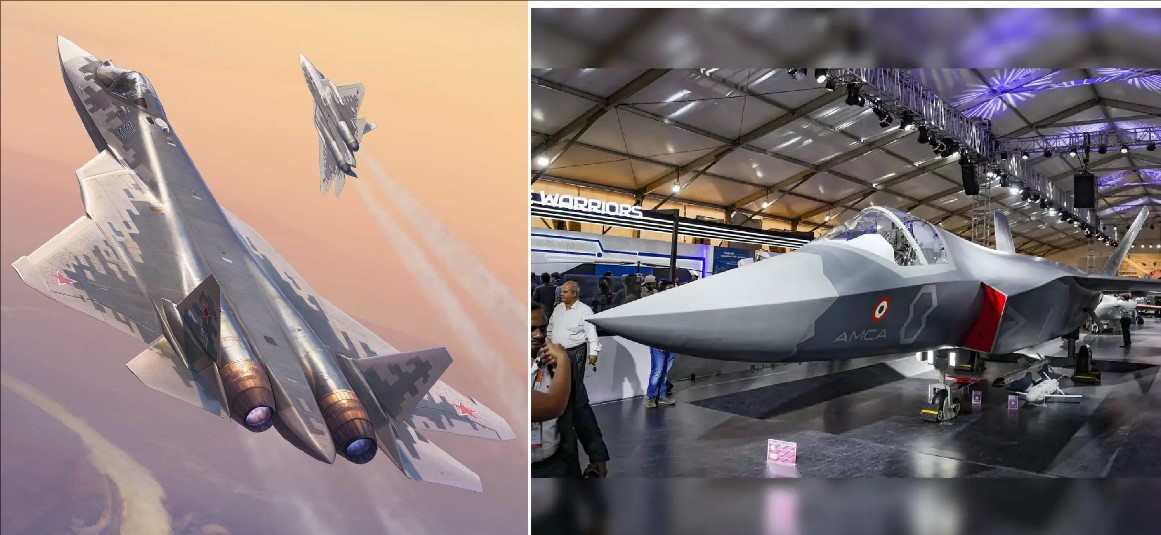
India
In a significant development for India’s defense ambitions, Russian Ambassador Denis Alipov has announced that Moscow is ready to support India’s Advanced Medium Combat Aircraft (AMCA) programme through the licensed local production of the Su-57 fighter jet. The proposal includes transferring critical technologies in areas such as stealth coatings, supercruise engines, and integrated avionics, with the potential for co-production by Indian companies like Hindustan Aeronautics Limited (HAL), Tata Advanced Systems, and Larsen & Toubro (L&T). This initiative is designed to directly aid India’s indigenous stealth fighter development and strengthen the country’s strategic air capabilities. The Su-57, Russia’s fifth-generation stealth fighter, comes equipped with advanced radar-absorbing materials and coatings, which drastically reduce its visibility to enemy radar. By sharing these technologies, Russia aims to help India enhance the AMCA’s low-observability features, a key requirement for operating in high-threat environments. In addition, the transfer of supercruise engine technology—engines capable of sustained supersonic flight without afterburners—would allow India to develop aircraft that are not only faster but also more fuel-efficient, enhancing the operational range and survivability of its future stealth fleet. Integrated avionics is another critical area where Russia’s assistance could prove invaluable. The Su-57’s avionics suite combines advanced sensors, communication systems, and electronic warfare capabilities into a single, highly coordinated system. By gaining access to such technology, Indian engineers could develop a more sophisticated and capable avionics infrastructure for the AMCA, improving situational awareness and combat effectiveness in complex operational scenarios. The collaboration is expected to involve major Indian defense manufacturers. HAL, which has extensive experience assembling the Su-30MKI, would play a central role in producing the Su-57 under license, while Tata Advanced Systems and L&T would contribute to manufacturing critical components. This arrangement aligns with India’s "Make in India" initiative, promoting self-reliance in defense production while simultaneously strengthening the domestic industrial base. Importantly, the Su-57 could serve as an interim solution to fill capability gaps until the AMCA becomes operational. With China rapidly expanding its fleet of advanced stealth aircraft, India faces increasing pressure to maintain air superiority in the region. The introduction of the Su-57 would provide the Indian Air Force with a modern, stealth-capable platform, helping to counter emerging threats while offering valuable experience in operating fifth-generation fighters ahead of the AMCA’s induction. Russia’s offer reflects the deepening strategic partnership between the two countries. By providing technology transfer and co-production opportunities, Moscow is not only supporting India’s indigenous development efforts but also helping it achieve greater autonomy in defense manufacturing. This move has significant implications for India’s long-term air combat capabilities, ensuring that the country remains well-positioned to face evolving regional challenges. As India advances its stealth fighter programme, the potential collaboration with Russia represents a critical step in bridging technological gaps and accelerating the development of its next-generation air combat assets. The combination of Su-57 technology and indigenous AMCA development promises to strengthen India’s defense posture and enhance its ability to respond effectively to regional threats.
Read More → Posted on 2025-10-18 17:45:48
World
Researchers at the University of Southampton have developed a 5D glass disc capable of storing an astonishing 360 terabytes (TB) of data — roughly 100,000 times the capacity of a standard DVD. This breakthrough technology is designed to endure for billions of years, even under extreme conditions such as intense heat and radiation, making it one of the most durable and high-capacity storage solutions ever created. The disc uses ultrafast femtosecond lasers to inscribe nanoscale structures into fused silica glass, encoding data across five dimensions. These include the three spatial coordinates (x, y, z) along with two optical properties — light polarization and intensity. This multi-dimensional encoding allows an extraordinarily dense packing of information, enabling the storage of entire libraries, government archives, and scientific datasets in a device no larger than a standard disc. Scientists have tested the 5D disc under extreme conditions to assess its durability. It remained fully functional at temperatures as high as 1,000°C and under intense radiation, confirming that the information remains intact without any degradation. The technology promises to create permanent digital archives, potentially outlasting civilizations, and providing a unique solution for preserving humanity’s most important cultural, historical, and scientific records. The potential applications of this innovation are vast. In archival preservation, governments and institutions could store critical documents and cultural artifacts safely for millennia. In science and astronomy, massive datasets from climate research, space missions, and genomic studies could be preserved without fear of data loss. Researchers envision a future where knowledge and civilization’s collective achievements can be stored securely for billions of years, immune to the limitations of conventional magnetic or solid-state storage devices. This 5D glass disc represents a major leap in both materials science and data storage technology. By combining ultrafast laser writing with the durability of fused silica glass, the University of Southampton has created a storage medium that is not only enormous in capacity but also virtually indestructible. It opens the door to a new era of permanent, high-density storage, ensuring that critical knowledge can survive for the far future.
Read More → Posted on 2025-10-18 17:34:25
World
In a historic milestone for naval defense, the French Navy confirmed that its Horizon-class air-defense frigate Forbin successfully intercepted a guided bomb launched from a Rafale Marine fighter aircraft using an Aster 30 surface-to-air missile. The announcement, made on October 17, 2025, marks the first-ever real-world demonstration of a warship neutralizing an air-launched precision weapon before impact. The intercepted munition was a live AASM (Armement Air-Sol Modulaire) bomb, a highly accurate, modular air-to-ground weapon capable of striking targets at long ranges. The Forbin, equipped with the MBDA Aster 30 missile system and the SAMPSON multi-function radar, detected, tracked, and destroyed the incoming bomb. The Aster 30 missile system is a long-range, high-speed, radar-guided interceptor capable of engaging a wide variety of aerial threats, including aircraft, cruise missiles, tactical ballistic missiles, and precision-guided munitions. With its active radar seeker and vertical launch capability, Aster 30 can perform rapid, agile maneuvers to intercept targets at ranges up to 120 km and altitudes exceeding 20 km, making it a cornerstone of modern naval air defense. French defense officials highlighted the strategic significance of this event. Unlike previous demonstrations focused on drones or missiles, this test involved a live, air-launched guided bomb, simulating one of the most complex threats faced by modern navies. The successful interception proves that multi-layered naval defense systems, when integrated with advanced sensors and missiles like the Aster 30, can neutralize precision weapons well before they reach their target, enhancing the survivability of high-value ships in combat zones. The Forbin’s achievement represents both a technical breakthrough and a major morale boost for European naval defense. It demonstrates that European navies are capable of countering next-generation aerial threats, including guided bombs, loitering munitions, and potentially hypersonic glide vehicles, through sophisticated radar-guided missile systems and real-time threat processing. Experts also emphasize the integration of air and naval capabilities, where fighter aircraft like the Rafale Marine simulate real combat threats while warships defend themselves autonomously. The exercise validates decades of development in the Horizon-class frigates’ combat systems, including advanced radar tracking, automated threat prioritization, and rapid missile launch capabilities, ensuring that European fleets remain at the cutting edge of maritime defense technology. The interception of an air-launched guided bomb by the Forbin, using the Aster 30 missile system, sets a new global benchmark and is expected to influence naval defense strategies worldwide, as countries increasingly invest in multi-layered air defense shields to counter evolving precision-strike threats.
Read More → Posted on 2025-10-18 17:18:52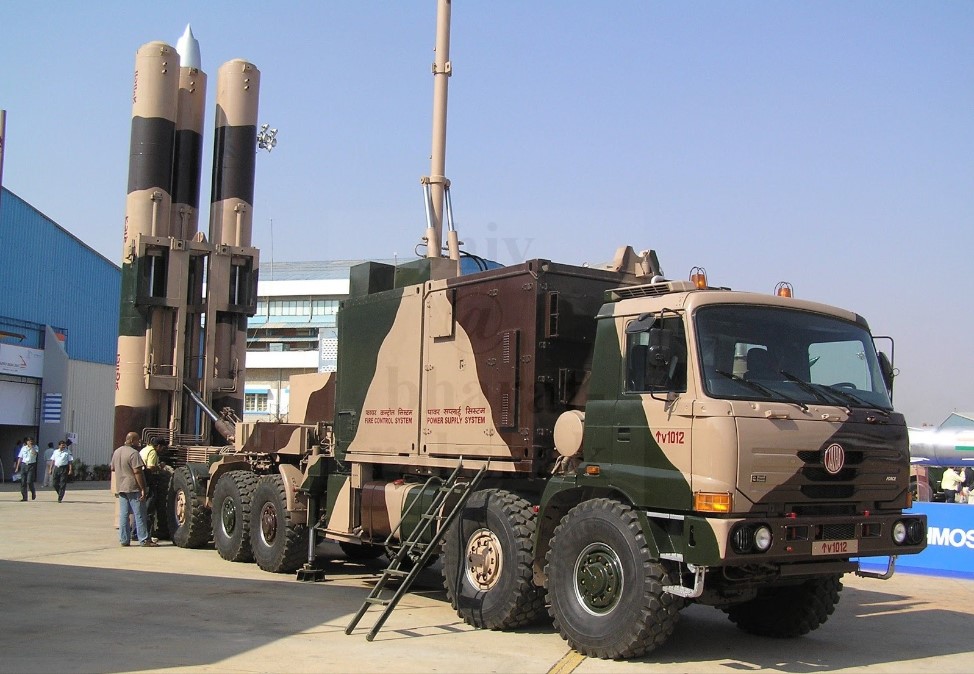
India
India has achieved another milestone in its growing defence export journey, with BrahMos Aerospace reportedly signing contracts worth around ₹4,000 crore (US $455 million) for the export of its BrahMos supersonic cruise missiles to two foreign countries. The announcement was made by Defence Minister Rajnath Singh during the flag-off ceremony of the first batch of BrahMos missiles from the company’s new manufacturing facility in Lucknow. While the names of the two countries have not been officially disclosed due to confidentiality clauses, the deals mark a significant expansion of India’s global defence footprint. The BrahMos system, jointly developed by India and Russia, has already established its reputation as one of the world’s fastest cruise missiles, capable of striking targets at speeds exceeding Mach 2.8 with pinpoint precision. Expanding India’s Defence Exports The ₹4,000 crore contracts come amid India’s rising status as a reliable arms exporter under its “Make in India, Make for the World” initiative. According to Rajnath Singh, these new deals underscore the country’s capability to deliver advanced, combat-proven weapon systems to friendly nations. India’s first export success for BrahMos came in 2022, when the Philippines signed a US $375 million (₹2,789 crore) contract for three batteries of the shore-based anti-ship version of the missile. The deal with Manila not only elevated India’s credibility in the international arms market but also opened doors for similar negotiations with other Southeast Asian nations. Who Could the Two New Buyers Be? Although official confirmation is awaited, Vietnam and Indonesia are widely seen as the most likely buyers of these new BrahMos missile systems. Both countries have shown consistent interest in acquiring BrahMos missiles for coastal defence amid growing tensions in the South China Sea. Vietnam has long been in discussions with India for the missile, with reports in late 2024 suggesting a deal worth around US $700 million was close to finalisation. Indonesia, too, was reported to be in advanced talks for a possible US $450 million acquisition of the shore-based variant for its naval forces. The combined estimated value of these potential deals aligns closely with the ₹4,000 crore figure recently revealed by the Indian government. Possible Number of Missiles If we take the earlier Philippine contract as a reference—three batteries for US $375 million—each battery costs roughly US $125 million (₹930 crore). Based on this rate, the latest ₹4,000 crore contracts could involve around four batteries of BrahMos systems in total, which translates to 20–40 missiles, depending on configuration and support systems included. Each battery typically includes multiple mobile launchers, command and control vehicles, radar units, and a stock of ready-to-fire missiles. The export variant is limited to a range of 290 km in accordance with Missile Technology Control Regime (MTCR) regulations. Strategic and Industrial Significance The contracts represent a huge boost to India’s defence manufacturing ecosystem and reinforce the capabilities of the Lucknow BrahMos unit, which has been designed to produce up to 100 missile systems annually. The deals will also help strengthen India’s strategic partnerships in the Indo-Pacific, especially with nations looking to counter regional maritime threats. For the purchasing countries, BrahMos offers a proven deterrent and rapid-response weapon system with high survivability and precision. For India, it showcases the country’s transformation from being an arms importer to a global exporter of advanced missile systems. Though the identities of the two buyer nations have not yet been officially disclosed, all indicators point to Southeast Asia as the destination for these new BrahMos systems. With a total export value of ₹4,000 crore and an expanding customer base, the BrahMos missile continues to reinforce India’s image as a major player in the international defence market. These latest deals not only boost India’s export figures but also reflect growing confidence among foreign militaries in the reliability and performance o
Read More → Posted on 2025-10-18 16:00:23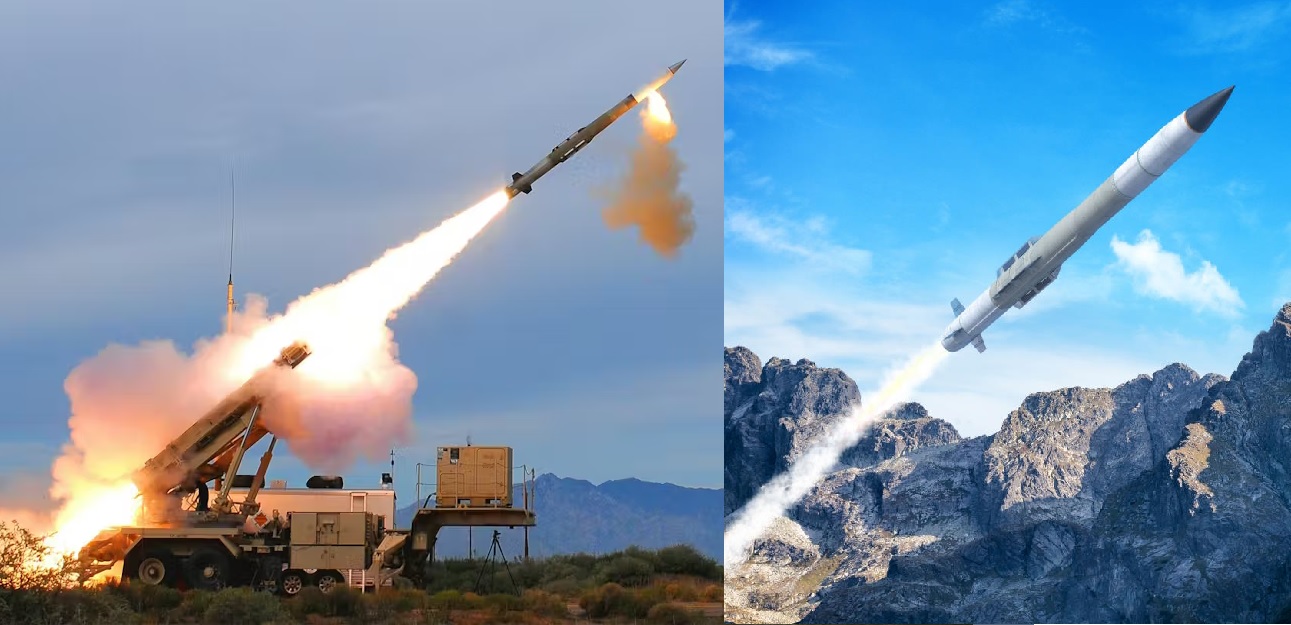
World
Lockheed Martin has announced the integration of artificial intelligence (AI) and machine learning (ML) technologies into its renowned PAC-3 Missile Segment Enhancement (MSE) interceptor system. The company stated that the upgrades will dramatically enhance the interceptor’s decision speed, precision, and adaptability against evolving air and missile threats, marking a significant leap in the modernization of missile defense capabilities. The PAC-3 MSE, known for its Hit-to-Kill technology, already features embedded AI software that has been part of the program’s framework since its inception. The latest advancements now expand the use of AI/ML across the entire kill chain, from detection and tracking to engagement and kill assessment. According to Lockheed Martin, these technologies “increase decision speed and improve decision quality to deliver a strategic advantage.” How the AI/ML Upgrade Works The integration of AI and ML allows the PAC-3 MSE system to process massive amounts of sensor data in real time. Using advanced algorithms, the system can detect, classify, and prioritize threats faster than before — even when dealing with multiple or maneuvering targets. At the detection stage, machine-learning models analyze radar and infrared data to differentiate genuine threats from decoys, drones, or clutter. Once identified, the AI-driven battle management system evaluates which interceptors to deploy and calculates the most efficient intercept path. During flight, AI-enabled guidance algorithms continually adapt to the target’s movement, adjusting the missile’s trajectory for a precise hit-to-kill outcome. These functions rely on upgraded processors and onboard computing modules capable of performing neural network inferences at high speed. Additionally, improved sensor fusion enables the system to combine radar and optical data for a more accurate, multi-dimensional understanding of the battlespace. Technical Enhancements To support these AI features, Lockheed Martin has implemented several key technical changes: Next-Generation Processors: Faster multicore processors and FPGA-based accelerators have been added to handle complex AI workloads with minimal latency. Seeker Algorithm Upgrades: The interceptor’s seeker software now employs ML-driven classifiers to improve target discrimination during terminal engagement. Enhanced Data Links: Secure, low-latency communication channels enable real-time data exchange between sensors, command centers, and interceptors. AI Verification Framework: Lockheed has introduced a model validation pipeline to ensure that AI algorithms perform safely and reliably under all combat conditions. These improvements ensure that the system not only reacts faster but also learns from each engagement, allowing continual refinement of its decision-making process over time. How It Improves the Kill Chain By embedding AI/ML into the fire control, command, and seeker systems, the PAC-3 MSE can perform nearly instantaneous threat assessments and engagement decisions. For instance, when a ballistic or cruise missile is detected: AI algorithms process sensor data to classify the type and trajectory of the target. The fire control system autonomously selects the best interceptor and computes intercept points. Mid-course updates use ML to refine targeting as the missile maneuvers. The onboard AI adjusts flight control for a precise kinetic intercept. This streamlined process reduces reaction time from seconds to milliseconds — a decisive advantage when confronting hypersonic or maneuverable reentry vehicles. Global Comparison While AI-driven battle management is gaining traction worldwide, Lockheed Martin’s approach is among the most integrated in an operational system. Israel’s Iron Dome and David’s Sling already utilize automated engagement management and radar data fusion. However, their AI integration focuses mainly on fire control rather than missile-level autonomy. Russia’s S-500 system is believed to include AI-assisted radar tracking, but detailed implementation remains classified. The U.S. THAAD system uses algorithmic threat prioritization but is now being updated with AI features inspired by PAC-3’s success. Thus, Lockheed Martin’s PAC-3 MSE stands out as one of the first fielded interceptors where AI operates across the full engagement cycle — from detection to destruction. Future Outlook As missile threats become more complex and numerous, especially with the rise of hypersonic and swarm attacks, AI integration will be crucial to maintaining an effective defense. Lockheed Martin’s AI-enabled PAC-3 MSE reflects a shift toward autonomous, adaptive defense systems capable of handling large-scale, high-speed engagements with minimal human input. The company continues to refine these capabilities under ongoing U.S. Army and allied modernization programs. With real-time learning and autonomous decision support, the PAC-3 MSE is evolving from a precision interceptor into a smart defensive weapon system — one capable of anticipating and countering tomorrow’s threats before they strike.
Read More → Posted on 2025-10-18 15:47:44
World
The United States spends hundreds of billions of dollars every year to defend countries that pose no direct threat to its borders. From maintaining troops and bases across Asia and Europe to deploying carrier strike groups in distant seas, Washington shoulders an immense financial burden to uphold what it calls the global security order. Nations such as Japan, South Korea, Taiwan, and Israel depend heavily on U.S. protection — a policy that blends deterrence, influence, and strategic dominance. But few Americans realize just how much this protection actually costs. A vast network of overseas bases The U.S. military maintains around 750 overseas bases in more than 80 countries, supporting about 200,000 active-duty troops stationed outside the continental United States. These facilities — from Okinawa and Yokosuka in Japan to Osan and Camp Humphreys in South Korea, Ramstein Air Base in Germany, and Diego Garcia in the Indian Ocean — serve as the backbone of U.S. global power projection. Operating and maintaining these installations costs U.S. taxpayers approximately $55–70 billion annually, according to estimates by the Department of Defense and the Costs of War Project at Brown University. While host nations like Japan and South Korea contribute to housing and infrastructure expenses, the majority of the logistical, training, and personnel costs still fall on Washington. For example: Japan: The U.S. spends about $5.5 billion per year on operations, personnel, and logistics, even though Tokyo contributes about $2 billion through its “host-nation support” program. South Korea: About $3.5–4 billion per year in U.S. military expenses, partially offset by Seoul’s contribution under the Special Measures Agreement. Germany: Roughly $4–5 billion annually to sustain troops and infrastructure, including bases like Ramstein and Grafenwoehr. These bases are not only costly but strategically positioned — allowing the U.S. to respond to crises in Asia, the Middle East, and Europe without delay. The floating fortresses: U.S. Navy fleets abroad Beyond land bases, a major part of the U.S. defense commitment comes from naval deployments. The U.S. Navy operates 11 aircraft carriers, most of which spend large portions of the year deployed in regions far from American waters. The Seventh Fleet, headquartered in Yokosuka, Japan, alone patrols an area stretching from the Western Pacific to the Indian Ocean. It includes about 70–80 ships and submarines, with 140 aircraft and 40,000 Navy and Marine personnel. Maintaining this fleet costs $6–7 billion per year, factoring in ship operations, fuel, maintenance, and rotational crew deployments. Similarly, the Fifth Fleet, based in Bahrain, ensures security in the Persian Gulf and Arabian Sea, while the Sixth Fleet, operating from Italy, covers Europe and the Mediterranean. Combined, these forward naval operations cost an estimated $20–25 billion annually, as they require continuous presence, refueling, and support missions. These deployments are intended to deter adversaries like China, Russia, Iran, and North Korea, reassure allies, and protect international trade routes. Yet they also represent one of the most expensive and enduring components of U.S. foreign defense commitments. Beyond deployments: security aid and arms financing The United States also channels large sums into direct military aid and arms financing. Through the Foreign Military Financing (FMF) program, Washington provides billions to help allies purchase U.S. defense equipment and maintain their arsenals. In fiscal year 2025, the U.S. allocated $6.1 billion for global FMF assistance. Major beneficiaries include: Israel: $3.8 billion annually under a long-term defense agreement. Egypt: $1.3 billion per year, primarily for modernization of its military. Taiwan: $500 million+ in new packages to bolster coastal and air defenses. Ukraine: Over $67 billion in direct military assistance since 2022, including missiles, drones, and armored vehicles. When adding humanitarian and logistical support, the total U.S. expenditure on Ukraine-related security surpasses $100 billion since the Russian invasion began. The real cost of being the world’s security provider When combining overseas base operations, naval deployments, and foreign military aid, the total U.S. spending on global defense easily exceeds $150–180 billion annually. That figure includes: $55–70 billion for overseas bases and troop maintenance $20–25 billion for deployed Navy fleets and carrier strike groups $6–10 billion in regular foreign military aid Up to $100 billion in crisis-related expenditures (such as Ukraine) These commitments account for roughly 20–25% of the Pentagon’s annual budget, excluding domestic operations and homeland defense. Strategic logic: deterrence and influence For Washington, this spending is justified as an investment in global deterrence and strategic influence. The idea is to prevent wars from reaching American soil by maintaining power projection overseas — a doctrine that dates back to the early Cold War. Forward-deployed bases enable the U.S. to respond within hours to potential conflicts, while naval fleets guarantee freedom of navigation and the security of vital trade routes. At the same time, military aid programs ensure that allied nations remain interoperable with U.S. systems, reinforcing long-term defense ties and arms sales. In Asia, this strategy is central to countering China’s growing military power. In Europe, it reassures NATO allies amid fears of Russian aggression. And in the Middle East, it maintains balance against Iran’s influence and secures energy transit routes. The criticism: America’s global security bill for others However, critics argue that the U.S. is effectively subsidizing the defense of wealthy nations, many of which could afford to increase their own military spending. Japan, Germany, and South Korea have large economies but rely heavily on U.S. forces for deterrence. Former U.S. defense officials have questioned whether maintaining 100,000 troops in East Asia and Europe is sustainable when the U.S. faces growing fiscal pressures at home. Others argue that these overseas deployments make America a global policeman, drawing it into conflicts that have little to do with its own security. Economists from the Stimson Center and Brown University estimate that if the U.S. reduced its global military presence by just 25%, it could save $30–40 billion per year without severely affecting its deterrence posture. Balancing cost, power, and commitment The United States remains unmatched in global reach. No other nation possesses the ability to deploy carriers, troops, and aircraft across every ocean simultaneously. This dominance, however, comes at a steep price — one that American taxpayers continue to bear for the sake of stability far beyond their own borders. For Washington, the choice is not merely financial. It’s about preserving a world order built on alliances, open seas, and deterrence. But as global tensions rise and domestic priorities compete for funding, the question grows louder: How long can the U.S. afford to be the world’s security provider for nations that are not its own?
Read More → Posted on 2025-10-18 15:44:27Search
Top Trending in 24 Hours
-
 USS Abraham Lincoln Faces Extended Deployment and Supply Challenges Linked to Iranian Attacks on Bahrain Base
-
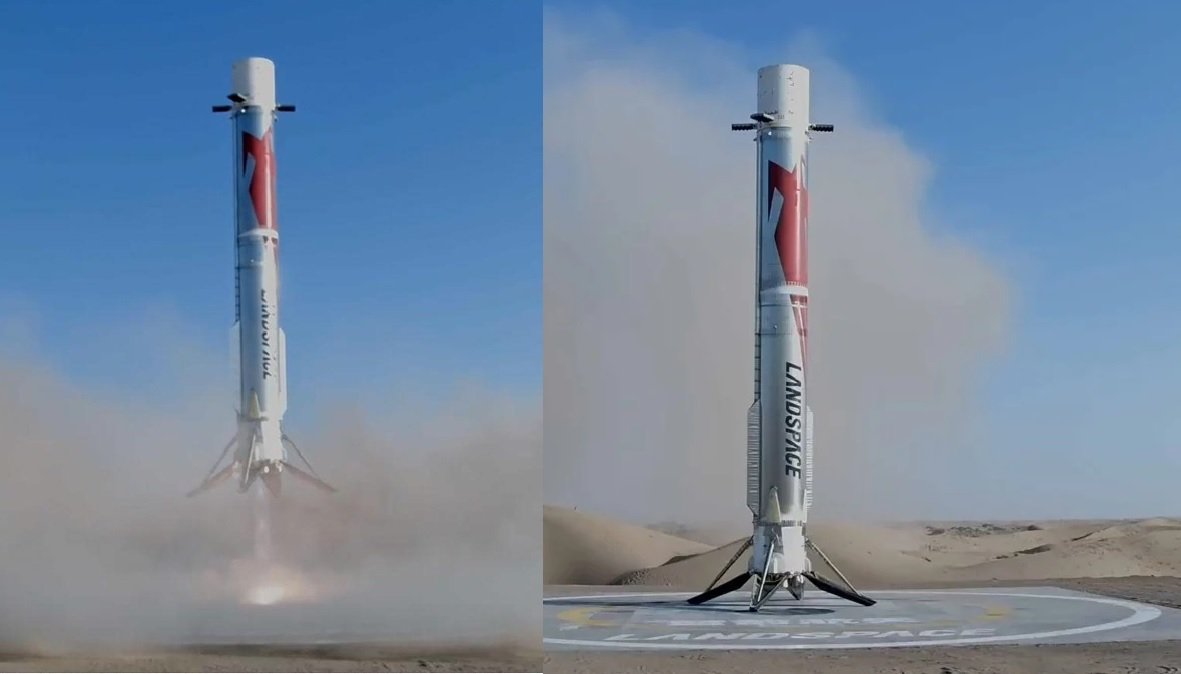 China Successfully Launches Zhuque-3 Rocket and Recovers Booster on Land After Orbital Launch
-
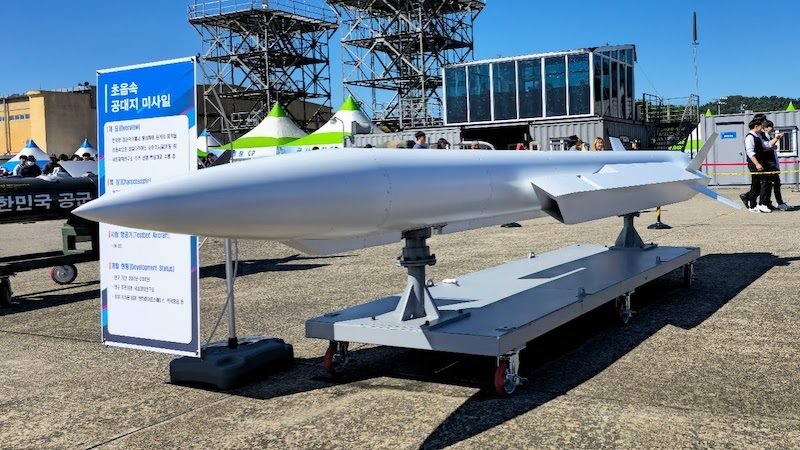 South Korea Approves Development of Next-Generation SSM-II Anti-Ship Missile and K2 Tank Upgrade
-
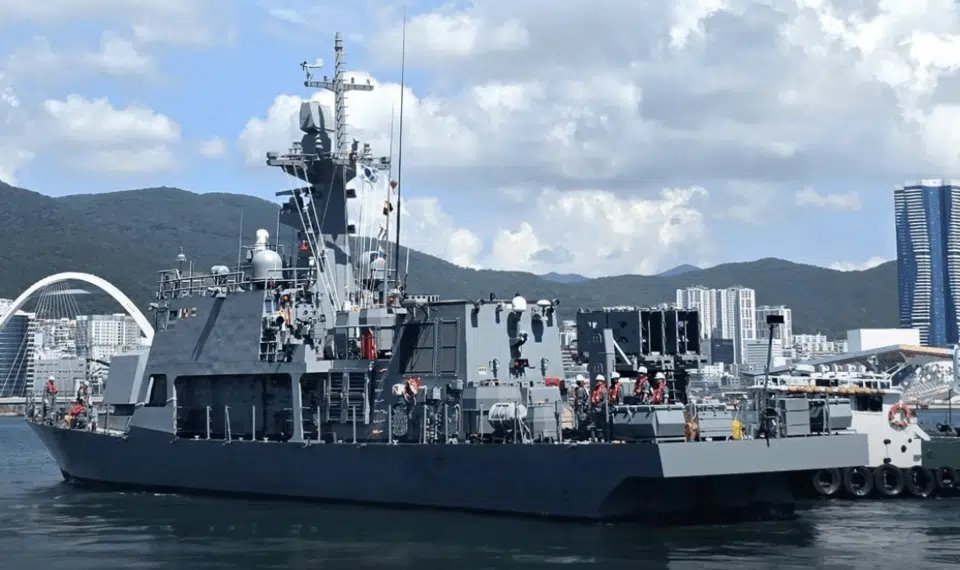 South Korea Delivers First PKX-B Batch-II Fast Patrol Craft to Navy
-
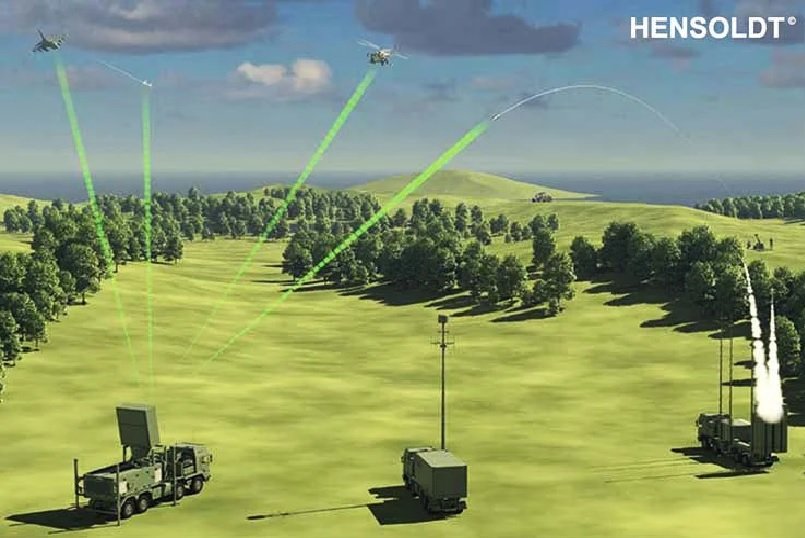 Rheinmetall Integrates HENSOLDT Twinvis Passive Radar into Skymaster Air Defence System
-
 U.S. Navy Invests $50 Million in Shield AI’s X-BAT for Runway-Independent Maritime Strike
-
 Raytheon’s SPY-6(V)3 Radar Completes Acceptance Trials on U.S. Navy’s Future Aircraft Carrier USS John F. Kennedy
-
 U.S. Army Awards ThinKom Up to $49 Million for Alecto Mobile High-Power Microwave Counter-Drone System Prototype
Top Trending in 4 Days
-
 Ukraine Uses British-Made Nyan Drones in Deep Strikes Against Russian Targets
-
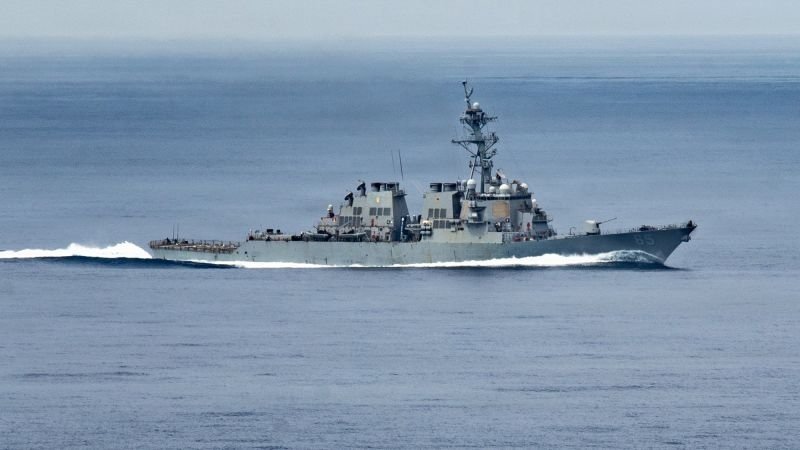 U.S. Navy Destroyer USS Benfold Spent Four Days Without Power in South China Sea After Generator Failure
-
 U.S. Navy Reviews Ford-Class Carrier Redesign as $275 Billion Trump-Class Battleship Program Advances
-
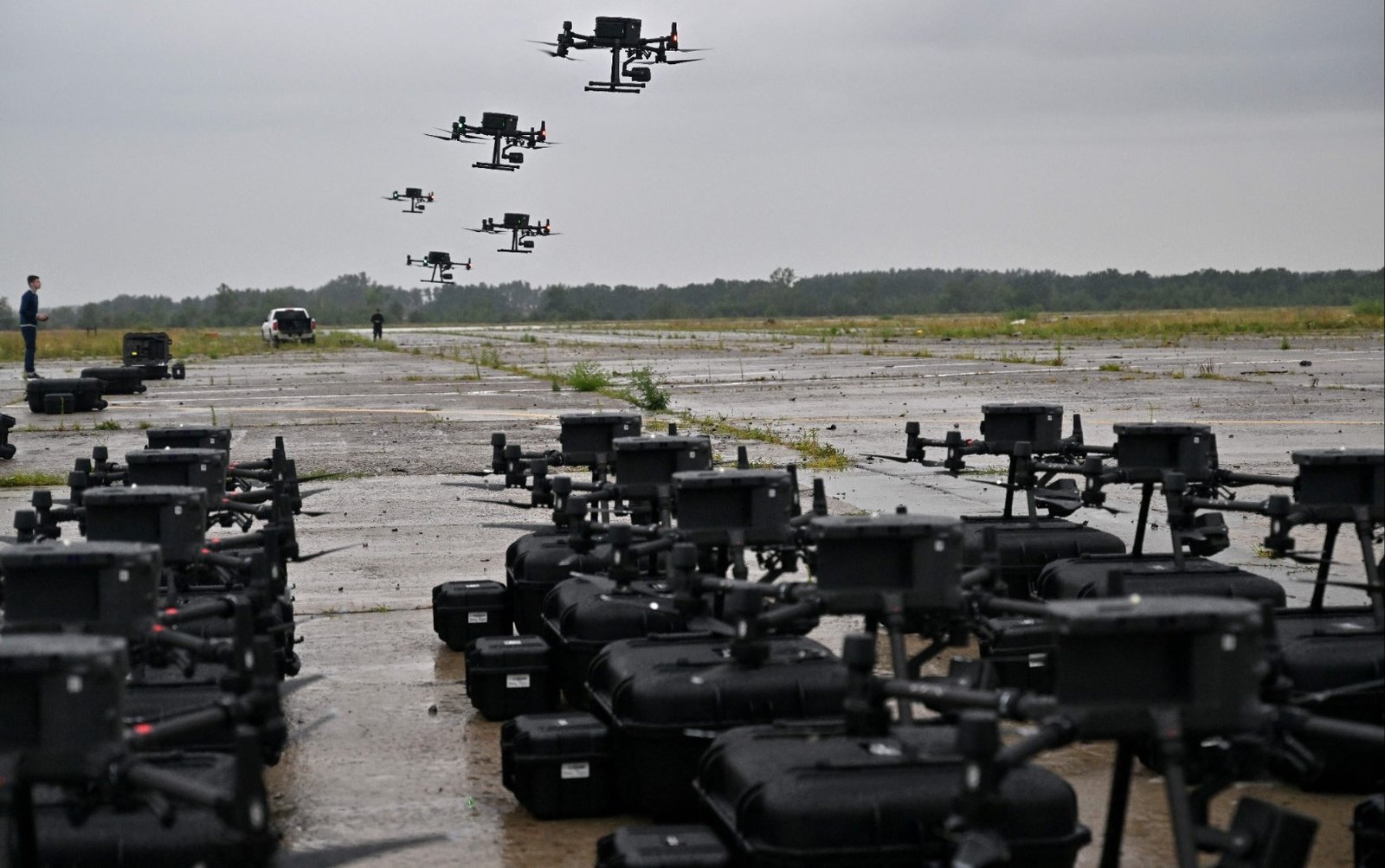 U.S. Air Force to Buy Chinese DJI Drones for Counter-Drone Training at Nuclear Missile Base
-
 Iran May Be Using Data From Fitness Apps to Track U.S. Military Personnel in the Middle East
-
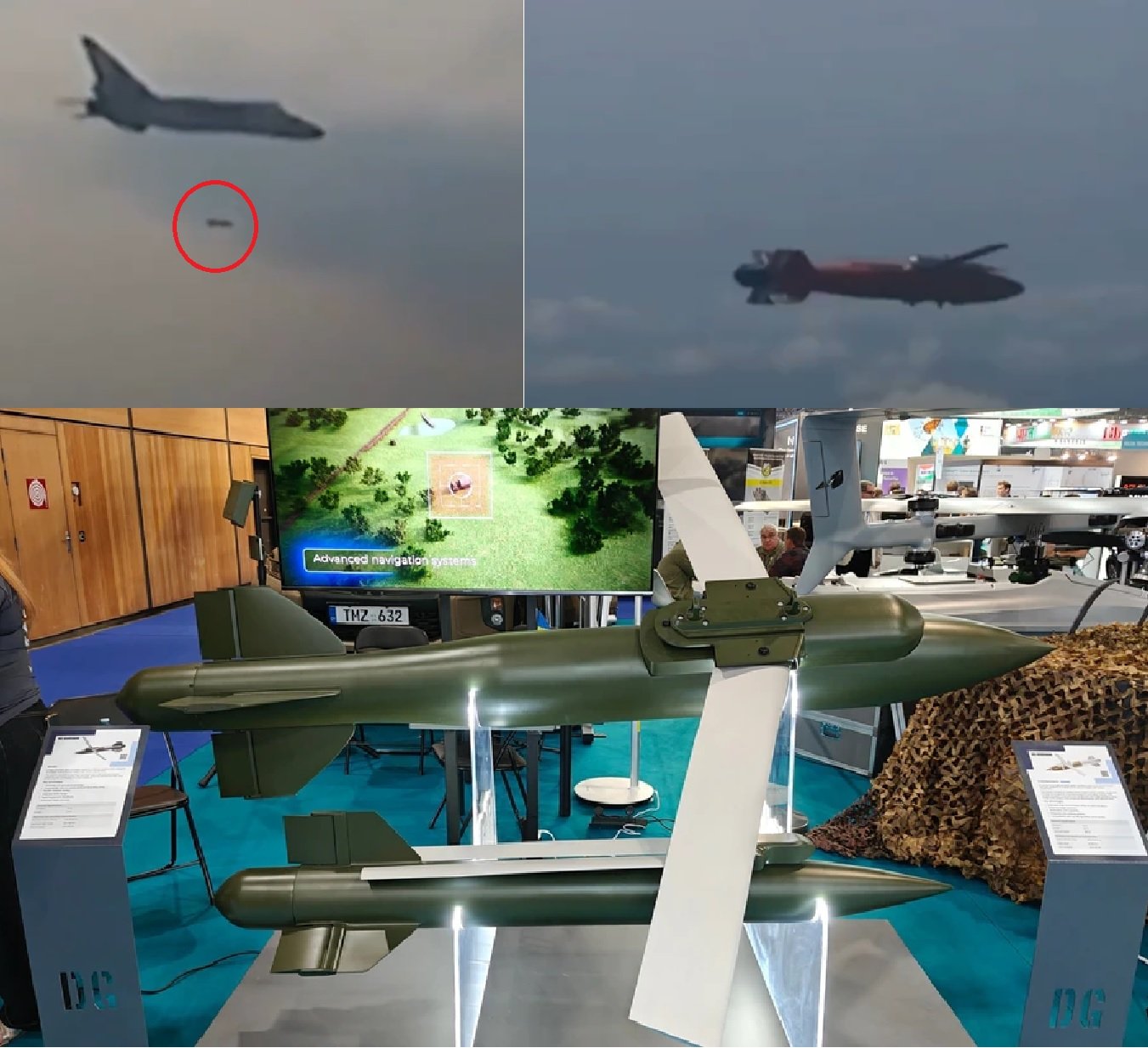 Ukraine Begins Procurement of Vyrivniuvach Guided Aerial Bomb
-
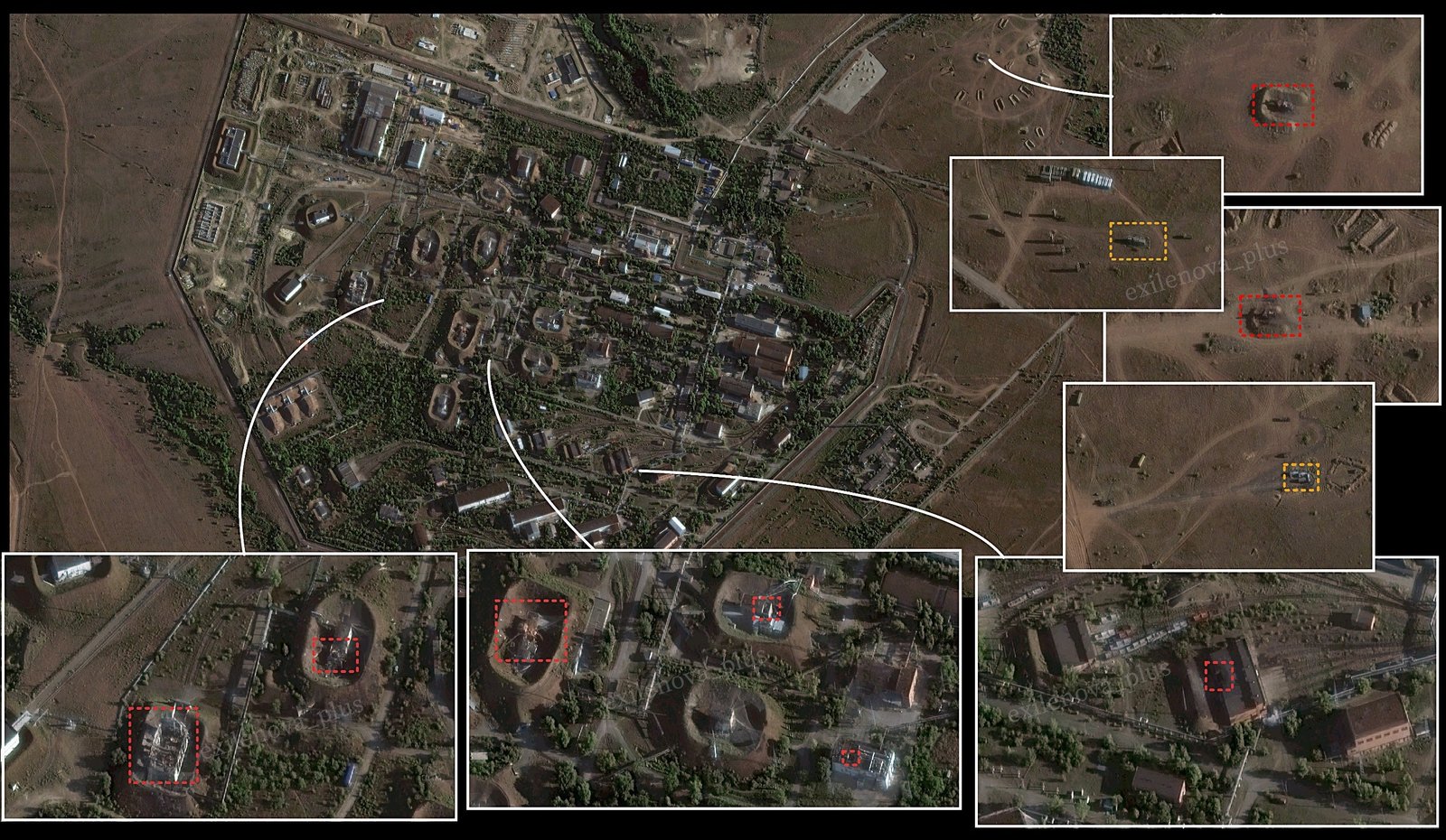 Satellite Images Show Ukrainian Drone Strike Hits Russian Rocket Fuel Plant and Air Defense Systems in Rostov Region
-
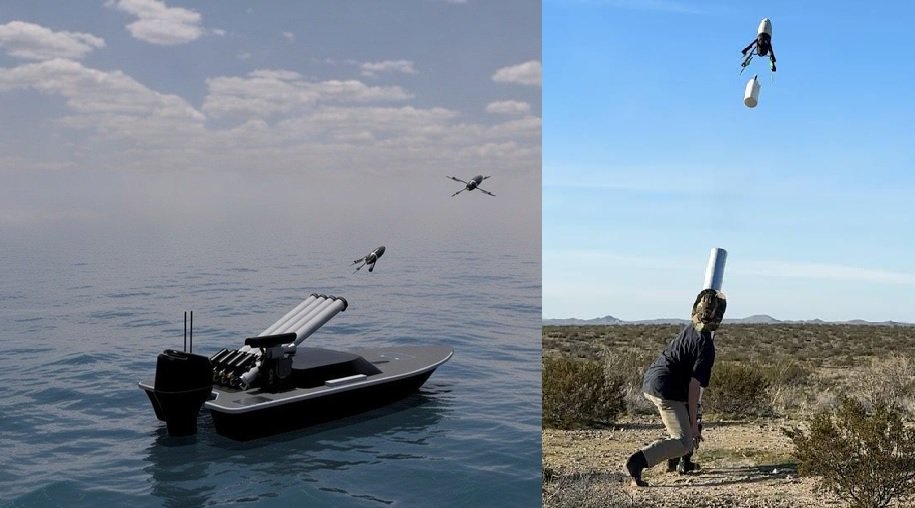 Thermopylae Aerospace Unveils SPART Tube-Launched Drone Interceptor for Group 2-3 and Turbojet UAS Threats
