Zelensky Urges Europe to Form 3-Million-Strong Army as Focus Shifts From Ukraine to Greenland
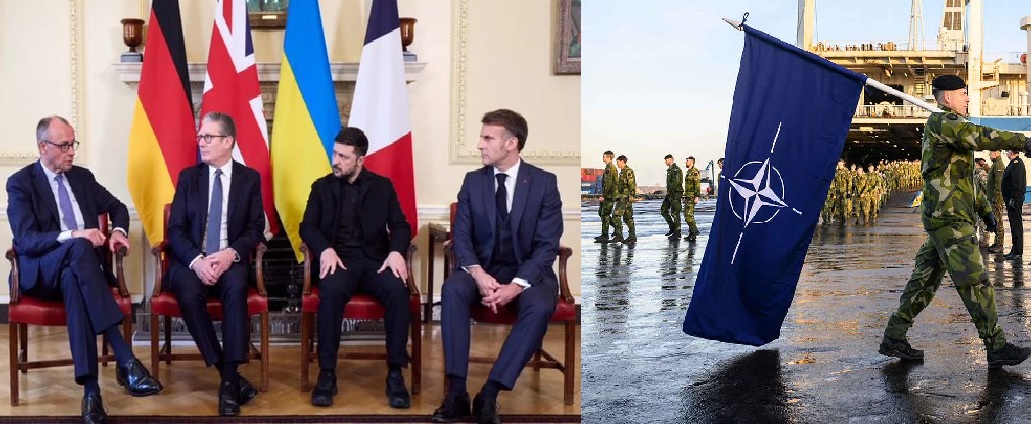
DAVOS / KYIV : Ukrainian President Volodymyr Zelensky has renewed a sweeping call for Europe to build its own independent military force—warning that the continent faces a strategic reckoning as attention drifts away from Ukraine and toward an emerging Arctic crisis.
Speaking as the annual World Economic Forum opened in Davos, Zelensky proposed the creation of a unified European armed force numbering up to three million soldiers, capable of deterring Russia without relying exclusively on the United States. His remarks laid bare Kyiv’s growing fear that political priorities in Western capitals are shifting at a moment when Ukraine remains locked in a grinding war.
A Proposal Stalled for a Year
Zelensky revealed that the idea of a Europe-wide army was first raised nearly a year ago, but he said it has gone nowhere since.
“A year has passed. Let me be honest, not a single step has been taken toward this idea,” he told delegates. “Perhaps now, given all these challenges, European leaders will give it some thought.”
According to Ukrainian officials, the proposal envisions a standing, professional force drawn from EU states and partners, operating alongside—rather than within—the North Atlantic Treaty Organization command structure. Zelensky stressed that the concept is not meant to undermine NATO or compete with Washington, but to ensure Europe has “its own separate, strong army” able to act decisively if U.S. political support falters.
Behind the rhetoric lies a blunt calculation: Europe’s combined population and economic output far exceed Russia’s, yet its military power remains fragmented, slow to mobilize, and heavily dependent on U.S. leadership.
Ukraine Slips Down the Davos Agenda
The renewed appeal comes as Ukrainian officials privately acknowledge a chill in Davos. Diplomats attending the forum say that Ukraine—long the central geopolitical topic—has been pushed aside, replaced by intense debate over Greenland and Arctic security.
Multiple European officials, speaking on background, described a rapid reordering of priorities as concerns mounted over U.S. policy toward the strategically vital Arctic island. Discussions that once focused on ammunition production, air defenses, and long-term support for Kyiv have reportedly been replaced by talks on trade leverage, tariffs, and deterrence in the High North.
For Kyiv, the shift has been jarring. One Ukrainian delegate described the mood as “polite concern, but no urgency,” a stark contrast to the emergency tone that dominated previous forums.
Denmark and the F-16 Question
Adding to Ukraine’s anxiety are unconfirmed but persistent reports from Copenhagen that Denmark is reassessing the deployment of F-16 fighter jets it had pledged to Ukraine. According to defense sources cited by European media, Danish authorities are examining whether some aircraft could be redeployed to strengthen defenses around Greenland amid rising Arctic tensions.
If carried out, such a move would mark a significant—and symbolic—shift. It would be the first time a NATO member redirected key military assets away from Ukraine to address a perceived threat elsewhere, even one involving the United States rather than Russia.
Danish officials have not publicly confirmed a withdrawal, emphasizing instead that any decisions would balance national defense obligations with continued support for Ukraine. Still, the mere prospect has unsettled Kyiv, which views Western-supplied aircraft as critical to countering Russia’s air and missile campaign.
The Arctic Factor and Washington
The Greenland focus has been fueled by renewed rhetoric from U.S. President Donald Trump, whose past interest in acquiring Greenland has resurfaced amid broader debates over Arctic resources, shipping lanes, and military basing. European diplomats say the combination of trade pressure and security signaling from Washington has forced EU capitals to consider contingencies once thought unthinkable.
For Ukraine, the implication is stark: Europe may soon be preparing for multiple strategic challenges at once, with finite resources and political attention stretched thin.
A Warning from Kyiv
Zelensky’s message in Davos was ultimately a warning as much as a proposal. Without a stronger, more autonomous European military posture, he argued, the continent risks being caught unprepared—not only for continued Russian aggression, but for a world in which U.S. priorities are less predictable.
“The war did not disappear,” a senior Ukrainian official said after the speech. “It is still here, every day. But the fear is that Europe is already thinking about the next crisis before this one is finished.”
As Davos continues, the contrast between Ukraine’s urgency and Europe’s divided focus underscores a sobering reality: for the first time since Russia’s invasion, Kyiv is no longer certain it remains at the center of the West’s strategic imagination.
About the Author
Aditya Kumar:
Defense & Geopolitics Analyst
Aditya Kumar tracks military developments in South Asia, specializing in Indian missile technology and naval strategy.