Yantra India Limited, HAL and BDL Join Forces to Build India’s Largest 10,000-Ton Extrusion Press for Defence and Aerospace Manufacturing
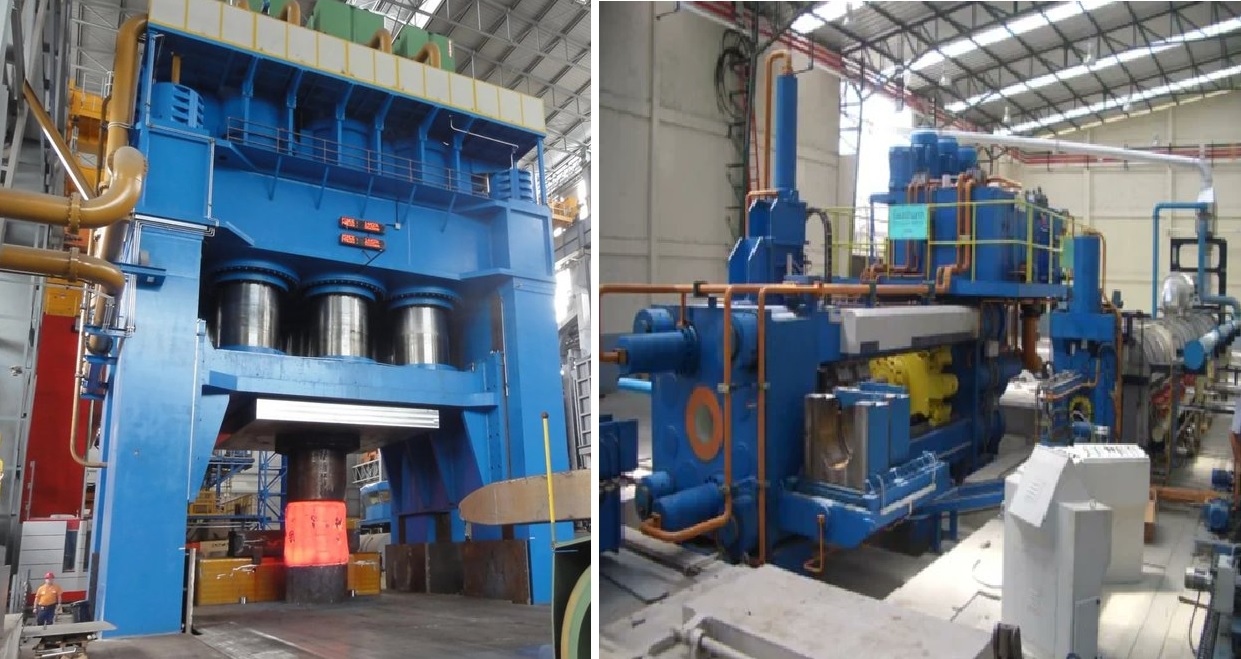
In a landmark step toward strengthening India’s indigenous defence manufacturing ecosystem, Yantra India Limited (YIL) has signed two major strategic agreements with Hindustan Aeronautics Limited (HAL) and Bharat Dynamics Limited (BDL) for the installation of a 10,000-ton extrusion press at YIL. The facility will be capable of producing large-scale, high-strength aluminium alloy components, critical for both aerospace and defence applications.
A third Memorandum of Understanding (MoU) was also signed with Mishra Dhatu Nigam Limited (MIDHANI) to establish a Metal Bank, ensuring uninterrupted availability of strategic raw materials required for national defence projects. Together, these deals mark a significant leap in India’s long-term goal of achieving self-reliance in strategic materials and high-precision engineering.
HAL, BDL Commit to Strategic Backing
Under the agreement, HAL has extended an interest-free advance of ₹435 crore to YIL, ensuring the timely establishment and operational readiness of the 10,000-ton press. BDL, in turn, will provide a sustained workload of 3,000 metric tonnes spread over the next ten years, guaranteeing consistent utilization and financial sustainability of the facility.
The arrangement effectively creates a public-sector production ecosystem, linking YIL’s manufacturing capability with HAL’s aircraft and helicopter programs and BDL’s missile and launcher systems. This alignment ensures not just demand stability but also full integration across India’s defence supply chain — from raw material to finished product.
The Power of a 10,000-Ton Press
The 10,000-ton extrusion press is designed to shape large billets of high-strength aluminium alloys into critical aerospace and missile components. Such presses are capable of producing airframe beams, fuselage frames, wing spars, rocket motor casings, and launcher rails — parts that require both precision and structural integrity.
Currently, India imports many of these large structural components from foreign suppliers in the United States, Russia, and Europe. The new YIL facility will drastically reduce this dependency.
When commissioned, it will be one of the most powerful metal-forming machines in India, rivalling heavy-press capabilities seen only in advanced industrial nations.
Why Aluminium Alloys Matter
High-strength aluminium alloys are a cornerstone of modern aerospace design, balancing light weight with exceptional tensile and fatigue properties. These alloys form the structural backbone of fighter aircraft, helicopters, transport planes, and guided weapons.
By enabling domestic production of such components, India can sharply reduce its import bill and control critical technologies tied to military readiness. The press will also support space, missile, and naval programs, where precision-engineered alloy sections are indispensable.
The Metal Bank Initiative: Securing the Supply Chain
The third MoU, signed between YIL and MIDHANI, focuses on the establishment of a “Metal Bank” — a dedicated reserve of high-grade raw materials like aluminium, titanium, and nickel alloys.
The goal is to eliminate disruptions in the supply of critical metals that can stall key defence projects. The Metal Bank will not only store strategic reserves but will also manage material traceability and ensure compliance with aerospace standards. This initiative is expected to enhance India’s resilience in the face of global supply chain shocks, sanctions, or raw-material shortages.
Strategic and Industrial Impact
The creation of the 10,000-ton press facility and Metal Bank marks a new phase in India’s defence-industrial transformation:
-
Indigenisation of Critical Processes – Previously, India depended on foreign forging houses for large structural parts. The new setup gives India sovereign manufacturing capability.
-
Strengthened Public-Sector Collaboration – By pooling HAL’s financial muscle, BDL’s steady demand, and YIL’s manufacturing expertise, the deal embodies the collaborative model envisioned under Aatmanirbhar Bharat.
-
Reduced Import Dependence – Domestic forging capability means faster delivery cycles, lower costs, and fewer vulnerabilities to export controls or geopolitical restrictions.
-
Boost to Export Competitiveness – With indigenous production capacity, India can better position itself as a supplier of precision aerospace components to friendly nations, particularly under defence export initiatives.
How India Now Compares Globally
Globally, the ability to manufacture large aerospace forgings is limited to a handful of nations.
-
United States: Home to the 50,000-ton Alcoa press, capable of producing airframe components for bombers and space vehicles.
-
France (Aubert & Duval): Operates presses in the 14,000-ton class for Airbus and Rafale parts.
-
China: Built a 30,000-ton press in 2012, one of the world’s largest, to support its military aircraft and space programs.
-
Russia: Uses 10,000- to 15,000-ton presses for aircraft and missile casings at facilities in Voronezh and Samara.
India’s forthcoming 10,000-ton press at YIL will make it one of the few countries capable of manufacturing aerospace-grade large structural aluminium forgings — an industrial achievement that will elevate the nation’s manufacturing status globally.
A Step Toward Strategic Autonomy
The YIL-HAL-BDL collaboration, backed by the MIDHANI Metal Bank initiative, represents a textbook example of how India’s public defence enterprises can jointly create strategic capability while ensuring financial and material security.
It strengthens the foundation for indigenous aircraft manufacturing, supports missile and space vehicle production, and provides flexibility for future programs such as the Advanced Medium Combat Aircraft (AMCA), LCH Mk-2, and next-generation air-defence systems.
With the signing of these landmark agreements, India has taken a decisive leap toward complete self-reliance in critical aerospace materials and component manufacturing. The 10,000-ton press will not only serve as a technological milestone but also as a symbol of India’s growing industrial confidence.
By aligning manufacturing capability (YIL), end-user demand (HAL and BDL), and material security (MIDHANI), the initiative exemplifies a cohesive national strategy — one that ensures India can build, sustain, and defend its own advanced weapon systems without external dependence.
In global terms, the new YIL press may weigh a fraction of the largest in the world, but strategically, it represents something far heavier — India’s determination to forge its own defence future.
About the Author
Aditya Kumar:
Defense & Geopolitics Analyst
Aditya Kumar tracks military developments in South Asia, specializing in Indian missile technology and naval strategy.