Why USA Wants to Leave NATO: America First or NATO First? The Costly Choice Facing Washington
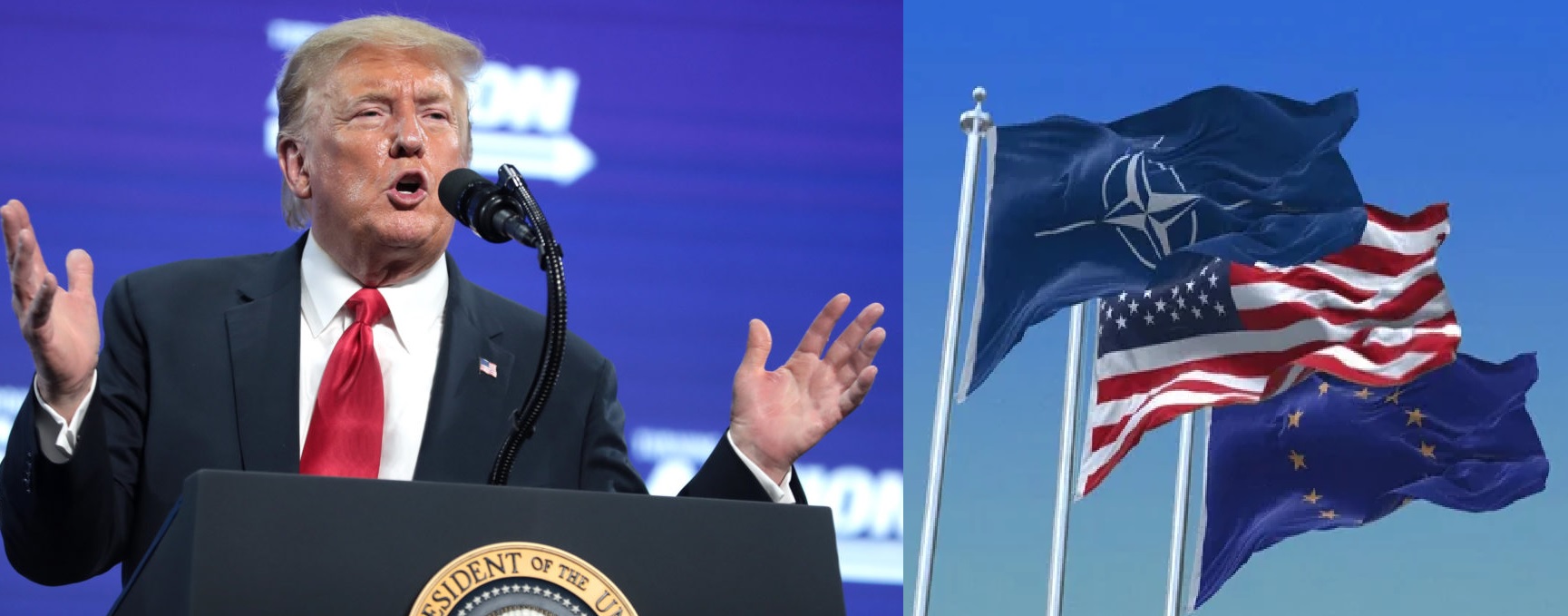
The future of the transatlantic alliance is again at the center of political debate in Washington, as arguments intensify over whether the United States should scale back or even withdraw from NATO. With U.S. defense spending nearing US$1 trillion and national debt continuing to rise, many in America now question whether the country can afford to remain the primary guarantor of Europe’s security.
The discussion is not new—but the economic pressures facing the United States, combined with Europe’s slow movement toward military self-reliance, have pushed the issue into sharper focus.
America’s Unequal Burden
In 2024, the United States spent US$997 billion on defense—an amount expected to exceed US$1 trillion in the near term. This enormous budget supports not only American military needs but also extensive commitments overseas, including the majority of NATO’s operational structure, missile defense, surveillance networks, and troop deployments across Europe.
By comparison, European NATO members collectively spent US$454 billion in 2024, less than half of the U.S. total. Even though spending has grown since Russia’s 2022 invasion of Ukraine, several European nations continue to fall short of the 2% of GDP defense target, instead directing more funds toward welfare programs, infrastructure, and domestic development.
This imbalance has strengthened the argument in the U.S. that American taxpayers are effectively subsidizing Europe’s security, while European governments focus their resources on improving living standards for their own citizens.
A Strained U.S. Economy Drives the Debate
The U.S. national debt has climbed above US$35 trillion, and economists warn that sustaining such high levels of military spending will pressure federal budgets for years to come. Critics of NATO’s current structure argue that America should redirect a larger share of its resources toward domestic needs:
-
modernizing transportation and energy infrastructure
-
improving healthcare and education
-
supporting manufacturing and technology industries
-
strengthening border and cyber defenses
For many Americans, the question is simple: Why continue paying disproportionately for Europe’s protection when the U.S. itself faces deep economic and social challenges?
What America Could Gain From Leaving or Reducing Its NATO Role
Supporters of a reduced American presence in NATO highlight several potential advantages, both economic and strategic.
Europe Would Be Forced to Increase Defense Spending
A reduced U.S. commitment would push Europe into a new era of military responsibility. Without America’s security umbrella, European governments would have no choice but to dramatically expand their defense budgets and rapidly invest in new capabilities. This would include modern fighter aircraft, missile-defense systems, armored vehicles, advanced munitions, and high-end surveillance platforms.
Such a surge in procurement would heavily benefit the United States. Europe relies on American defense technology, and any expansion in military spending would translate into massive contracts for U.S. manufacturers, leading to more jobs, more production, and increased revenue across the American defense industry.
Reduced Pressure on the U.S. Pentagon Budget
Another significant advantage involves the strain on the Pentagon’s resources. The United States currently finances a vast network of troops, bases, and operational missions across Europe, all of which cost billions annually. Scaling back these commitments would allow Washington to cut overseas expenditures, reduce NATO-related obligations, and lighten the burden on a defense budget that is approaching US$1 trillion.
Even modest reductions would help ease long-term fiscal pressure and free the Pentagon to invest in new technologies rather than maintaining costly legacy structures abroad.
More Freedom to Invest at Home
If less money flows toward securing Europe, the United States could redirect funds to strengthen its own economy. Analysts note that even a modest reduction in overseas defense commitments could free billions annually for:
-
job-creation programs
-
semiconductor and AI research
-
veterans’ health systems
-
rural and urban development
-
support for American families
A Strategic Shift Toward Asia
Many U.S. policymakers argue that future threats lie not in Europe but in the Indo-Pacific, especially as China expands military and economic influence. A reduced NATO footprint would allow the U.S. to reposition aircraft carriers, air squadrons, and missile networks toward the Pacific—seen as the highest strategic priority.
The European Challenge Without America
If the U.S. withdraws or substantially reduces involvement, Europe would face a stark reality. NATO depends on Washington for roughly 70% of its total military capabilities, including long-range strike power, intelligence and satellite networks, strategic mobility, and nuclear deterrence.
No European nation, nor any combination of them, is currently capable of filling that void.
Building a comparable force would require decades of investment and hundreds of billions of dollars, marking a dramatic shift in Europe’s defense landscape. For the first time in generations, Europe would have to confront the true cost of its security.
A Turning Point for the Alliance
The debate over whether the United States should remain NATO’s primary pillar reflects deeper questions about national priorities, economic limits, and shifting global power dynamics.
American voters increasingly demand a focus on domestic needs, while political leaders acknowledge that Europe has become structurally dependent on U.S. protection.
Whether the U.S. chooses to remain fully engaged, redefine its role, or eventually step back, the conversation itself signals a major turning point for the alliance. NATO’s future—and the stability of the transatlantic relationship—may ultimately depend on how Washington answers a critical question:
Should America continue carrying the weight of Europe’s defense, or is it time for Europe to stand on its own?
About the Author
Aditya Kumar:
Defense & Geopolitics Analyst
Aditya Kumar tracks military developments in South Asia, specializing in Indian missile technology and naval strategy.