Why U.S. Approved a Weaker F-35 Package for Saudi Arabia Than Israel’s F-35I, How Much Weaker
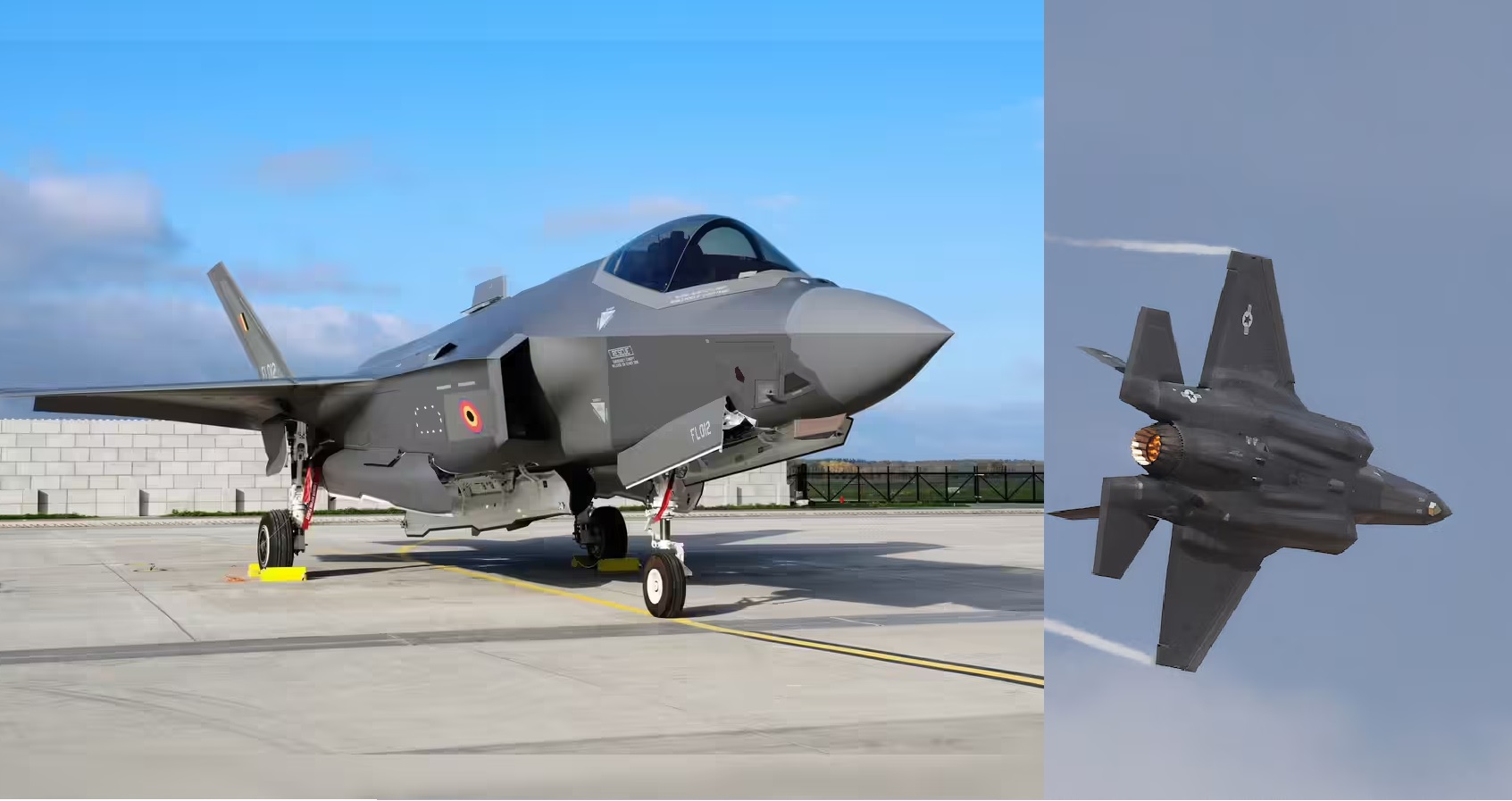
The United States has agreed in principle to sell F-35 stealth fighter jets to Saudi Arabia, but with major restrictions designed to preserve Israel’s legally protected Qualitative Military Edge (QME) in the Middle East. The decision marks a significant step in U.S.–Saudi defense ties, even as Israel strongly opposes the move despite being the region’s only current F-35 operator.
The administration confirmed that Saudi Arabia will receive a reduced-capability version of the aircraft, lacking several of the advanced technologies, weapons, and electronic-warfare systems supplied to Israel.
A “Less Advanced” F-35 for Saudi Arabia
According to U.S. officials familiar with the review process, the F-35s intended for Saudi Arabia will be substantially downgraded to ensure they do not match or surpass the Israeli Air Force’s F-35I “Adir” jets.
Key omissions include:
• No advanced Israeli electronic-warfare suite
Israel’s F-35I carries a custom-built EW system integrated directly into the aircraft—technology not available to any other operator.
• No access to the AIM-260 JATM
The U.S. Air Force’s next-generation air-to-air missile, the AIM-260, which outranges current AMRAAM missiles, will not be included in the Saudi package.
• Limited software access
The most sensitive mission software, data-fusion tools, and sovereign-level coding interfaces reserved for Israel will remain off-limits.
• Reduced weapons compatibility
Saudi aircraft will not be cleared for several classified U.S. or Israeli weapons integrated into the Adir variant.
• No bespoke Israeli enhancements
Israel’s F-35Is feature locally integrated weapons, communications systems, and mission pods. None of these will be available to Riyadh.
Officials stress that while Saudi pilots will operate a fifth-generation fighter, it will be a standard export configuration with added U.S. restrictions — not the tailor-made platform Israel uses.
Israel Opposes the Deal Despite Safeguards
Israel — the first country outside the U.S. to receive the F-35 — has had the aircraft in active service for eight years, and now operates multiple squadrons. Its defense establishment remains concerned that any sale, even a downgraded one, could dilute its technological advantage.
Israeli officials argue that:
-
Saudi Arabia’s acquisition of a stealth platform could complicate Israel’s air dominance
-
Technology leakage risks remain
-
Regional alignments can shift rapidly
Israel’s security cabinet and air force have both filed formal objections, but Washington has reiterated that U.S. law requires Israel to maintain superiority — and that requirement is guiding every decision in the Saudi deal.
Why the U.S. Is Moving Forward
For Washington, the sale is part of a broader geopolitical strategy. Saudi Arabia has pushed for the F-35 for years, and the aircraft was seen as a pivotal bargaining chip in U.S. efforts to encourage Saudi–Israeli normalization and deepen Riyadh’s role in U.S.-led regional security frameworks.
American officials describe the sale as a “cornerstone of long-term strategic cooperation” with Saudi Arabia, aimed at countering Iran, strengthening air-defense integration, and binding Riyadh more closely to U.S. security structures.
Regional Impact
If completed, the sale would represent a historic shift:
Saudi Arabia would become the second country in the Middle East to operate a fifth-generation aircraft — even if in restricted form.
This move could:
-
Boost Saudi Arabia’s airpower
-
Increase pressure on Iran
-
Tighten U.S.–Saudi military ties
-
Introduce new debate over future weapons balance in the Gulf
At the same time, the restrictions on the jets ensure Israel retains:
-
More advanced sensors
-
Deeper software access
-
Superior electronic warfare capabilities
-
Exclusive access to top-tier U.S. and Israeli weaponry
What Happens Next
The deal must still pass a congressional review. Lawmakers have historically required assurances that Israel’s QME is protected before approving any high-end arms sale in the Middle East.
While the sale is not finalized, the political momentum in Washington suggests it is increasingly likely — provided downgraded configurations remain firmly in place.
The U.S. decision to sell F-35s to Saudi Arabia marks a major milestone in regional defense politics. But by stripping out advanced weapons, stealth-enhancing electronics, and cutting-edge Israeli technology, Washington is ensuring that Israel’s qualitative military edge — enshrined in U.S. law — remains intact.
Even so, the deal continues to generate tension, with Israel urging caution and Washington balancing strategic interests in one of the world’s most complex security landscapes.
About the Author
Aditya Kumar:
Defense & Geopolitics Analyst
Aditya Kumar tracks military developments in South Asia, specializing in Indian missile technology and naval strategy.