Why India’s Nuclear Stockpile is Growing and Surpassing Pakistan
India's nuclear stockpile has been steadily growing, currently standing at over 172 warheads, surpassing Pakistan's estimated 170. This growth is driven by significant advancements in India's missile technology and the expansion of its ballistic missile submarine fleet.
Advancements in Ballistic Missile Submarines
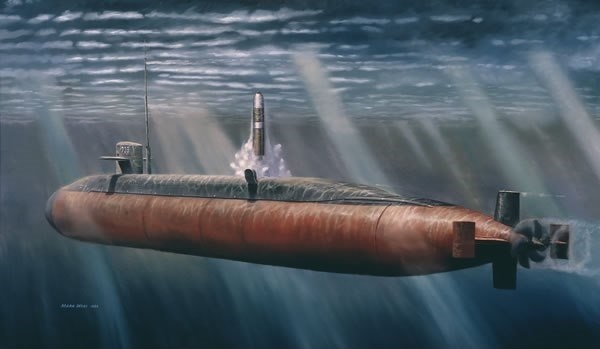
Central to India’s nuclear strategy is its fleet of Arihant-class submarines. These vessels form the backbone of India’s sea-based nuclear deterrence, providing a credible second-strike capability. The first two Arihant-class submarines, INS Arihant and INS Arighat, are already operational. The Indian Navy is now focusing on developing two more advanced variants, the S4 and S4* submarines. These new submarines are expected to be larger and more capable than their predecessors, with improved stealth features and the ability to carry more nuclear-tipped ballistic missiles.
The development of these submarines is a crucial factor in the increase of India’s nuclear stockpile. As the number of submarines grows, so does the need for a larger arsenal of deployable nuclear warheads. This expansion is not just about increasing the number of warheads but also about enhancing the survivability and credibility of India's nuclear deterrent.
Multiple Independently Re-entry Vehicles (MIRVs)
Another key factor contributing to the rise in India’s nuclear stockpile is the successful development and testing of the Agni-5 MkII missile equipped with Multiple Independently Re-entry Vehicles (MIRVs). The Agni-5 is an intercontinental ballistic missile (ICBM) with a range of over 5,000 kilometers, capable of reaching targets deep inside China and other potential adversaries. The addition of MIRVs to the Agni-5 significantly increases its lethality, as a single missile can now carry multiple warheads, each capable of hitting a different target. This technological advancement not only enhances India’s strike capabilities but also necessitates an increase in the number of warheads available for deployment.
Strategic Implications
The expansion of India’s nuclear arsenal and advancements in missile technology have significant strategic implications. First, it strengthens India’s deterrence posture against both Pakistan and China. A more robust and diversified nuclear arsenal enhances India’s ability to respond to any nuclear threat or aggression. Second, it reflects India’s commitment to maintaining a credible minimum deterrent while ensuring that its nuclear forces are modern and capable of addressing emerging security challenges.
However, this growth in nuclear capabilities also raises concerns about regional stability and the potential for an arms race in South Asia. As India enhances its nuclear capabilities, Pakistan is likely to respond by further developing its own arsenal. This dynamic could lead to a security dilemma, where both countries feel compelled to continue expanding their nuclear stockpiles and capabilities.
Conclusion
India’s nuclear stockpile is set to grow, driven by the development of advanced ballistic missile submarines and the successful integration of MIRVs into its missile arsenal. These advancements are crucial for maintaining a credible nuclear deterrent and addressing the evolving security landscape. However, they also underscore the need for continued dialogue and confidence-building measures in South Asia to mitigate the risks of an escalating arms race and ensure regional stability. As India continues to modernize its nuclear forces, it must balance its strategic imperatives with efforts to promote peace and security in the region.
✍️ This article is written by the team of The Defense News.