Why Indian Army Chose Israel's PULS Rocket System Over Indigenous Prahar Missile

New Delhi: The Indian Army’s decision to induct Israel’s PULS (Precise & Universal Launching System) has triggered an intense debate across social media and defence forums. Critics question why India opted for a foreign rocket artillery system when it already possesses the indigenous Prahar missile, capable of striking targets up to 150 kilometres. A closer examination of operational data, platform design, cost economics, and battlefield flexibility, however, reveals that the choice is driven not by redundancy but by doctrine.
Prahar: A Powerful but Dedicated Missile System
Developed by India’s defence research ecosystem, Prahar is a tactical ballistic missile designed for high-precision strikes. It has a maximum range of 150 km, carries a warhead of around 250 kg, and weighs close to 1,300 kg per missile. Each launcher can carry six missiles, mounted on a 12×12 heavy mobility vehicle.
The missile itself measures 7.32 metres in length with a diameter of 420 mm, making it significantly larger and heavier than guided rockets in the same range bracket. The upcoming extended-range derivative, often referred to as Pranaash, is expected to push the envelope further to 200 km.
While Prahar delivers high accuracy and destructive power, it comes with a structural limitation. It is a dedicated system. The launcher vehicle is designed exclusively for Prahar-class missiles. If the Army wants to operate a different range or missile type, an entirely new launcher fleet is required. In a battlefield environment that prioritises “shoot-and-scoot” mobility, a large 12×12 vehicle firing heavy ballistic missiles is not always the most agile solution.
PULS: A Modular Rocket Artillery Philosophy
In contrast, the PULS, developed by Elbit Systems, is built around a fundamentally different concept. It is not a single missile, but a modular, universal launcher mounted on a 6×6 high-mobility truck.
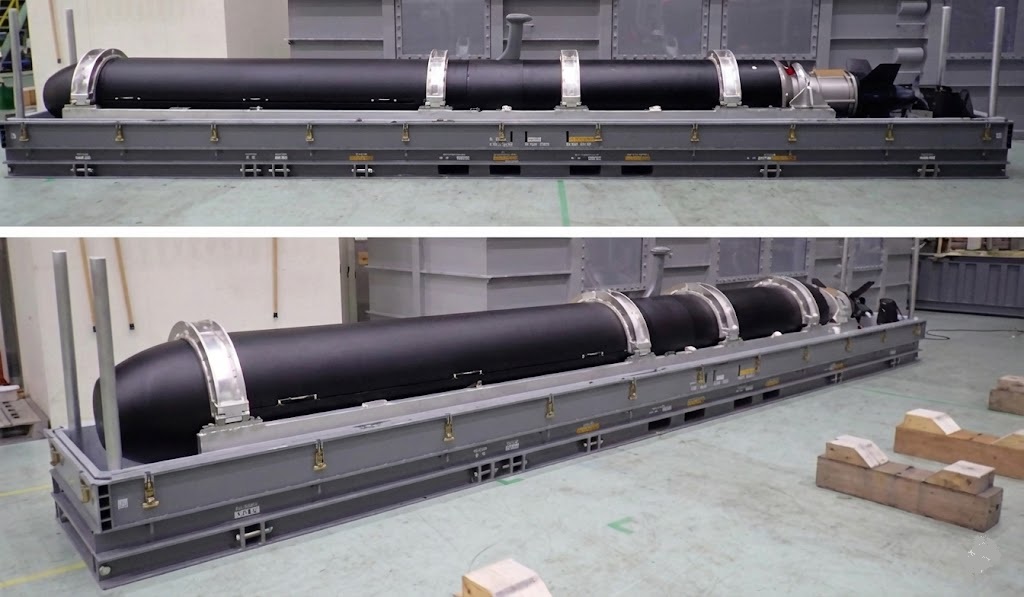
For the 150 km class, PULS fires the EXTRA guided rocket, which weighs about 570 kg, carries a 120 kg warhead, and is 4.7 metres long with a 330 mm diameter. A single PULS launcher can carry eight EXTRA rockets, offering higher salvo density on a lighter, faster platform compared to Prahar.
The system’s real strength, however, lies beyond 150 km. Using the same launcher, the Army can fire the Predator Hawk guided rocket, which reaches 300 km, weighs roughly 800 kg, and carries a 140 kg warhead. Importantly, the launcher can be configured with a mixed load, such as four EXTRA rockets and two Predator Hawk rockets on the same truck, enabling layered strikes from a single firing unit.
Filling India’s Critical 300 km Capability Gap
From an operational standpoint, the Indian Army already covers several strike bands. Pinaka, including its LRGR (Long-Range Guided Rocket) variant, offers precision strikes in the 90–120 km range from 8×8 platforms, carrying eight rockets per launcher. At the other end of the spectrum, systems like BrahMos and Pralay cover 400 km and beyond.
What India lacked until recently was a cost-effective, precision strike option around 300 km. Prahar and its successors sit at the lower tactical ballistic missile tier, while BrahMos and Pralay belong to a far heavier and more expensive category. The induction of PULS effectively plugs this gap, giving the Army a deep-strike capability without escalating to strategic-class missiles.
Guided Rockets vs Ballistic Missiles: The Cost Equation
Another decisive factor is cost. Prahar is a full-fledged ballistic missile, with complex avionics, propulsion, and guidance systems. This translates into a higher cost per round, making it less suitable for sustained, high-volume battlefield use.
By contrast, PULS rockets such as EXTRA and Predator Hawk are classified as precision-guided rockets. Although the line between rockets and missiles is increasingly blurred, guided rockets are generally cheaper to produce, easier to stockpile, and faster to deploy in large numbers. For tactical ranges up to 300 km, the Army’s preference leans toward “affordable precision” rather than “expensive complexity.”
Mobility and the ‘Shoot-and-Scoot’ Imperative
Rocket artillery doctrine demands rapid relocation after firing to avoid counter-battery fire. A 6×6 PULS truck, carrying lighter rockets, can redeploy far quicker than a 12×12 heavy ballistic missile launcher. This mobility advantage becomes critical in high-intensity conflicts, especially along contested borders where survivability depends on speed and dispersion.
A Flexible Battlefield Asset, Not a Replacement
The induction of PULS does not signal the sidelining of Prahar. Instead, it reflects a layered artillery and missile strategy. Prahar remains relevant as a precision tactical ballistic missile for specific targets requiring heavier warheads. PULS, meanwhile, offers the Army a single “universal truck” that can adapt to mission requirements.
In practical terms, the same PULS launcher can fire 150 km EXTRA rockets at a command centre in the morning, then be reloaded with 300 km Predator Hawk rockets for deep strikes by night. This adaptability is something a dedicated system like Prahar cannot provide.
The Strategic Logic Behind the Decision
The Indian Army’s choice of PULS is less about foreign versus indigenous systems and more about operational flexibility, cost efficiency, and range optimisation. By acquiring PULS, India gains an immediately available, modular solution that fills a long-standing 300 km precision strike gap, complements Pinaka and Prahar, and enhances battlefield survivability.
In the evolving landscape of modern warfare, the decision underscores a clear message: versatility and mobility now matter as much as raw range and payload.
About the Author
Aditya Kumar:
Defense & Geopolitics Analyst
Aditya Kumar tracks military developments in South Asia, specializing in Indian missile technology and naval strategy.