Why Hungary Is Refusing More EU Money for Ukraine, Not Supporting in War
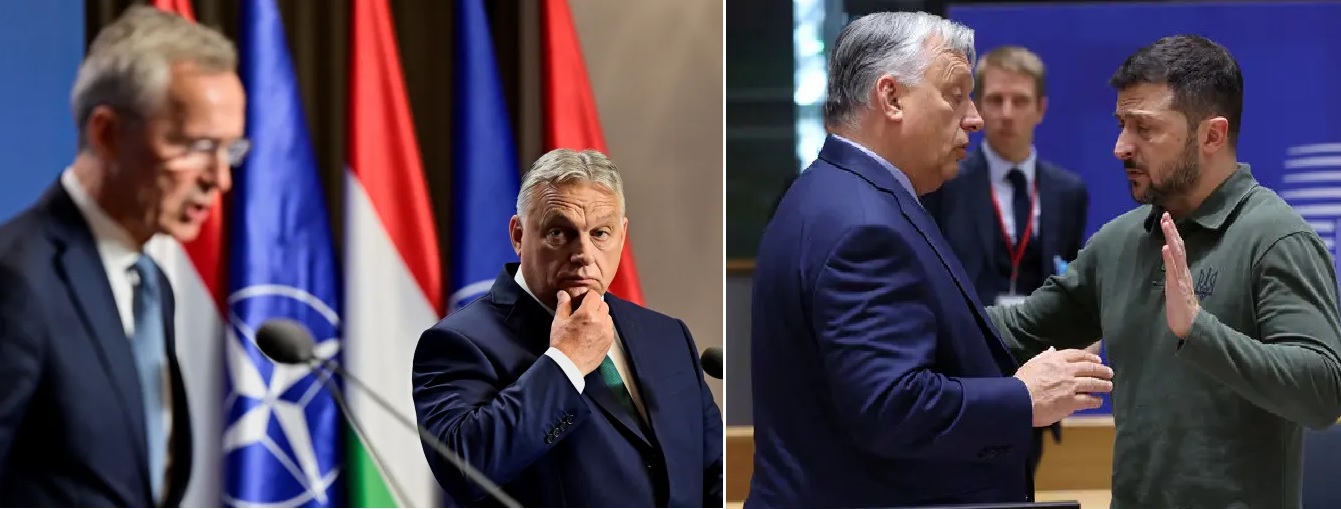
As Russia’s full-scale war against Ukraine drags on, one EU leader is openly trying to slam the brakes on European support. Hungarian Prime Minister Viktor Orbán has declared that Hungary “does not support” the European Union sending any further financial assistance to Ukraine in any form, and is instead urging Europe to back a U.S.-led peace initiative and open direct negotiations with Russia.
His stance has turned Budapest into the bloc’s most disruptive voice on Ukraine and raised fresh questions about the durability of EU unity in the war.
A fresh clash over money for Ukraine
In recent days, Orbán has sharpened his opposition to new funding proposals from European Commission President Ursula von der Leyen, who is seeking around €135 billion in additional support linked to Ukraine, including military aid and broader financial measures. He has publicly rejected all three ideas: more money from national budgets, new joint EU borrowing, and using frozen Russian assets to finance support for Kyiv.
He has described the plan as “the price of prolonging the war” and accused Brussels of pushing a financial blueprint that amounts to a written declaration that “we Europeans are going to war”. In his words, “Hungarian people’s money belongs to the Hungarian people”, and he refuses to divert funds from pensions, family support and domestic businesses to send them to Ukraine, where he claims EU controls over spending are inadequate and corruption risks are high.
At the same time, Orbán has praised U.S. President Donald Trump’s emerging 28-point peace plan, saying that Europeans must immediately and unconditionally support the U.S. peace initiative and, in addition to backing Washington, “launch autonomous and direct negotiations with Russia without delay”. He argues that Brussels is fixated on financing and escalating an unwinnable conflict while Washington is at least trying to talk.
A long record of blocking EU aid to Kyiv
The current confrontation is not a one-off. Since 2022, Hungary has repeatedly used its veto power to slow or water down EU support for Ukraine.
In December 2023, Orbán blocked a €50 billion four-year support package for Ukraine – the so-called Ukraine Facility – during a late-night summit in Brussels, even as other leaders moved ahead on opening EU membership talks with Kyiv.
After weeks of pressure and intense negotiations, all 27 member states eventually agreed in February 2024 to the €50 billion facility, which includes €17 billion in grants and €33 billion in loans to support Ukraine’s budget, reconstruction and reforms. Orbán dropped his veto only after leaders added review clauses and side assurances, but he made clear that his fundamental objections remained.
On the military side, Budapest has also been blocking or delaying top-ups to the European Peace Facility (EPF) – the off-budget fund the EU uses to reimburse arms deliveries to Ukraine. Since March 2023, Hungary has refused to agree to EPF tranches for Kyiv and vetoed a proposed €20 billion military support plan over four years.
In early 2025, Orbán went further, warning that financing Ukraine’s war effort would “ruin Europe”, arguing that with U.S. financial support no longer guaranteed, the EU simply cannot afford open-ended commitments to Kyiv’s defence.
Why Hungary is taking this line
1. Domestic politics and money pressures
At home, Orbán frames his stance as a defence of Hungarian sovereignty and social spending. He repeatedly tells voters that Brussels wants to take money from Hungarian families and pensioners to “burn it in Ukraine”, and that he will not sacrifice domestic priorities to “finance the war”.
This message lands in a sensitive context. Since 2022, the EU has frozen or suspended tens of billions of euros in cohesion and recovery funds for Hungary because of concerns over rule of law, judicial independence and corruption. Roughly €22 billion in cohesion funds were initially put on hold; by early 2024, about €6.3 billion in cohesion money was still frozen, and in late 2024 Hungary permanently lost around €1 billion for failing to access part of the suspended funds in time.
Critics in Brussels and many analysts argue that Orbán is using his veto on Ukraine and sanctions to pressure the EU into releasing more of this blocked money – effectively turning Ukraine aid and Russia policy into leverage in a broader standoff over rule-of-law conditionality.
2. Deep energy ties with Russia
Another key reason is Hungary’s entrenched dependence on Russian energy. Despite EU efforts to cut ties with Moscow, Hungary still relies heavily on Russian natural gas, crude oil and nuclear fuel. The Kremlin-backed Paks II nuclear project, under which Russia’s Rosatom is building two new reactors and providing a state loan, remains central to Budapest’s energy strategy even after the EU’s top court annulled Brussels’ previous approval of state aid for the project.
Studies show that imports of Russian nuclear fuel to Hungary and Slovakia in 2024 were well above pre-invasion levels, and recent reporting highlights Budapest’s continued heavy use of Russian oil and gas compared to other EU states.
At the same time, Orbán has cultivated a special relationship with Moscow and, more recently, with President Trump. In November 2025 he claimed that Trump agreed to grant Hungary an exemption from U.S. sanctions on Russian energy, underlining Budapest’s determination to preserve these energy flows even as the rest of the EU tries to phase them out.
This structural dependence on Russian energy makes Hungary wary of any escalation with Russia and reinforces the government’s incentives to oppose measures – including large-scale aid to Ukraine – that deepen confrontation with Moscow.
3. Minority disputes with Ukraine
Relations between Budapest and Kyiv were tense even before the full-scale invasion, largely because of the status of the Hungarian minority in Ukraine’s Transcarpathia region. Since 2015, Ukraine has introduced education and language laws that Hungary says restrict the use of Hungarian as a mother tongue in schools and public life.
In March 2024, Hungary sent an eleven-point list of demands to Ukraine and EU partners, insisting on stronger guarantees for Hungarian-language education and minority rights. It has repeatedly linked its position on Ukraine’s EU accession and broader support to these issues.
Tensions flared again in May 2025, when Hungary cancelled expert-level talks with Ukraine on minority rights, citing an espionage dispute and mutual expulsions of diplomats. The unresolved dispute gives Orbán another domestic justification for slowing Ukraine’s integration into European structures and for questioning continued aid.
4. Ideological positioning as the “peace camp”
On a political level, Orbán is positioning Hungary as the leader of what he calls the “peace camp” in Europe, in opposition to what he describes as a “pro-war Brussels elite”. In his narrative, the rest of Europe is “marching into war” by trying to arm Ukraine to defeat Russia, while Hungary is calling for immediate ceasefire and peace talks.
He has argued that continued military and financial support for Kyiv, combined with higher defence spending, will “ruin Europe”, and insists that the only sustainable solution is a negotiated settlement brokered primarily by Washington and Moscow, with the EU playing a secondary role. His public closeness to Trump and scepticism toward deeper EU integration fit neatly into this message.
What it means for Ukraine and for the EU
For Ukraine, Hungary’s obstruction does not yet mean that aid will stop – other EU governments have repeatedly found ways to pressure, cajole or work around Budapest to keep money flowing. The €50 billion Ukraine Facility ultimately went through, and member states have explored bilateral mechanisms and creative legal routes to bypass vetoes when necessary.
But every new veto threat from Budapest complicates the picture. It delays decisions, forces difficult compromises and chips away at the image of a united European front. At a time when U.S. support is uncertain and Ukraine faces mounting battlefield and budget pressures, the prospect that one EU country might block or dilute major packages is a serious concern in Kyiv and many European capitals.
Inside the EU, frustration is rising. Think-tank analysts and some politicians are openly debating whether the bloc should suspend Hungary’s voting rights on foreign-policy and budget issues if it continues to use its veto to paralyse decisions on Ukraine and Russia – a drastic step, but one that illustrates how central Orbán’s resistance has become to the wider struggle over Europe’s response to the war.
For now, Hungary remains the outlier in an EU that still officially backs “Ukraine for as long as it takes”. Whether Orbán’s bet on “peace first, aid later” gains traction – or simply isolates Budapest further – will be one of the key questions for Europe as the war and the political battles around it enter yet another year.
About the Author
Aditya Kumar:
Defense & Geopolitics Analyst
Aditya Kumar tracks military developments in South Asia, specializing in Indian missile technology and naval strategy.