Why Developing a 6th-Gen Jet Engine in 10 Years Is Unrealistic: A Reality Check on Adaptive Cycle Engine Technology
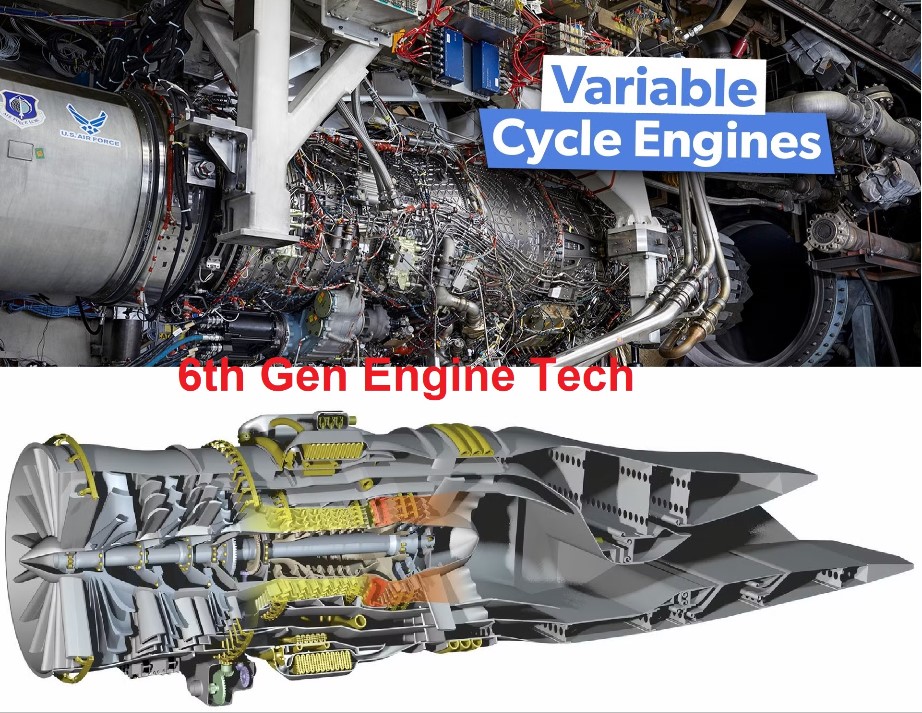
As the race for sixth-generation fighter jets intensifies globally, many nations and defense enthusiasts confidently claim that a cutting-edge variable or adaptive cycle engine can be developed within a decade. This timeline, while aspirational, dangerously underestimates the technological, financial, and infrastructural demands required to build the most complex propulsion systems ever envisioned. Let’s bring this optimism back to earth with a sobering look at real-world timelines and challenges.
What is an Adaptive/Variable Cycle Engine?
A variable or adaptive cycle engine is a transformative leap beyond traditional turbofan engines. While a typical turbofan has a fixed bypass ratio — essentially a trade-off between fuel efficiency (high-bypass) and speed (low-bypass) — adaptive engines can morph in-flight to offer the best of both worlds. They dynamically adjust airflow paths to provide:
-
Fuel efficiency during cruise
-
High thrust during combat
-
Enhanced thermal management for powering advanced avionics and directed energy weapons
In simple terms, this is like having a jet engine that behaves like a Prius on patrol and a Ferrari in dogfights — and switches seamlessly between both.
📘 For a deeper dive into how 6th-gen engines differ from 5th-gen propulsion systems, check out our article: 5th Gen vs 6th Gen Jet Engine Technology: What’s the Difference?
The U.S. Journey: Nearly Two Decades in the Making
No country exemplifies the difficulty of this task better than the United States, the undisputed leader in aero-engine technology.
-
2007: The Adaptive Versatile Engine Technology (ADVENT) program begins under the U.S. Air Force and DARPA to explore concepts of adaptive cycle engines.
-
2012: Transition to the Adaptive Engine Technology Demonstrator (AETD) program, where practical demonstrators like GE’s XA100 and Pratt & Whitney’s XA101 start taking form.
-
2016: AETD evolves into the Adaptive Engine Transition Program (AETP) — focusing on preparing engines for real-world application in aircraft like the F-35 and Next Generation Air Dominance (NGAD) platforms.
-
2023: Critical Design Review (CDR) of the next-gen XA102 engine completed — a refined version expected for sixth-gen fighters. Flight testing still awaits.
Let that timeline sink in: from concept to potential flight in nearly 20 years, despite immense U.S. industrial capacity, technological expertise, and funding.
Global Landscape: Who’s Trying What?
Other countries have expressed interest in adaptive or variable cycle engine technologies, but their programs are at various nascent or exploratory stages — none near the maturity of the U.S.
United Kingdom (Team Tempest)
-
Engine Lead: Rolls-Royce
-
Timeline: Rolls-Royce has announced research on advanced propulsion systems with variable cycle features for the Tempest 6th-gen fighter, aiming for deployment by 2035.
-
Progress: Heavy investment in thermodynamic management and composite materials, but no flight-ready adaptive engine has been demonstrated yet.
France-Germany-Spain (FCAS / SCAF)
-
Engine Lead: Safran (France) with MTU Aero Engines (Germany)
-
Timeline: 6th-gen fighter expected by 2040, but engine technology is still early in the conceptual stage.
-
Progress: Discussions include variable cycle capability, but without a prototype or demonstrator, timelines remain optimistic at best.
Japan (F-X / GCAP with UK & Italy)
-
Engine Lead: IHI Corporation
-
Timeline: Working with Rolls-Royce on engine demonstrators; initial ground testing expected by mid-2020s, in-air testing by 2030s.
-
Progress: Promising collaboration, but still dependent on imported technical expertise.
India (AMCA Program)
-
Engine Lead: Proposed joint development with Safran, GE, or Rolls-Royce
-
Timeline: Claims to field a sixth-gen engine (for AMCA Mk2 or beyond) by early 2030s
-
Reality: No dedicated infrastructure yet, and no foundational adaptive engine research. Without even a fifth-gen engine developed domestically, a sixth-gen variable cycle engine within 10 years or 15 Years would require a technological miracle.
Who Has Actually Built One?
Only General Electric (GE) and Pratt & Whitney (P&W), both U.S.-based, have developed working adaptive cycle engines — XA100 and XA101, respectively — with demonstrators already undergoing testing.
Even with the experience of F119 (used in the F-22) and F135 (used in the F-35), creating these adaptive engines took over 15 years of effort, with thousands of hours in development and testing.
Why the 10-Year Plan Is Fantasy for Most
-
Lack of Test Infrastructure: Countries like India, even France and Germany, do not yet possess dedicated adaptive engine test beds.
-
Material Science Limitations: Adaptive engines need materials that survive unprecedented thermal loads — often relying on single-crystal turbine blades and CMCs (ceramic matrix composites), technologies only a few countries have mastered.
-
Software and Control Systems: Managing variable airflow paths in real-time demands bleeding-edge AI and FADEC (Full Authority Digital Engine Control) software. Again, limited to a handful of nations.
-
Funding and Political Stability: Most nations lack the uninterrupted funding streams like the U.S. DoD or DARPA, where multi-billion dollar engine programs can be sustained for decades.
Ambition Must Be Tempered by Realism
Developing a 6th-gen adaptive cycle engine from scratch in 10 years is not impossible — but for any country other than the U.S., it is highly improbable.
History tells us that even with unlimited resources, world-class talent, and pre-existing knowledge, the U.S. needed nearly two decades to field this technology. Expecting nations with limited engine design experience to achieve the same feat in half that time is more wishful thinking than strategic planning.
As the defense world eyes 2035 as the magic year for sixth-generation fighters, the engines that will power them remain the most critical bottleneck — and the true benchmark of technological leadership.
✍️ This article is written by the team of The Defense News.