Why Canada Reviews $27.7 Billion F-35 Deal and Considers Gripen Alternative
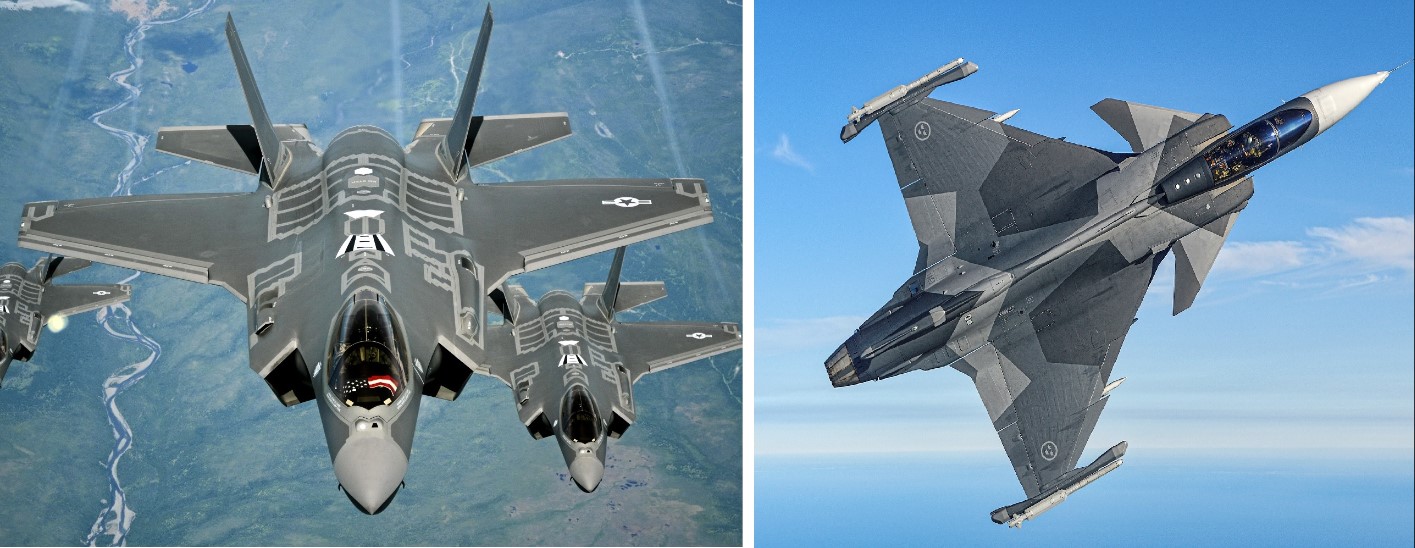
Canada’s fighter jet replacement program is under review as the government seeks improved economic returns before finalizing its contract with Lockheed Martin. The $27.7 billion deal for 88 F-35A Lightning II jets is being reassessed, with Industry Minister Mélanie Joly noting that the fleet could be reduced or supplemented with Sweden’s Saab Gripen E if better terms are not agreed.
The original plan, announced in January 2023, aimed to replace the Royal Canadian Air Force’s aging CF-18 Hornets with fifth-generation F-35A fighters. The contract, initially valued at approximately CAD 19 billion (around USD 14 billion), covered aircraft procurement, training, and infrastructure. The first jets were scheduled for delivery in 2026, with full operational capability expected by 2032. Subsequent reviews indicated that the total program cost, including support and maintenance over the aircraft’s lifetime, could reach CAD 27.7 billion.
Why Canada Is Reviewing the Order
Canada’s concerns go beyond cost. The government has emphasized the need for stronger domestic economic benefits from the purchase, including local jobs, technology transfer, and industrial participation for Canadian firms. Lockheed Martin and the U.S. government are expected to demonstrate that the contract delivers value for money and measurable long-term economic benefits for Canada’s aerospace and defense industries.
Other factors contributing to the review include operational readiness and infrastructure challenges. The Auditor General’s reports highlighted delays in specialized hangars, training systems, and pilot preparation. Maintaining the F-35 also requires a skilled workforce and complex logistics, raising questions about long-term sustainment and cost management.
The review also reflects Canada’s interest in diversifying defense suppliers. While relations with the U.S. remain strong, officials have noted the importance of maintaining autonomy over defense equipment and avoiding overreliance on a single supplier.
Why Canada Is Considering the Gripen
Saab’s Gripen E has emerged as a potential alternative, having previously offered a package of 88 aircraft, local assembly lines, technology transfer, and an in-country maintenance and upgrade center, potentially located in Montreal. The Gripen is also well-suited to operations from shorter and Arctic runways, a factor relevant to Canada’s northern territories.
Compared with the F-35, the Gripen offers lower operating costs and easier maintenance. It also allows Canada greater control over software, upgrades, and sustainment, which some analysts view as increasing strategic and industrial independence. A mixed fleet of F-35s and Gripen E aircraft is under consideration, where F-35s would serve high-end missions such as NATO and NORAD operations, while Gripen jets could handle patrol and regional defense.
Benefits and Considerations
Supporters of the F-35 note that it provides interoperability with U.S. and NATO forces, advanced sensors, and capabilities not available in other aircraft. Canadian companies already participating in the F-35 industrial base could maintain ongoing manufacturing and maintenance contracts, ensuring some domestic economic benefit.
Switching to another aircraft would involve new procurement processes, certification, and infrastructure development, which could affect timelines for replacing the aging CF-18 fleet. Canada’s government is therefore balancing operational capability, industrial participation, cost, and long-term strategic independence in making its decision.
Current Status
The government has indicated that it is seeking contract adjustments addressing cost management, industrial participation, and maintenance rights. If negotiations do not result in improved terms, Canada may reduce its F-35 order, allowing Saab or other manufacturers to contribute to the fighter fleet.
The review reflects Canada’s approach to aligning defense procurement with both operational needs and domestic industrial objectives, while also maintaining flexibility to adjust strategy as conditions and costs evolve.
About the Author
Aditya Kumar:
Defense & Geopolitics Analyst
Aditya Kumar tracks military developments in South Asia, specializing in Indian missile technology and naval strategy.