Vietnam Establishes Artillery and Missile Command to Strengthen Defense Modernization
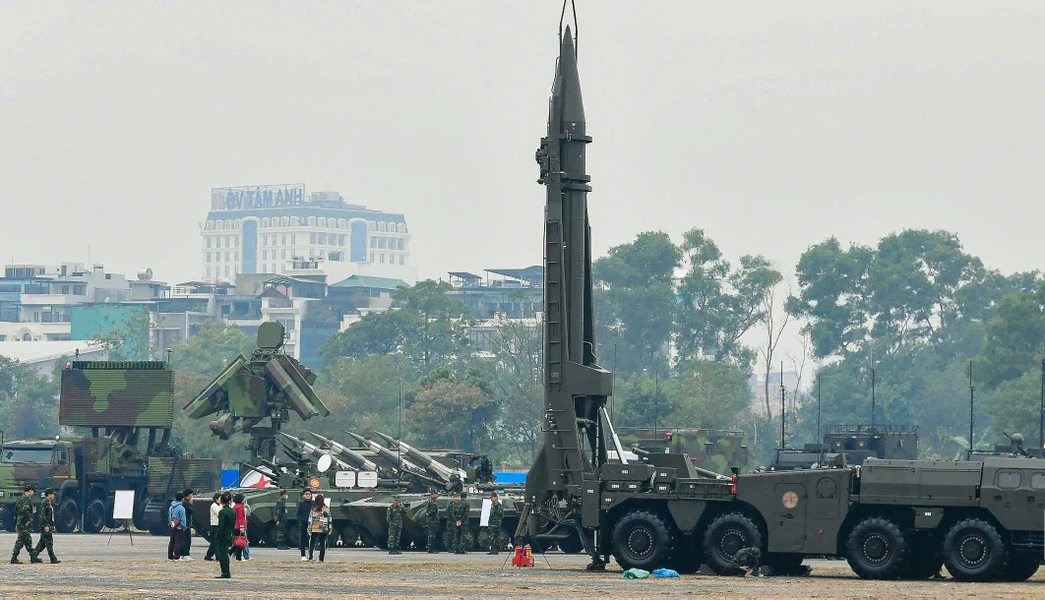
Hanoi, August 2025 – The Vietnamese Ministry of Defense has officially launched the Artillery and Missile Command, marking a major milestone in the country’s ongoing effort to modernize its armed forces and enhance strategic capabilities. The announcement was made during a formal ceremony chaired by General Nguyen Tan Cuong, Chief of the General Staff of the Vietnam People’s Army and Deputy Minister of Defense.
This new command underscores Vietnam’s commitment to military restructuring and modernization amid an increasingly complex regional security environment in the Asia-Pacific.
A Strategic Transformation
General Cuong emphasized that the creation of the command reflects a forward-looking decision by the Politburo and the Central Military Commission. The aim is to reorganize and streamline Vietnam’s military command structure, ensuring faster and more effective responses to modern challenges.
He described the move as a political commitment to strengthening national defense, highlighting that the command will be responsible for both operational guidance and strategic deployment of artillery and missile forces across the armed services.
The formation of the command builds directly upon the foundation of the former Artillery Corps, which played a decisive role throughout Vietnam’s 20th-century conflicts. President Ho Chi Minh once praised these units as having “bronze feet, iron shoulders, excellent in fighting, accurate in shooting,” a legacy now carried forward in the modernized command.
Capabilities and Arsenal
Vietnam’s artillery arsenal remains diverse, blending legacy systems with modern acquisitions. The military still fields Soviet-era weapons such as the 76 mm ZiS-3, the 100 mm BS-3 anti-tank gun, and the 122 mm D-30 howitzer, alongside U.S.-made M101 105 mm howitzers inherited from the Vietnam War era.
However, modernization is accelerating. Hanoi has approved the purchase of 20 South Korean 155 mm K9 Thunder self-propelled howitzers, expected to significantly boost Vietnam’s long-range precision firepower with advanced mobility and fire-control systems.
On the rocket artillery front, Vietnam operates approximately 350 upgraded BM-21 Grad 122 mm multiple launch rocket systems (MLRS) and about 400 BM-14 140 mm launchers. Many of these have been locally modernized to extend range and improve accuracy.
At the strategic level, Vietnam maintains a stockpile of around 20 tactical ballistic missile launchers, including variants of the Scud-B and Scud-C systems, as well as North Korean Hwasong missiles that have undergone Vietnamese modifications for greater reliability and effectiveness. These assets, though limited in number, provide Hanoi with a credible deterrent capability.
Mission of the New Command
The newly formed Artillery and Missile Command will not simply oversee existing systems but also act as the strategic brain for future modernization. Its responsibilities include:
-
Establishing a streamlined organizational framework.
-
Reinforcing the leadership apparatus to ensure effective command and control.
-
Guiding the deployment of missile and artillery forces in line with evolving doctrines.
-
Ensuring constant combat readiness and alignment with Party and State policies.
General Cuong called on commanders to show determination, discipline, and creativity, stressing that modernization will succeed only if combined with a strong sense of political loyalty and operational excellence.
Broader Context: Modernization and Regional Security
The creation of the Artillery and Missile Command is part of Vietnam’s comprehensive military modernization plan that extends across land, sea, and air forces. In recent years, Vietnam has invested in Russian S-300 and SPYDER air defense systems, Russian-built submarines, and Su-30MK2 fighter jets. The artillery and missile arm now joins this broader modernization push, ensuring Vietnam’s defense forces remain balanced and versatile.
This initiative also comes at a time of heightened regional tensions, especially in the South China Sea, where Vietnam continues to defend its sovereignty claims. Analysts see the establishment of this command as a signal that Hanoi is determined to strengthen its deterrence capabilities while maintaining a defensive posture.
A Blend of Tradition and Modernization
The Artillery and Missile Command symbolizes Vietnam’s strategy of blending historical experience with modern technology. By drawing on the combat-proven traditions of the Artillery Corps while introducing advanced systems such as the K9 Thunder, precision MLRS upgrades, and tactical missile improvements, Vietnam is positioning itself for a more robust and future-ready defense posture.
The establishment of the Artillery and Missile Command represents one of the most significant steps in Vietnam’s military restructuring in decades. It not only consolidates existing capabilities but also creates a platform for modernization that will shape the future of the Vietnam People’s Army.
As Vietnam continues to navigate regional challenges, this new command will serve as a pillar of national defense, combining political resolve, historical legacy, and modern firepower to safeguard the country’s sovereignty and security.
✍️ This article is written by the team of The Defense News.