VEM Technologies Delivers First Tejas Mk1A Centre Fuselage to HAL
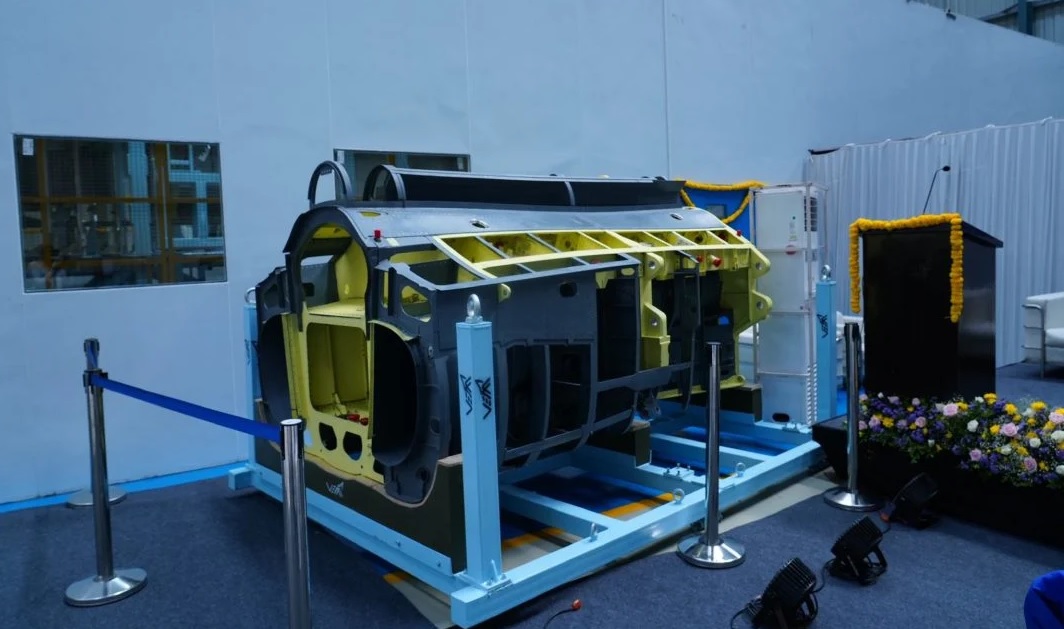
In a major leap for India’s indigenous defence production, VEM Technologies has officially delivered the first centre fuselage assembly for the Light Combat Aircraft (LCA) Tejas Mk1A to Hindustan Aeronautics Limited (HAL). The handover took place at VEM’s facility in Hyderabad, witnessed by key officials including Secretary of Defence Production Sanjeev Kumar and HAL Chairman and Managing Director Dr. D. K. Sunil.
This event is especially significant because it's the first time such a crucial part of the Tejas fighter jet has been manufactured by a private Indian company. The centre fuselage, which forms the core structure of the aircraft, is built using a semi-monocoque design that combines both metal and advanced carbon fibre composite materials. It comprises 1,595 individual components, all of which were subjected to strict quality inspections by HAL during the manufacturing process.
The Tejas Mk1A is a modernized version of India’s homegrown fighter jet and includes advanced features like an Active Electronically Scanned Array (AESA) radar, upgraded avionics, and improved combat capabilities. The Indian Air Force sees the Mk1A as a key player in its modernization efforts, and the involvement of private companies like VEM Technologies is viewed as a strategic move to reduce reliance on foreign suppliers—an increasingly important goal in a world facing frequent supply chain disruptions.
VEM Technologies, based in Hyderabad, employs over 900 professionals and has a growing presence in India’s aerospace and defence sector. Apart from its work on the Tejas program, the company is also actively participating in the development of the Advanced Medium Combat Aircraft (AMCA), India’s next-generation stealth fighter. Prototypes of the AMCA are expected by 2026–2027.
The successful delivery of the Tejas Mk1A centre fuselage is part of a broader national effort to increase indigenous content in military hardware. Currently, about 62% of the Tejas Mk1A is made from Indian components. With future models like the Tejas Mk2, the goal is to raise that figure to 70% or more.
However, India’s journey toward full self-reliance in fighter aircraft manufacturing still faces challenges. The Tejas aircraft continue to use the American-made GE F404 engine, as India’s own Kaveri engine project, under development since 1986 by the Gas Turbine Research Establishment (GTRE), has not yet reached full operational maturity. Still, recent defence policies aim to push future fighter programs toward 80% indigenization.
The handover of the Tejas Mk1A centre fuselage by VEM Technologies to HAL is not just a technical milestone—it also symbolizes the growing collaboration between India’s public and private sectors in defence. This synergy is essential for achieving the country's long-term vision of strategic autonomy and a strong, self-sufficient military-industrial base.
✍️ This article is written by the team of The Defense News.