Unknown Man Kills ISI Operative and Former Pakistani Brigadier Amir Hamza Involved in 2018 Sunjwan Attack
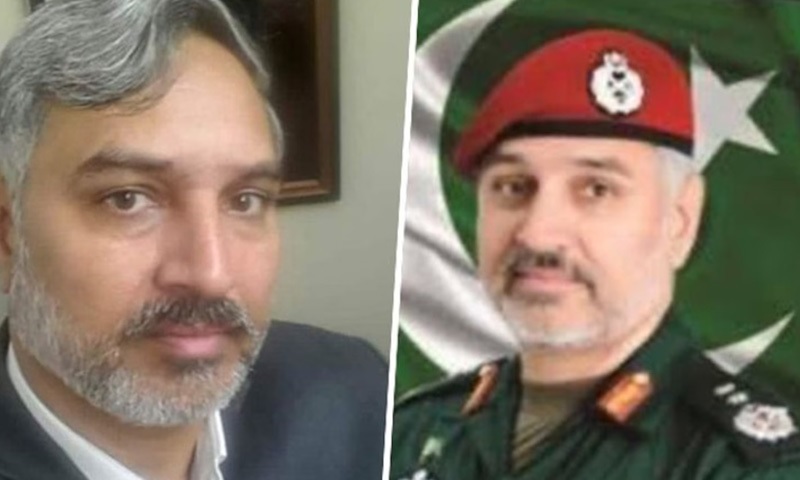
The assassination of retired Brigadier Amir Hamza in Pakistan highlights a troubling pattern of targeted killings of ISI operatives involved in attacks against India, raising concerns about internal security and factional conflicts.
Retired Brigadier Amir Hamza, a prominent figure within Pakistan's Inter-Services Intelligence (ISI) agency, was assassinated on Monday in a targeted attack in Jhelum district, Punjab province. Hamza, known for his involvement in ISI operations against India, was ambushed by four unidentified gunmen while traveling with his wife and daughter.
The attack occurred at the Lilla interchange, where the assailants, riding on two motorcycles, cornered Hamza's vehicle and opened fire. Hamza was pronounced dead at the scene, while his wife and daughter sustained injuries. According to local police, the attackers did not steal any belongings, indicating the motive was targeted killing rather than robbery.
Hamza had a significant history within the ISI. He was allegedly one of the masterminds behind the 2018 attack on the Sunjwan Army camp in Jammu and Kashmir, India. This attack resulted in the deaths of six Indian soldiers and injuries to twelve others. Following his retirement, Hamza held key supervisory posts, with his last position being the director general of the Emergency Services Academy (1122).
The police have launched an investigation into Hamza's assassination, describing it as a "blind murder case." Hamza's brother, Ayub, who was following the car on a motorcycle, witnessed the incident. Local authorities have registered a case and are probing into the targeted attack.
Hamza's killing marks the elimination of the second Pakistani involved in the Sunjwan attack. Last November, Lashkar-e-Taiba (LeT) commander Khwaja Shahid, also known as Mia Muajhid, was found beheaded near the Line of Control (LoC) in Pakistan-occupied Kashmir (PoK).
This incident is the latest in a series of targeted killings of Pakistani individuals associated with the ISI and implicated in attacks against India. In April, Amir Sarfaraz, another high-ranking ISI operative, was killed by unidentified gunmen in Lahore. Similarly, Adnan Ahmed, a top Lashkar-e-Taiba commander responsible for a series of attacks on security convoys in Jammu and Kashmir, was gunned down in Karachi last December. In October last year, Jaish-e-Muhammed terrorist Shahid Latif, who was the chief handler of the suicide squad that attacked the Pulwama air base in 2016, was killed in Sialkot.
The pattern of these targeted killings raises concerns about the internal security situation within Pakistan and the potential for factional conflicts within the intelligence community. The consistent elimination of key ISI operatives involved in high-profile attacks against India suggests a coordinated effort to dismantle the network of individuals responsible for cross-border terrorism.
Pakistani authorities are under pressure to address these security breaches and investigate the underlying causes of these assassinations. The recurring nature of these incidents highlights the challenges faced by Pakistan's intelligence and security apparatus in maintaining control and stability within the country.
✍️ This article is written by the team of The Defense News.