Ukrainian Forces Use UK Storm Shadow Missiles to Bypass Russian Defenses, Destroy Bryansk Munitions Plant

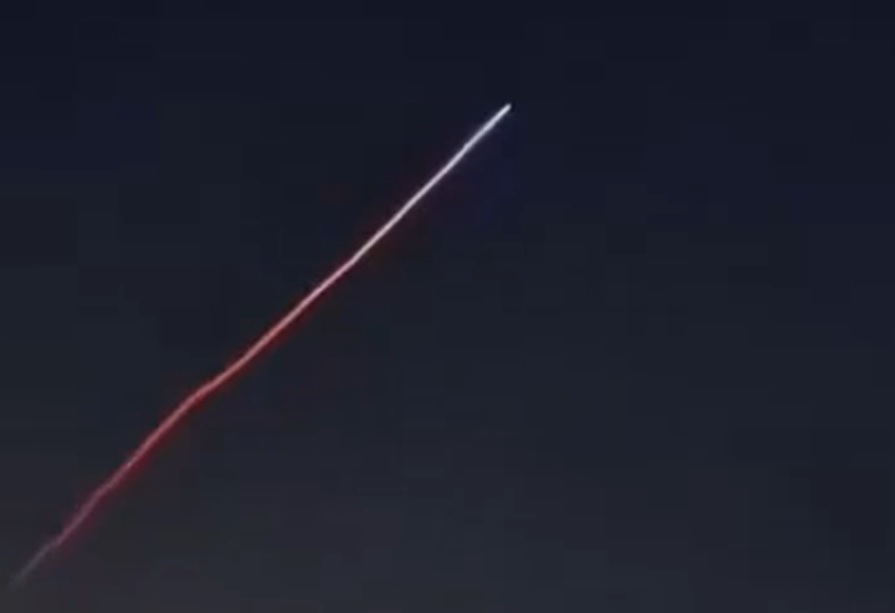
Ukraine’s General Staff has confirmed that British-supplied Storm Shadow cruise missiles successfully bypassed Russian air defenses and destroyed a major chemical and munitions facility in Russia’s Bryansk region — a plant believed to produce gunpowder, explosives, and munition components used by Russian forces to shell Ukrainian territory.
According to Ukrainian military sources, the overnight strike targeted a high-value industrial complex integral to Russia’s weapons production chain. The facility, located near Bryansk city, reportedly housed production lines for rocket propellants and artillery explosives, which Ukraine says have been used in attacks across the Chernihiv and Sumy regions.
Local Russian officials acknowledged “a large-scale drone and missile attack” in Bryansk but did not provide details on the extent of damage. Independent verification remains pending, but satellite imagery and early footage shared on social media appeared to show large fires and secondary explosions, suggesting an ammunition-related detonation.
Precision strike using British technology
The Storm Shadow — known in France as SCALP-EG — is a long-range, air-launched cruise missile jointly developed by the UK and France. Manufactured by MBDA, it is designed for deep-penetration strikes against hardened or well-defended targets such as command bunkers, bridges, and ammunition plants.
Weighing about 1,300 kilograms and powered by a turbojet engine, the missile can travel at high subsonic speeds and is equipped with a BROACH tandem warhead, capable of punching through reinforced structures before detonating internally. Guided by a combination of inertial navigation, GPS, terrain-following radar, and an imaging infrared seeker, it provides high accuracy even in GPS-denied environments.
While export variants have a listed range of around 250 kilometers, analysts believe that Ukraine’s Storm Shadows may have enhanced range due to integration with Su-24M bombers, which have been modified to deploy the missile since mid-2023.
Bypassing Russian defenses
Ukrainian officials emphasized that the strike demonstrated the missile’s ability to evade Russia’s layered air defense network, which includes systems such as the S-400 and Pantsir-S1.
The Storm Shadow’s low-altitude flight path, small radar cross-section, and autonomous guidance reportedly allowed it to penetrate Russian radar coverage and strike its target with minimal warning.
A senior Ukrainian defense official stated anonymously that “the results prove that even advanced Russian air defense systems cannot fully protect key industrial assets from modern Western cruise missiles.”
Strategic implications
If confirmed, the Bryansk strike marks one of the deepest and most significant cross-border attacks by Ukrainian forces using Western weapons. It underscores Kyiv’s expanding capacity to hit targets inside Russian territory, particularly those linked to the production of weapons used against Ukrainian civilians.
Western officials have previously stated that the Storm Shadow systems were supplied under the condition that they be used for military purposes and within international law. London has not commented publicly on the reported strike.
Analysts suggest that repeated successful use of Storm Shadow missiles could further degrade Russia’s munitions production and stretch its air defense coverage, forcing Moscow to divert critical resources away from the front lines.
Environmental and safety concerns
The destruction of a chemical and explosives facility raises concerns about toxic contamination and secondary explosions. Unconfirmed reports indicated that local authorities evacuated nearby settlements as emergency services responded to widespread fires. However, Russian state media has downplayed the scale of the incident.
A new phase in Ukraine’s deep-strike campaign
The Bryansk operation follows a series of Ukrainian precision strikes in recent months on oil depots, airbases, and logistics hubs across Russian border regions. It highlights Kyiv’s shift toward a long-range interdiction strategy aimed at crippling Moscow’s ability to sustain its war effort.
While Russia continues to rely heavily on artillery and missile barrages against Ukrainian cities, Ukraine’s growing ability to retaliate deep inside Russian territory signals a new chapter in the ongoing conflict — one where industrial and logistical nodes far from the front line are no longer beyond reach.
About the Author
Aditya Kumar:
Defense & Geopolitics Analyst
Aditya Kumar tracks military developments in South Asia, specializing in Indian missile technology and naval strategy.