Ukrainian Firm DevDroid Integrates AI-Powered Optical Targeting System Into Combat UGVs
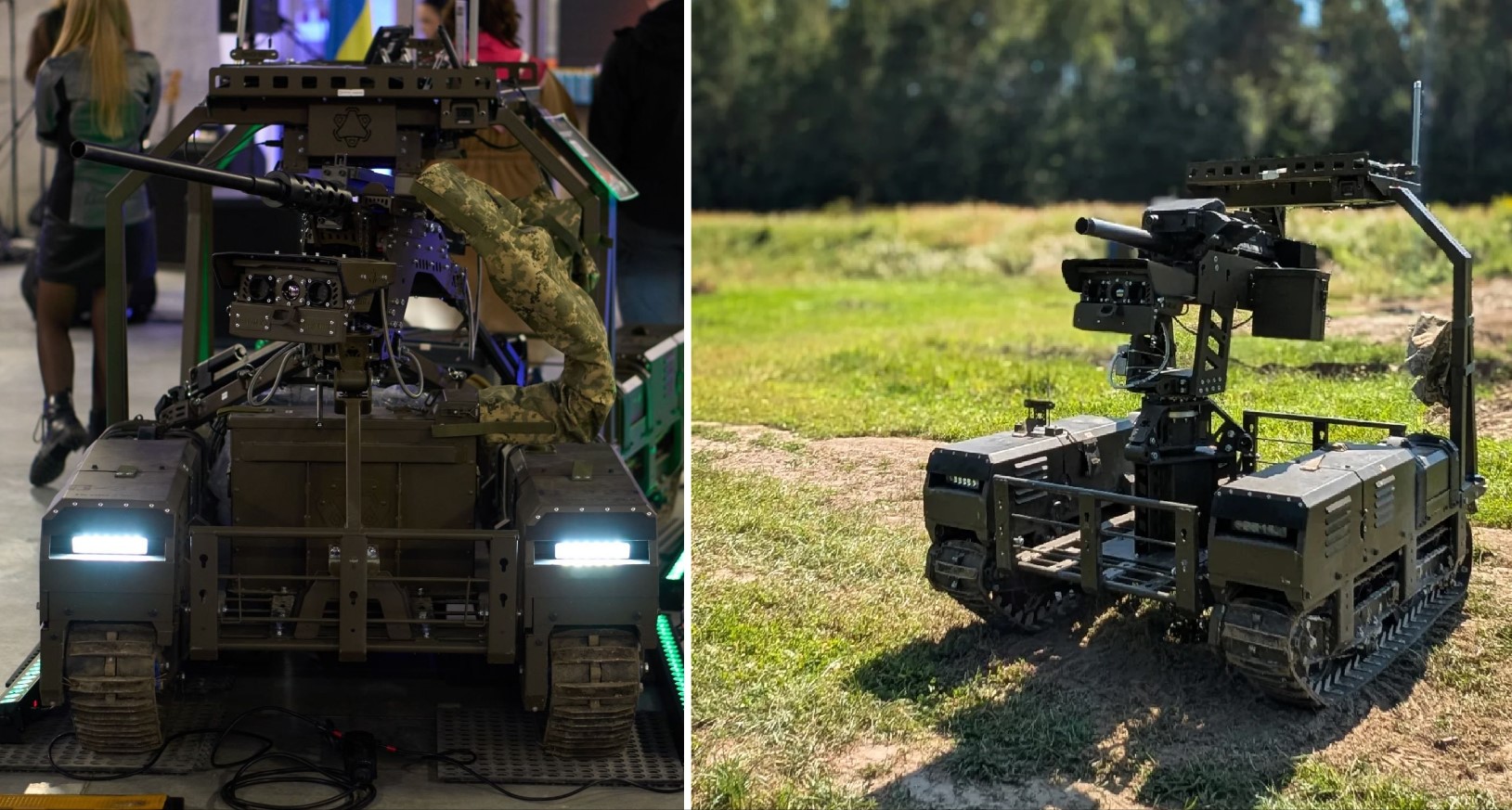
Kyiv: Ukrainian defense technology company DevDroid has successfully integrated an advanced AI-powered optical target detection and identification system into its unmanned ground vehicles (UGVs), marking a significant step forward in battlefield automation and situational awareness for Ukraine’s armed forces.
The development was confirmed by Yurii Poritskyi, Chief Executive Officer of DevDroid, during an interview with Militarnyi. According to the company, the new system is designed to reduce operator workload, speed up target recognition, and improve survivability of unmanned platforms operating in high-threat environments.
Multi-Camera Optical Suite Enhances Battlefield Awareness
At the core of the system is a three-camera optical architecture that provides continuous visual coverage for UGV operators. The primary daylight camera is capable of detecting enemy personnel at distances of up to 1,000 meters, allowing early identification of threats during daylight combat operations.
Complementing this is a wide-angle daytime camera, which gives operators a broader field of view in front of the vehicle. This sensor enables rapid assessment of terrain, monitoring of enemy movement, and identification of sectors with no hostile presence, improving route selection and tactical decision-making during missions.
For operations in low-visibility conditions, the system integrates a thermal imaging camera capable of detecting human targets at distances of 600 to 700 meters, depending on weather and atmospheric conditions. This capability significantly enhances night-time and adverse-weather performance, a critical factor in modern frontline combat.
AI Trained on Real Combat Footage
DevDroid emphasized that the artificial intelligence driving the system was trained using a large volume of real battlefield combat footage, collected during active hostilities. This approach allows the AI to better recognize real-world movement patterns, camouflage techniques, and battlefield behaviors that are often absent from synthetic or test-range datasets.
The AI software features distinct operational modes tailored to different mission requirements. One mode detects any change in the visual scene, instantly alerting the operator when movement is observed in the UGV’s field of view. Another mode is specifically optimized for human target detection, filtering out irrelevant motion and focusing on identifying enemy personnel.
According to Poritskyi, these modes allow operators to quickly adapt the system to reconnaissance, perimeter security, or direct combat support roles without changing hardware.
Armed UGV With 30 mm Cannon Under Development
Looking ahead, DevDroid revealed plans to develop a new unmanned ground combat platform armed with a 30 mm cannon. The future UGV is intended for assault operations and direct fire support for infantry units operating on the front line.
The company stated that the armed platform will combine the newly developed AI-enabled optical system with enhanced mobility and protection, allowing it to engage enemy positions while minimizing risk to human soldiers. Such a system would place DevDroid among a small group of manufacturers globally working on heavily armed robotic ground combat vehicles.
Production Expansion for Evacuation Drones
In parallel with its combat robotics program, DevDroid is also scaling up production of its Maul evacuation drones, designed to extract wounded soldiers from contested areas. These unmanned evacuation systems are increasingly in demand as Ukraine continues to seek technological solutions to reduce battlefield casualties and maintain medical evacuation capabilities under fire.
Company officials noted that increased production capacity is aimed at meeting the growing operational requirements of the Ukrainian Defense Forces, reflecting a broader shift toward unmanned systems across logistics, combat support, and frontline operations.
Growing Role of AI-Driven Ground Robotics
DevDroid’s latest integration highlights the accelerating role of AI-driven unmanned ground systems in modern warfare. By combining long-range optical sensors, thermal imaging, and combat-trained artificial intelligence, Ukrainian developers are rapidly fielding systems designed for real-world battlefield conditions rather than experimental use.
As the conflict continues to drive innovation, platforms such as DevDroid’s AI-equipped UGVs are expected to play an increasingly central role in reconnaissance, combat support, evacuation, and future autonomous assault operations.
About the Author
Aditya Kumar:
Defense & Geopolitics Analyst
Aditya Kumar tracks military developments in South Asia, specializing in Indian missile technology and naval strategy.