Ukraine’s Combat-Proven Raybird Drone Tipped to Replace the British Army’s Watchkeeper by 2027
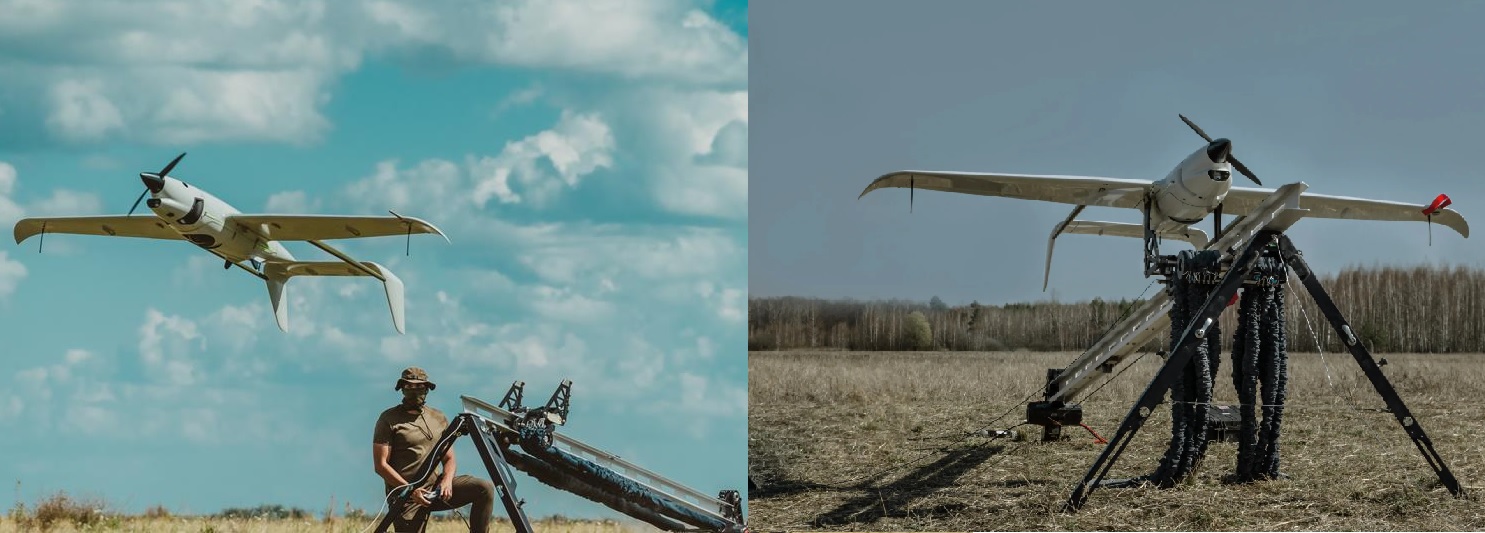
The British Army’s long-troubled Watchkeeper unmanned aerial system may soon have an unlikely successor — the Raybird, a combat-tested reconnaissance drone developed by Ukraine’s Skyeton company. According to Forces News reports on November 4, 2025, the Raybird is being actively promoted as a replacement for the Watchkeeper, which is set to retire in 2027. If adopted, this move could accelerate the UK’s Project Corvus program — a key effort to modernize and field affordable, long-endurance ISR (Intelligence, Surveillance, Reconnaissance) drones resilient to electronic warfare (EW).
A Ready Solution for Project Corvus
The UK’s Project Corvus aims to develop a new unmanned system under the Land Tactical Deep Find (LTDF) requirement — designed to locate and track enemy assets deep behind the frontline with minimal risk to personnel. Watchkeeper, once envisioned as the backbone of British Army reconnaissance, has faced recurring issues since its introduction in 2014, including technical faults, grounding incidents, and limited deployment utility.
With Watchkeeper slated for retirement in 2027, the need for a replacement is urgent. Ukraine’s Raybird presents a ready and combat-proven alternative. Having logged more than 350,000 flight hours in wartime conditions, the drone has been extensively used for reconnaissance, artillery correction, and electronic warfare missions in Ukraine’s ongoing defense operations.
The UK Ministry of Defence (MoD) is reportedly exploring whether Raybird could bridge the gap — offering a faster, cheaper, and more resilient capability than a new domestic development.
Specifications and Technical Overview
Despite its compact size, the Raybird packs advanced capabilities that align closely with the UK’s future ISR needs. Built for long-endurance missions, electronic warfare resilience, and rapid field deployment, the drone combines endurance with simplicity.
Key Specifications:
-
Manufacturer: Skyeton (Ukraine)
-
Endurance: Up to 28 hours
-
Maximum Range: Up to 2,500 kilometers (autonomous mode)
-
Operational Altitude: Up to 5,500 meters
-
Maximum Take-Off Weight: Approximately 23 kilograms
-
Wingspan: Between 3 and 4.2 meters (variant dependent)
-
Payload Capacity: Around 5 kilograms
-
Communication Range: Up to 200 kilometers
-
Deployment: Catapult-launched, parachute and airbag recovery
-
Setup Time: 20–25 minutes
-
Sensors: EO/IR gimbal, Synthetic Aperture Radar (SAR), and optional RF payloads for ELINT missions
-
EW Resilience: Operable in GPS-denied or jammed environments
These specifications make Raybird one of the few small UAVs capable of combining medium-endurance performance with the portability of a tactical drone.
Why the Raybird Stands Out
The appeal of the Raybird to the UK defense establishment lies in three major factors — combat performance, deployability, and cost efficiency.
Firstly, the system has already proven its reliability in combat conditions. Ukrainian forces have relied on Raybird for years in some of the most electronically hostile airspaces in the world. This has provided invaluable data on its performance under jamming, harsh weather, and live-fire conditions — something few Western tactical drones can claim.
Secondly, Raybird’s modular design allows operators to switch payloads quickly and launch with minimal infrastructure, suiting modern expeditionary warfare. Its ground crew requirement is minimal, and the system can be assembled and launched from a small open field.
Thirdly, affordability plays a central role. With Western military budgets stretched and the demand for persistent ISR increasing, the Raybird presents an option that is mature, scalable, and significantly cheaper than many Western-built equivalents.
The Industrial and Strategic Angle
Behind the proposal is a joint UK-Ukraine venture involving Skyeton and British partner companies. The plan reportedly includes local assembly and maintenance in the UK, satisfying both operational and political requirements for domestic industrial participation.
According to Janes Defence Weekly, the UK’s Land Tactical Deep Find requirement prioritizes affordability, rapid deployment, and EW survivability — all criteria that the Raybird meets. This makes it a realistic candidate for Project Corvus, which aims to deliver operational capability soon after Watchkeeper’s retirement.
If the UK adopts the Raybird, it would also mark a significant deepening of defense-industrial cooperation with Ukraine — providing a pathway for Ukrainian aerospace technologies to enter the NATO market.
Challenges and Unanswered Questions
Despite its advantages, the Raybird faces several challenges before it could replace the Watchkeeper. Integration with the British Army’s C4ISR network (Command, Control, Communications, Computers, Intelligence, Surveillance, and Reconnaissance) would require new data links, software certification, and training.
There are also concerns over airspace safety certification — an issue that long plagued the Watchkeeper program. Additionally, while Raybird has shown excellent performance in Ukraine, the UK’s operational demands and weather conditions could require adaptation.
Moreover, questions remain about industrial sovereignty — whether the UK would prefer a domestically built drone or one with foreign origins, even if locally assembled. Competing systems from European or British manufacturers could also challenge Raybird’s bid.
As the Watchkeeper nears retirement, the British Army cannot afford a capability gap in its tactical ISR assets. Project Corvus will likely award its first contracts in 2026, making the next year critical for testing and evaluation.
Should Raybird prove its reliability, interoperability, and survivability, it could become the first Ukrainian-designed drone to enter frontline service with a NATO army — a landmark achievement for both nations.
In an era where low-cost, long-endurance, and resilient ISR platforms are redefining modern warfare, Ukraine’s Raybird stands as a powerful example of how battlefield innovation can reshape the future of reconnaissance.
About the Author
Aditya Kumar:
Defense & Geopolitics Analyst
Aditya Kumar tracks military developments in South Asia, specializing in Indian missile technology and naval strategy.