Ukraine Unveils Mass-Produced ‘Bullet’ Interceptor Drone to Counter Russian Shahed and Geran Drones
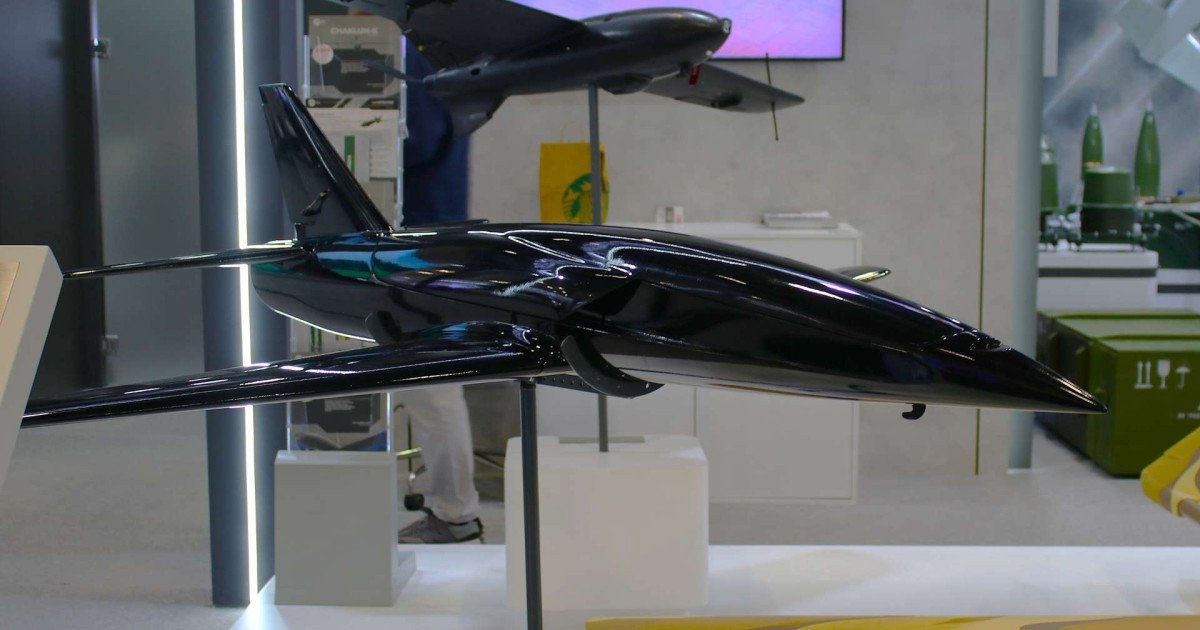
As Russia intensifies its aerial campaign with faster, jet-powered loitering munitions, Ukraine is responding by industrializing a new layer of air defense built not on missiles, but on speed, software, and scale. Ukrainian defense-technology firm General Chereshnya has entered mass production of the “Bullet” interceptor drone, a high-speed system designed to hunt enemy unmanned aerial vehicles (UAVs) in mid-air and blunt the Kremlin’s expanding drone offensive.
The Bullet, which moved into serial production in late 2025, is engineered to counter Shahed-136 kamikaze drones, long-range reconnaissance UAVs, and selected low-flying aerial targets. With top speeds reaching up to 450 kilometers per hour, the platform represents a new category of weapon—an unmanned, low-cost interceptor often described by Ukrainian engineers as a “flying air-defense missile.”
Responding to a Faster War in the Air
Russia’s drone campaign has evolved rapidly. What began with relatively slow, propeller-driven Shahed drones has transformed into a high-speed threat environment, forcing Ukraine to rethink traditional defensive concepts. Mobile fire teams, once effective against slow UAVs, now struggle to counter faster and higher-flying targets.
This shift became more pronounced with the introduction of the Geran-3 (Shahed-238), a jet-powered variant reportedly capable of reaching speeds of up to 500 kilometers per hour. These systems dramatically reduce engagement windows and exceed the interception limits of most FPV-based air-defense drones.
“The physics of the battlefield have changed,” said Yaroslav Hryshyn, founder of General Chereshnya. “When the enemy introduces speed and altitude, you must respond with platforms that can match those parameters. The Bullet is the result of that reality.”
Designed as an Interceptor, Not an Adaptation
Unlike conventional FPV drones retrofitted for interception, the Bullet was designed from the outset as a dedicated air-to-air platform. Its aerodynamic airframe, reinforced structure, and jet or high-output electric propulsion allow it to close on targets in seconds rather than minutes.
The serial production model reaches speeds of approximately 309 kilometers per hour, while performance variants deployed at the front approach 450 kilometers per hour. Its operational ceiling of up to 6,000 meters enables engagements against targets previously unreachable by short-range drone defenses.
This performance allows the Bullet interceptor to reliably engage Shahed-class drones cruising at around 180 kilometers per hour, while also providing a partial counter to Russia’s newer, faster systems.
Artificial Intelligence in the Kill Chain
A defining feature of the Bullet system is its integration of artificial intelligence (AI) during the terminal phase of flight. The drone uses AI-based auto-aim and target-lock software, enabling it to complete an intercept even if the operator’s control signal is disrupted by electronic warfare (EW).
In a battlespace saturated with jamming and spoofing, this autonomy is critical. Once the Bullet acquires a target, it can execute the final attack independently, improving kill probability, reducing pilot workload, and increasing survivability.
The interceptor is produced in three main configurations: a daytime variant with optical sensors, a nighttime model equipped with thermal imaging, and a guidance-optimized version focused on enhanced seekers and onboard AI processing.
A Cost Equation Ukraine Can Sustain
Beyond performance, the Bullet addresses one of Ukraine’s most pressing strategic challenges: cost-efficiency. Conventional surface-to-air missile (SAM) systems can cost hundreds of thousands to several million dollars per launch, making them ill-suited to counter mass drone attacks.
By comparison, the Bullet interceptor is estimated to cost between $3,000 and $7,000 per unit. While its reported success rate of over 80 percent does not match high-end missile systems, Ukrainian planners see the trade-off as essential in a war of attrition.
Using a low-cost interceptor to defeat a low-cost drone preserves scarce missile stocks and enables air defense to scale with the intensity of Russian attacks.
Training for High-Speed Engagements
High-speed aerial interception requires skills beyond standard FPV operations. To address this, General Chereshnya has established the General Chereshnya Academy, a dedicated training program for interceptor drone pilots.
The academy deploys mobile training teams near operational units, rapidly certifying pilots for frontline service. According to the company, interception timelines measured in seconds demand precision, situational awareness, and confidence in AI-assisted targeting systems.
In October 2025 alone, the company reports that its interceptor drone family, including the Bullet and AIR models, destroyed at least 548 aerial targets—making it one of the most effective elements of Ukraine’s layered air-defense network.
International Attention and Expansion Plans
The Bullet’s combat performance has attracted significant international interest. In late 2025, U.S.-based defense firm AIRO Group signed a Letter of Intent with General Chereshnya to form a joint venture aimed at manufacturing and distributing the interceptor for NATO and allied nations.
The partnership seeks to adapt the combat-proven high-speed interceptor to Western manufacturing standards while preserving its core advantages: speed, autonomy, and affordability. Defense analysts say such systems could help NATO counter drone swarms and low-cost aerial threats.
Toward a Drone-on-Drone Doctrine
As Ukraine moves into 2026, the Ministry of Defense has signaled that drone-on-drone interception will become a cornerstone of domestic procurement policy. Officials plan to deploy thousands of interceptor drones per month to protect cities, energy infrastructure, and logistics hubs from sustained Russian attacks.
The rise of the Bullet interceptor reflects a broader transformation in modern warfare, where control of the air increasingly depends on software, autonomy, and industrial scale, rather than missiles alone.
In this evolving battlespace, the Bullet is not just a weapon—but a signal that the future of air defense may belong to those who can build faster, smarter, and cheaper than their adversary.
✍️ This article is written by the team of The Defense News.