Ukraine, Germany Suspend Orders of Helsing’s HX-2 Drone After Failures in Combat Tests
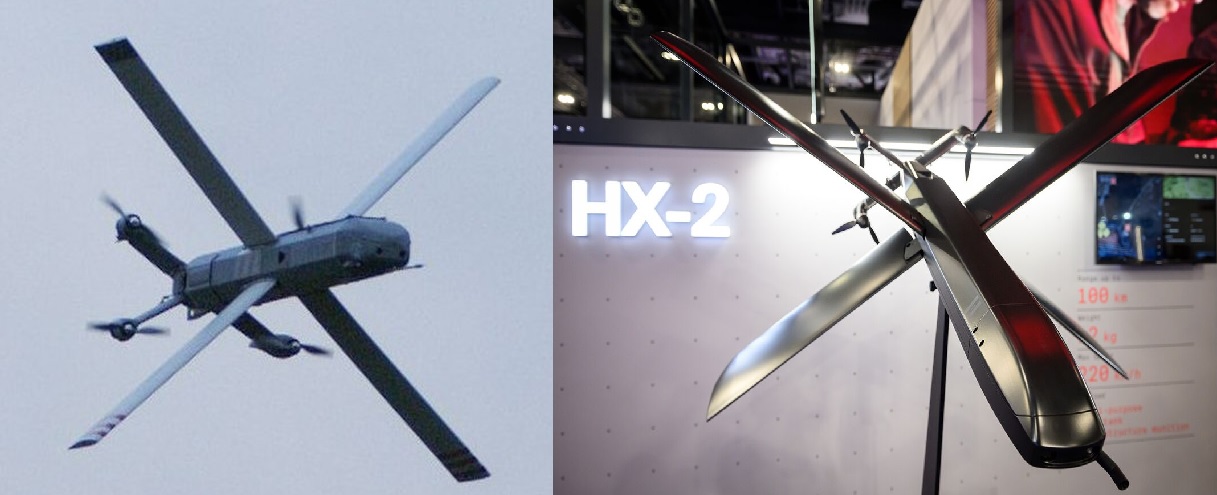
KYIV / BERLIN : Ukraine and Germany have suspended further procurement of the HX-2 loitering munition produced by the German defense startup Helsing, following a series of technical failures uncovered during frontline testing in Ukraine, according to reporting by Bloomberg and internal German government documents.
The decision marks another setback for Western-supplied unmanned aerial systems (UAS) in the war against Russia and underscores the widening gap between advertised next-generation drone capabilities and the harsh realities of electronic warfare on the Ukrainian battlefield.
Testing in Ukraine Exposes Critical Flaws
According to an internal presentation prepared by the German Defence Ministry and dated November 2025, the HX-2 repeatedly failed to meet operational expectations during trials conducted by Ukraine’s 1st Unmanned Aerial Systems Center, part of the 14th regiment.
Ukrainian operators reported persistent problems during launch sequences, with multiple units failing to take off reliably under combat conditions. Even when airborne, the system was found to lack several of the advertised AI-enabled targeting and autonomy features that had been central to Helsing’s marketing narrative.
Perhaps most damaging, evaluators concluded that the HX-2 was significantly more vulnerable to Russian electronic warfare than anticipated. Jamming frequently disrupted navigation and guidance, sharply limiting the munition’s combat effectiveness in contested airspace, where electronic countermeasures are now routine.
A Pattern of Underperformance
The HX-2 is not the first Helsing system to encounter difficulties in Ukraine. Its predecessor, the HF-1 loitering munition, had already drawn sustained criticism from Ukrainian units for inconsistent performance and limited survivability.
The HF-1 is a modified version of the AQ-100 Bayonet developed by Terminal Autonomy. According to the same Defence Ministry presentation, only about 2,000 of the 4,000 HF-1 units ordered under contract had been delivered. Of those, roughly 40 percent were reportedly sitting unused in Ukrainian inventories, described in internal assessments as operationally irrelevant under current battlefield conditions.
In an effort to salvage the procurement program, Berlin and Kyiv agreed to convert the remaining HF-1 orders into HX-2 purchases. That decision is now under renewed scrutiny, as the HX-2 itself has failed to demonstrate a meaningful improvement.
Western UAVs Struggle Against Battlefield Reality
The difficulties facing Helsing’s systems reflect a broader challenge confronting Western drone manufacturers in Ukraine. Ukrainian military and intelligence sources have repeatedly argued that many imported loitering munitions are ill-suited for an environment saturated with jammers, spoofers, and rapid counter-UAS adaptation by Russian forces.
Domestic Ukrainian drones, often cheaper and less technologically ambitious, have in many cases outperformed Western systems by prioritizing resilience, rapid iteration, and ease of repair over advanced but fragile software-dependent features.
This assessment appears to be gaining traction among Ukrainian security agencies. The Security Service of Ukraine has recently confirmed that it halted operational use of the Altius family of loitering munitions supplied by Anduril, citing unreliable performance and repeated mission failures.
Implications for European Defense Strategy
For Germany, the HX-2 setback raises uncomfortable questions about its fast-growing defense technology sector and the credibility of Europe’s emerging drone industry. Helsing has been widely promoted as a flagship example of Europe’s push into AI-enabled warfare, attracting political attention and significant investment amid calls for greater strategic autonomy from U.S. defense suppliers.
The suspension of orders does not necessarily spell the end of the HX-2 program, but officials familiar with the testing say future procurement will depend on substantial redesigns and verifiable proof that the system can survive sustained electronic attack.
For Ukraine, the episode reinforces a lesson learned repeatedly since 2022: in a war defined by adaptation speed, resilience, and mass production, these factors often matter more than cutting-edge features that fail under fire. As Kyiv continues to refine its drone doctrine, the emphasis is increasingly shifting toward systems that can be built, modified, and replaced faster than the enemy can learn to defeat them.
Whether Western manufacturers can adapt quickly enough to that reality may determine their future role on Europe’s most technologically demanding battlefield.
About the Author
Aditya Kumar:
Defense & Geopolitics Analyst
Aditya Kumar tracks military developments in South Asia, specializing in Indian missile technology and naval strategy.