Ukraine Fights With Challenger 2 Tanks as Britain Freezes Plans to Upgrade Them to Challenger 3
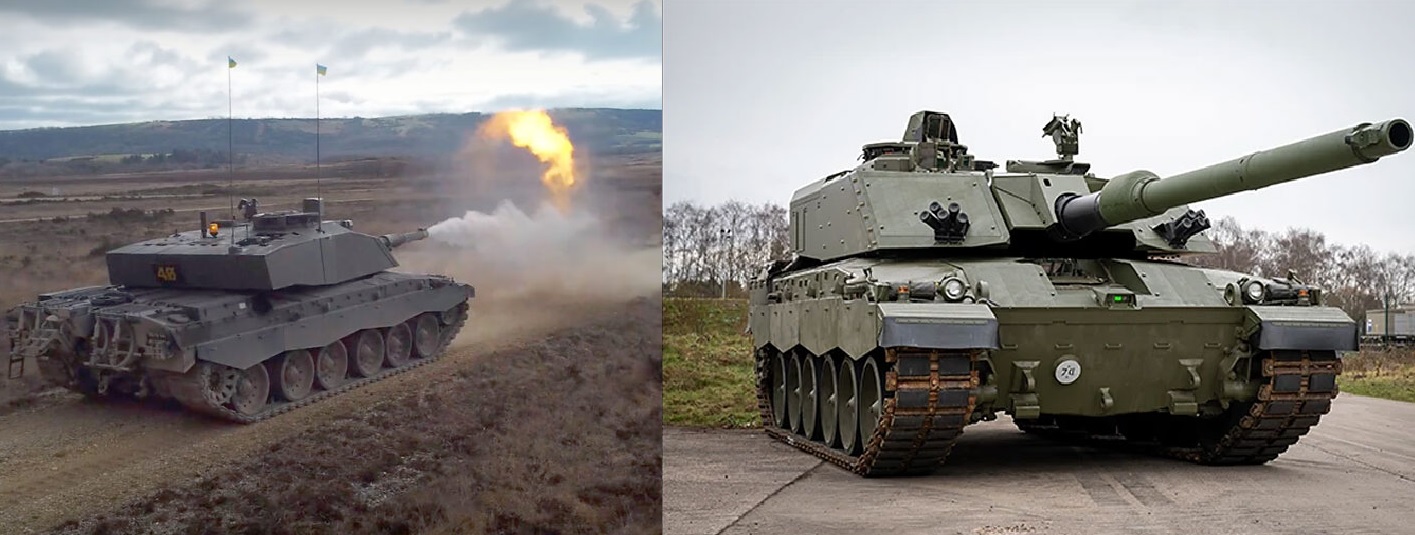
Kyiv / London : As Ukrainian forces continue to deploy British-supplied Challenger 2 main battle tanks on the front lines against Russian troops, questions are mounting in the United Kingdom over the fate of a much larger fleet of the same vehicles sitting idle at home. The British Army currently holds around 140 Challenger 2 tanks that will not be upgraded to the new Challenger 3 standard, and no final decision has been made on whether they will be dismantled, stored, sold abroad, or transferred to an ally such as Ukraine.
The situation highlights a growing disconnect between Ukraine’s urgent battlefield needs and Britain’s unresolved post-modernisation plans for its ageing armoured force.
A Tank Fighting in Ukraine and Waiting in Britain
Ukraine began operating Challenger 2 tanks in 2023 after receiving a limited number from the UK as part of a broader Western effort to strengthen Kyiv’s armoured capabilities. Though supplied in small quantities, the tanks have been used in both defensive and limited offensive roles, valued primarily for their heavy protection and long-range firepower.
At the same time, according to UK Defence Journal, the British Army retains approximately 140 Challenger 2 hulls that are excluded from the ongoing Challenger 3 upgrade programme. These tanks are effectively surplus to Britain’s future force structure, yet remain intact and potentially usable.
The Ministry of Defence has so far declined to commit to a clear path forward, leaving the fleet in what analysts describe as a strategic holding pattern.
What It Takes to Turn Challenger 2 Into Challenger 3
The Challenger 3 upgrade is not a minor refurbishment but a deep modernisation designed to keep Britain’s armoured force relevant into the 2040s. Central to the upgrade is the replacement of the Challenger 2’s 120mm rifled gun with a NATO-standard 120mm smoothbore cannon. This change allows the tank to fire the same ammunition used by most Western main battle tanks, greatly simplifying logistics and interoperability.
Beyond the main gun, the Challenger 3 programme includes a redesigned turret, improved fire-control systems, enhanced thermal sights for both commander and gunner, upgraded armour protection, and a modern digital architecture to support battlefield networking. The work is complex and expensive, which is why only 148 Challenger 2 tanks are being converted.
The remaining 140 vehicles lack allocated funding and industrial capacity for conversion, effectively pushing them out of Britain’s long-term plans.
How Challenger 2 Has Performed in Ukraine
On the battlefield, Ukraine’s experience with Challenger 2 tanks has been mixed but largely positive. The tank’s heavy armour, including its Dorchester composite protection, has proven resilient against many battlefield threats. Ukrainian crews have also praised the tank’s accuracy at long range.
However, challenges remain. The Challenger 2’s rifled gun uses ammunition that is not standard among Ukraine’s other Western-supplied tanks, such as the Leopard 2. This complicates logistics and limits ammunition availability. Maintenance has also been an issue, as the tank requires specialised spare parts and trained technicians, often forcing repairs to be carried out away from the front or even outside Ukraine.
Despite these issues, Ukrainian forces continue to operate the tanks, suggesting that their combat value outweighs the logistical burden, particularly given Ukraine’s ongoing shortage of heavily armoured vehicles.
Ukraine as a “Logical Candidate”
According to Defense Express, Ukraine stands out as the most logical destination should Britain decide to transfer its unused Challenger 2 tanks. Ukrainian crews are already trained on the platform, supply chains — while limited — are established, and the strategic need is clear.
Transferring additional Challenger 2s would not require the lengthy and costly Challenger 3 upgrade, and could significantly bolster Ukraine’s armoured strength at a time when attrition remains high. Analysts note that even if the tanks are not cutting-edge by NATO standards, they remain formidable assets in the current conflict.
Strategic Hesitation in London
For Britain, the dilemma reflects broader tensions in defence planning. Scrapping the tanks would draw criticism at a time when allies are seeking every available piece of equipment to support Ukraine. Long-term storage carries its own costs and risks, while export or transfer would require political approval and funding for refurbishment and transport.
So far, London has offered no definitive timeline. The result is a paradoxical situation: Ukrainian soldiers are fighting with Challenger 2 tanks under fire, while more than a hundred identical vehicles remain parked and undecided thousands of kilometres away.
As the war grinds on and pressure grows for sustained military support to Kyiv, the fate of Britain’s unused Challenger 2 fleet is increasingly seen not just as a budgetary issue, but as a test of strategic resolve.
About the Author
Aditya Kumar:
Defense & Geopolitics Analyst
Aditya Kumar tracks military developments in South Asia, specializing in Indian missile technology and naval strategy.