U.S. Withdraws Aircraft Carriers from Middle East, Signals Strategic Shift on Iran and Chin
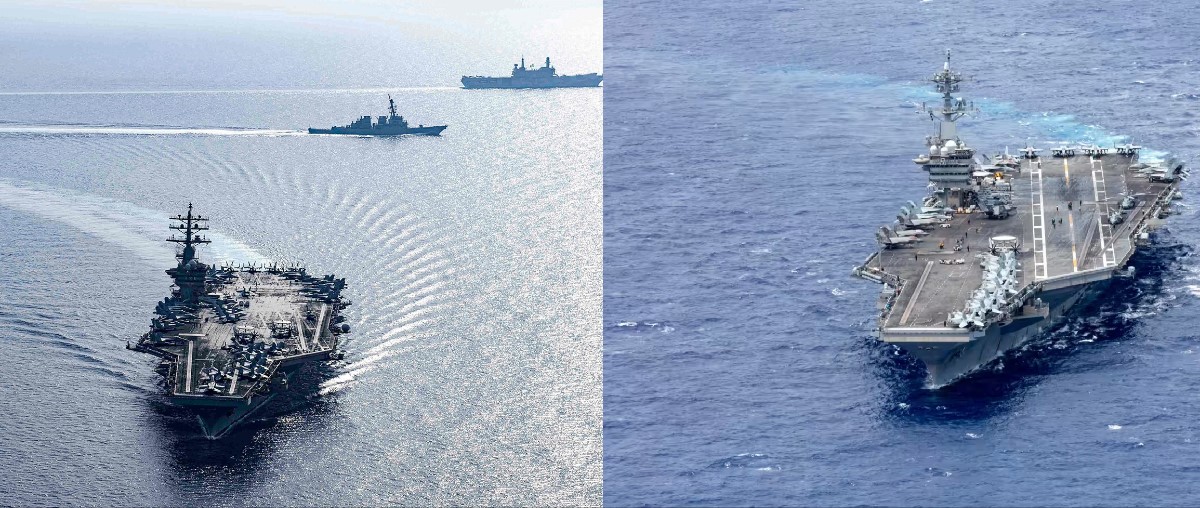
Washington / Tehran / Beijing : For the first time in decades, the United States finds itself without an aircraft carrier strike group stationed in or immediately adjacent to the Middle East, a development that is reshaping assumptions about how Washington might wage a future conflict with Iran — and what that posture signals to China amid rising tensions over Taiwan.
For decades, the presence of at least one U.S. aircraft carrier in the Middle East has been treated as a prerequisite for major American military operations. In past interventions, the U.S. Navy routinely deployed two carriers, with one serving as a backup to ensure uninterrupted air operations in case of mechanical failure, combat losses, or escalation. That model is now conspicuously absent.
According to U.S. defense officials and open-source naval tracking data, no American carrier is currently operating in the Persian Gulf, Gulf of Oman, or northern Arabian Sea. While U.S. forces remain active across regional bases, the absence of carriers marks a significant departure from established doctrine.
A Shift in U.S Military Thinking
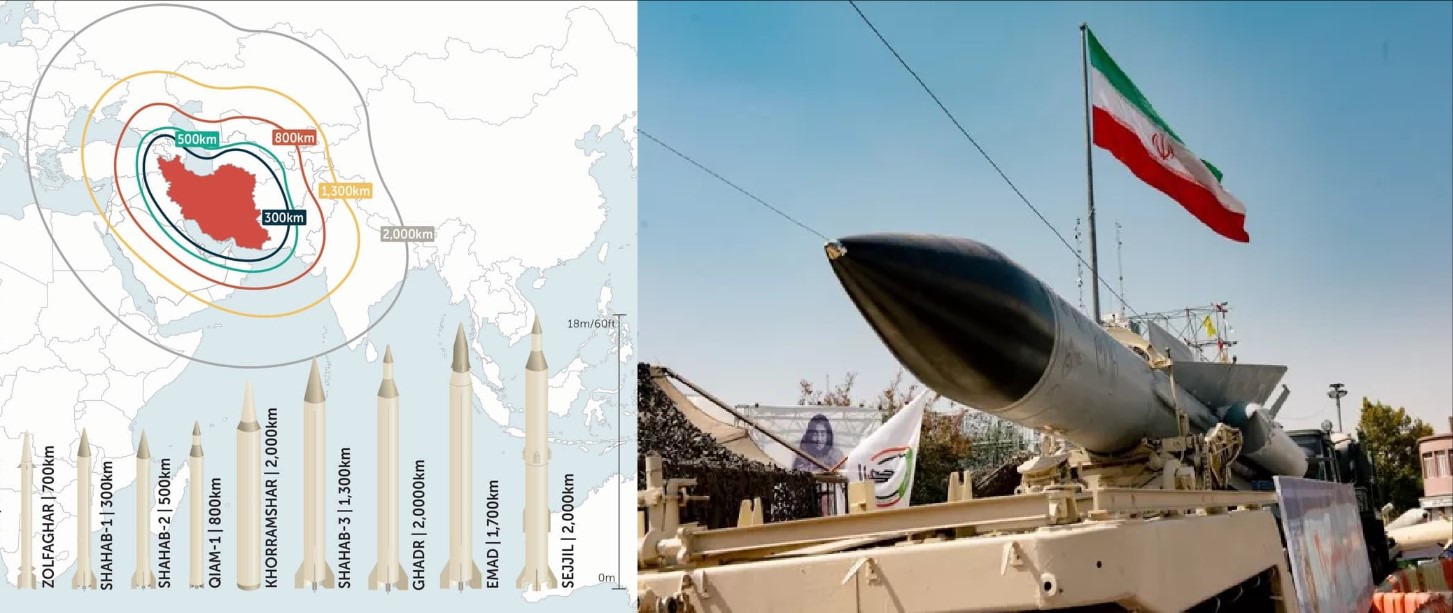
The change reflects a growing reassessment inside the Pentagon about the vulnerability of aircraft carriers in high-threat environments. Iran’s expanding arsenal of precision-guided ballistic missiles, cruise missiles, armed drones, fast-attack craft, and sea mines has dramatically increased the risks to large surface vessels operating close to its shores.
U.S. military planners increasingly view aircraft carriers not as invulnerable symbols of dominance, but as high-value targets that could be degraded or neutralized early in a conflict. In a war with Iran, analysts say, carriers would likely operate at extended distances, relying on long-range aircraft rather than sustained close-in operations.
This evolution mirrors broader U.S. defense thinking shaped by lessons from Ukraine and great-power conflict wargames, where survivability, force dispersal, and long-range strike capability are prioritized over forward concentration of forces.
What is Lost Without Carriers
The absence of aircraft carriers, however, carries real operational consequences. Carrier air wings traditionally provide sustained, high-tempo air operations, capable of launching dozens of sorties per day. They also play a central role in suppressing enemy air defenses, conducting electronic warfare, and maintaining air superiority in contested airspace.
Without carriers, the U.S. must rely more heavily on land-based aircraft, regional air bases, long-range bombers, and stand-off weapons such as cruise missiles. While effective for precision strikes, these alternatives reduce flexibility, endurance, and operational tempo, particularly in a prolonged conflict.
Military analysts note that initiating strikes on Iran without carrier involvement would represent a deliberate test of American combat capability under constrained conditions — a demonstration that the U.S. can fight without assets it may need elsewhere.
The China Factor Looms Large
That “elsewhere” is the Indo-Pacific. The carrier gap in the Middle East is widely interpreted as linked to Washington’s preparations for a potential confrontation between China and Taiwan.
U.S. defense planners are acutely aware that aircraft carriers would be indispensable in any high-intensity conflict in the Western Pacific. With China’s People’s Liberation Army rapidly expanding its missile forces, naval power, and air defenses, the U.S. is reluctant to expose its carrier fleet to unnecessary risk or strain in secondary theaters.
Maintaining carriers closer to the Pacific preserves deterrence against Beijing and avoids signaling that U.S. naval power is overstretched. In this context, the Middle East drawdown appears less like disengagement and more like strategic reallocation.
Beijing’s likely Response
China has been closely monitoring U.S. force posture changes. Chinese state media and military commentators have repeatedly argued that American aircraft carriers are increasingly vulnerable to hypersonic and precision missile strikes, particularly in confined waters.
If the U.S. demonstrates an ability to strike Iran without carrier support, Chinese analysts are likely to interpret it in two ways. First, as evidence that Washington is adapting its warfighting doctrine to operate without carriers near hostile shores. Second, as confirmation that the U.S. is conserving its most valuable naval assets for a Taiwan contingency.
Beijing, in response, is expected to accelerate its own naval and missile modernization. The People’s Liberation Army Navy continues to expand its carrier fleet, while simultaneously investing in anti-carrier systems designed to deny U.S. forces access to the Western Pacific. Chinese officials are also likely to use the Middle East carrier absence to reinforce domestic narratives that American power is becoming more cautious and selective.
A Signal, Not a Retreat
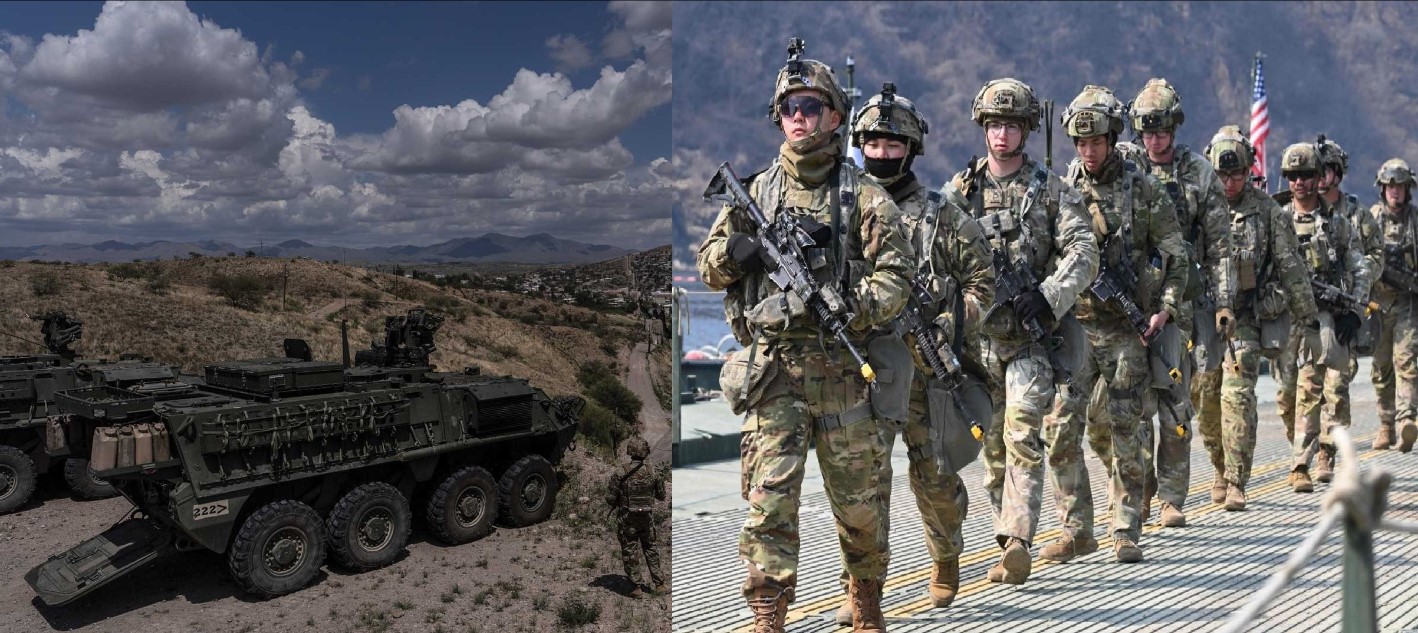
U.S. officials insist that the absence of carriers does not mean diminished American commitment to Middle Eastern security. Tens of thousands of U.S. troops remain deployed across the region, supported by advanced air power, missile defenses, and naval forces.
Instead, the current posture suggests a recalibration of American military power. Should the U.S. choose to strike Iran without deploying aircraft carriers, it would mark a historic shift — not only in Middle East strategy, but in how Washington prepares for a potential great-power confrontation with China.
In that sense, the empty waters of the Persian Gulf may be sending a message far beyond Tehran, one that is being carefully studied in Beijing.
About the Author
Aditya Kumar:
Defense & Geopolitics Analyst
Aditya Kumar tracks military developments in South Asia, specializing in Indian missile technology and naval strategy.