U.S War Department Announces Fast-Track Six Critical Technologies Revolution to Outpace China and Russia
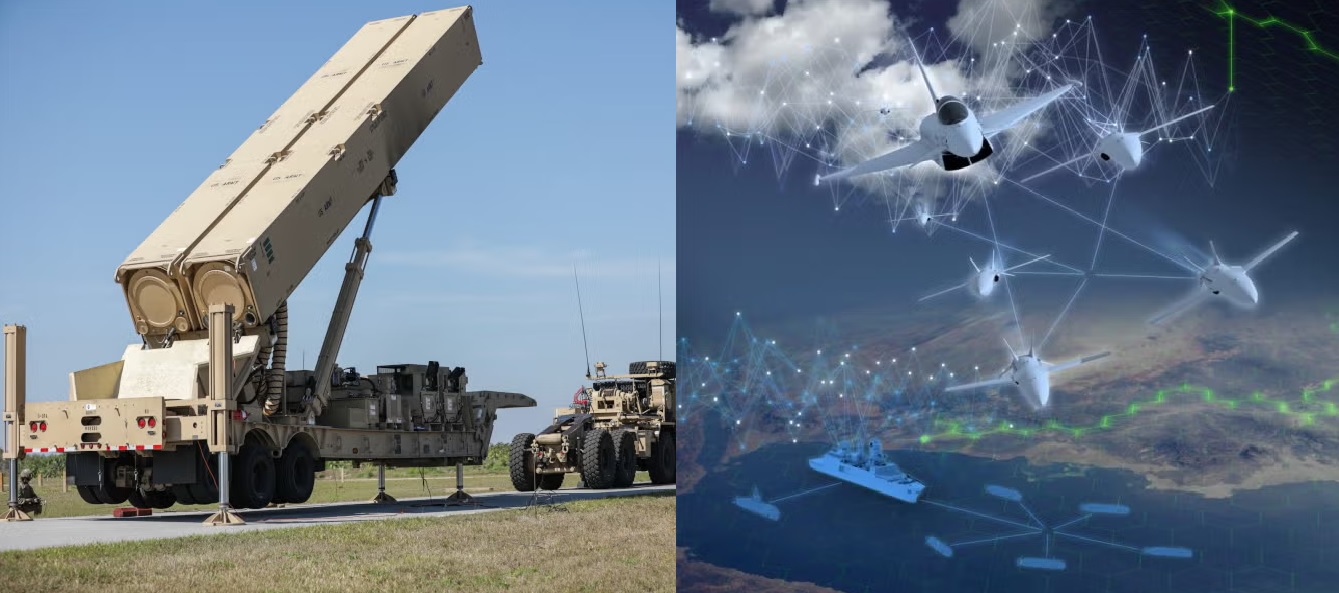
The U.S War Department has moved decisively into a new phase of military modernization, unveiling six critical technology priorities that officials say will shape the future of U.S. warfighting. What emerged this week was not another slow-moving reform directive, but a sharpened, urgent plan to equip American troops with cutting-edge tools right now, not in some distant planning cycle.
Undersecretary of War for Research and Engineering Emil Michael framed the moment with unusual bluntness. “Our adversaries are moving fast, but we will move faster,” he said. “The warfighter is not asking for results tomorrow; they need them today.” His message was clear: technological hesitation is no longer an option.
At the center of the strategy are six fields—Applied AI, Biomanufacturing, Contested Logistics Technology, Quantum Battlefield Information Dominance, Scaled Directed Energy, and Scaled Hypersonics. Each, according to defense leaders, represents not just an innovation path but a survival requirement for operating in a world increasingly shaped by near-peer military competition.
AI as the Driving Engine of Modern Warfare
Nothing illustrates this shift more than the renewed emphasis on applied artificial intelligence. President Donald J. Trump’s “Winning the Race: America’s AI Action Plan,” released in July, directed the department to adopt AI at unparalleled speed. Michael echoed the sense of urgency, warning that AI will be transformative only if it is deployed rapidly and broadly.
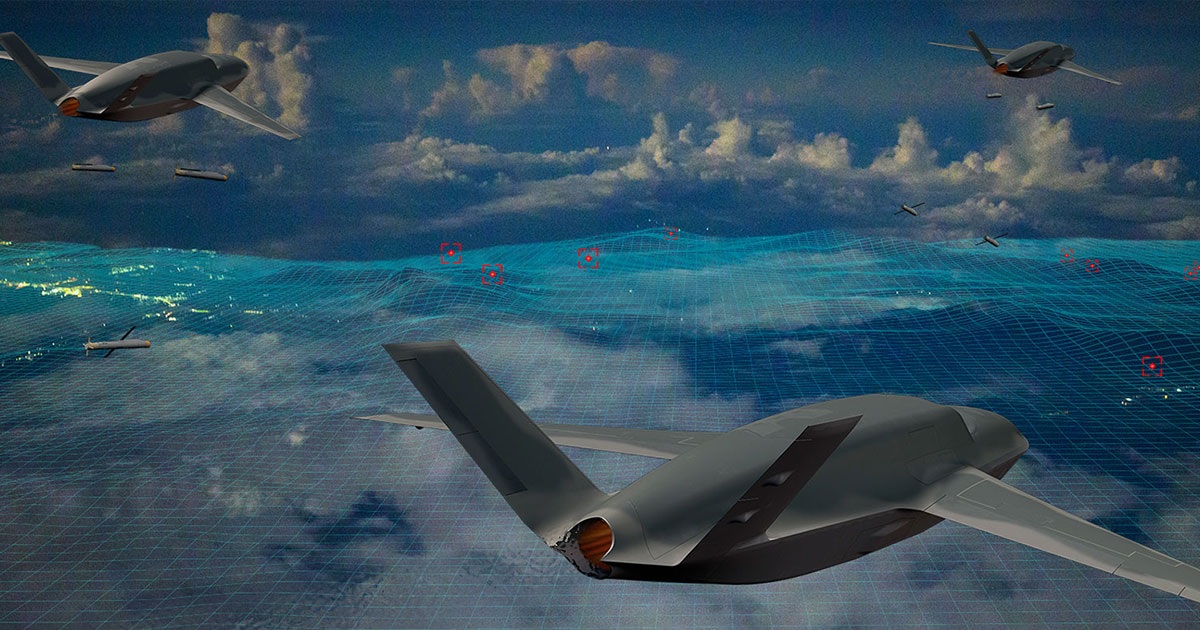
Inside the Pentagon, planners describe a future where AI becomes the nervous system of military power—an invisible force running through targeting, logistics, intelligence analysis, and autonomous systems. The vision is of a battlefield where sensors, drones, satellites, and command nodes operate in synchronized motion, all moving faster than any human staff could.
“When adopted rapidly, AI will fundamentally transform the department,” Michael said. It is meant to compress decision cycles, increase precision, and make the U.S. military’s response time nearly instantaneous.
Biomanufacturing and the Race for Supply Security
The next priority—biomanufacturing—might seem, at first glance, far removed from missiles and sensors. But the department sees it as a quiet revolution, an answer to the vulnerability of global supply chains that recent wars have exposed.
Michael described biomanufacturing as a way to “harness living systems” to produce critical materials. In practice, this means using engineered organisms to create:
-
bio-based energetic materials
-
chemical components for explosives
-
specialty minerals and compounds used in sensors and electronics
For a military concerned about the availability of rare earth metals and chemical precursors, many of which come from China, biomanufacturing offers something priceless: control. It gives the U.S. a domestic, resilient way to produce materials that modern weapons depend on.
Fighting a War Where Supplies Are Under Attack
The department’s third priority—contested logistics—recognizes a simple truth of modern warfare: the U.S. can no longer assume its supply lines are safe. In a conflict with a technologically sophisticated adversary, everything from ships to ports to fuel depots could be targeted.
The War Department wants to push logistics into a new era, one where resupply does not depend on vulnerable convoys or large depots. Autonomous drones, mobile micro-factories, hardened communications, and AI-driven planning tools are envisioned as the backbone of a system that must survive under attack.
In the Indo-Pacific, where any conflict with China would stretch supply lines across thousands of miles, these technologies are seen not as an upgrade but as a necessity.
Quantum Technologies for a New Kind of Information Warfare
The fourth priority—quantum battlefield information dominance—signals an ambition to reshape how the U.S. military sees and moves within contested environments. Quantum-secured communication networks could make enemy interception nearly impossible. Quantum sensors might detect stealth aircraft, submarines, or missiles long before traditional systems can.
Defense officials believe that quantum technologies could eventually become as important as radar once was in the early 20th century—something that completely transforms the character of warfare.
The department’s goal is straightforward: never lose information superiority, even in the most hostile electromagnetic environments.
Directed Energy Finally Moves Toward Mass Deployment
For decades, high-energy lasers (HEL) and high-power microwaves (HPM) were promising research projects that never quite reached maturity. Now, the War Department is preparing to scale them across the force.
Michael said the focus is on moving beyond prototypes to fieldable systems capable of engaging:
-
drones
-
cruise missiles
-
swarm attacks
-
low-cost airborne threats
Directed energy offers a unique advantage: each shot costs only a few dollars, compared to tens or hundreds of thousands for conventional interceptors. In a world where drone swarms are increasingly common—from Ukraine to the Red Sea—low-cost defense has become essential.
The department wants lasers mounted on trucks, ships, and airborne platforms, providing a layer of defense that is both cheap and persistent.
Hypersonics: From Limited Programs to Force-Wide Capability
The final pillar—scaled hypersonics—is perhaps the most strategically visible. The U.S. has lagged behind both China and Russia in fielding hypersonic weapons. The new push aims to reverse that trend by shifting from development to mass production, driving down costs and integrating hypersonic systems across multiple branches of the military.
Speed, range, and survivability make hypersonics a central part of deterrence. But until now, the U.S. has produced hypersonic missiles in relatively small numbers. The War Department now aims to change that by building the industrial base necessary for large-scale fielding.
A Return to First Principles: U.S. Military Superiority
War Secretary Pete Hegseth framed the new strategy in stark terms. “Our nation’s military has always been the tip of the spear,” he said. Narrowing the War Department’s focus ensures that American forces remain technologically unmatched.
“These six critical technology areas will ensure our warriors never enter a fair fight,” Hegseth said. “We are committed to remaining the most deadly fighting force on planet Earth.”
Behind the rhetoric is a recognition that the world has changed: adversaries innovate faster, conflicts evolve faster, and technology advances faster than any bureaucracy is comfortable with. The War Department’s new plan is an attempt to catch up—and then surge ahead.
In this moment, U.S. leaders believe that speed, precision, and technological daring are the only ways to secure battlefield advantage. And if the War Department has its way, the next generation of American warfighters will wield tools unlike anything seen in the last century—not eventually, but now.
About the Author
Aditya Kumar:
Defense & Geopolitics Analyst
Aditya Kumar tracks military developments in South Asia, specializing in Indian missile technology and naval strategy.