U.S. Typhon Missile System Lands in Japan in First Ever Deployment
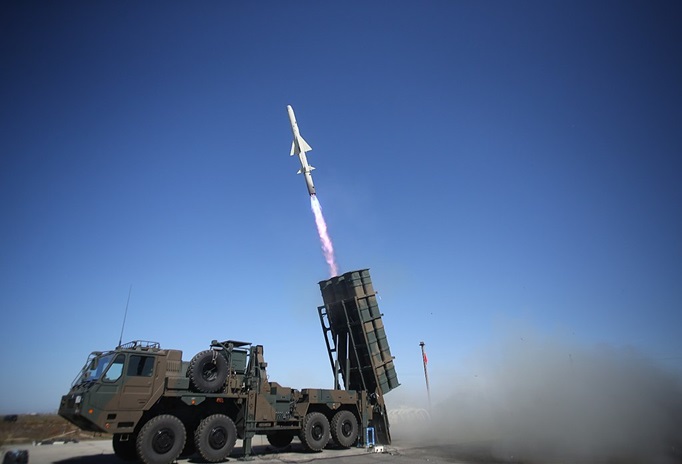
Tokyo, August 28, 2025 — For the first time, the U.S. Army’s Typhon surface-to-surface missile system will be deployed on Japanese territory, a move confirmed by Japan’s Ground Self-Defense Force. The system is scheduled to arrive at Marine Corps Air Station Iwakuni, west of Hiroshima, in time for the upcoming Resolute Dragon 2025 joint military exercise running from September 11 to 25.
What the Typhon Can Do
The Typhon system, officially called the Strategic Mid-Range Fires System, is a containerized, road-mobile launcher. It can fire two types of missiles:
-
The SM-6, capable of striking targets more than 320 kilometers away.
-
The Tomahawk cruise missile, with a range of up to 1,500 kilometers for deep-strike missions.
Because the system is mobile and hard to detect, it allows U.S. forces to rapidly disperse and target both land and maritime threats. Typhon’s dual role makes it effective for sea-denial missions and precision land attacks.
Why This Deployment Matters
This is not the first time Typhon has operated in the region. In 2024, it was briefly deployed in the Philippines during training drills. That rotation was temporary, but the Japan deployment appears more deliberate and may become recurring. With over 12,000 Japanese troops and 1,900 U.S. personnel taking part in Resolute Dragon, the Typhon system will play a central role in joint operations, showcasing its readiness as a fully integrated tool of theater deterrence.
Strategic Impact on Rivals
-
China: The system’s reach covers key Chinese naval facilities and bases, complicating Beijing’s operations around Taiwan and the East China Sea. Chinese amphibious and naval forces must now account for a mobile U.S. land-based missile threat.
-
Russia: Moscow sees the deployment as pressure on its eastern flank. From Japan, U.S. missiles can reach Russian logistics corridors, air bases, and naval facilities in the Sea of Okhotsk.
-
North Korea: Most of Pyongyang’s critical infrastructure — missile sites, artillery, and command centers — now falls within Typhon’s strike envelope. Its rapid deployment reduces North Korea’s ability to detect or counter a launch, strengthening U.S. preemptive and retaliatory options.
Japan’s Own Defense Push
The Typhon deployment also comes as Japan accelerates its own defense buildup. Tokyo is moving forward with fielding Type-12 anti-ship missiles with ranges up to 1,000 kilometers, and plans to deploy U.S. Tomahawk cruise missiles on its own by the end of this year. Japan’s 2026 defense budget request is projected to hit a record 8.8 trillion yen, underlining its shift toward long-range strike capabilities and unmanned defense systems.
A New Balance of Power
By positioning the Typhon in Iwakuni, the U.S. and Japan are strengthening a forward strike posture that changes the regional balance of power. The system introduces a new layer of unpredictability for potential adversaries and cements the role of mobile, precision ground fires in Indo-Pacific strategy.
The message is clear: this deployment is not symbolic. It represents a major step in U.S.–Japan deterrence, one that will reverberate across Beijing, Moscow, and Pyongyang as great power competition in the Indo-Pacific intensifies.
✍️ This article is written by the team of The Defense News.