U.S. Stock Market Wipes Out Over $1 Trillion in Single Day Amid India Tariffs, Amazon Slump, and Weak Jobs Data
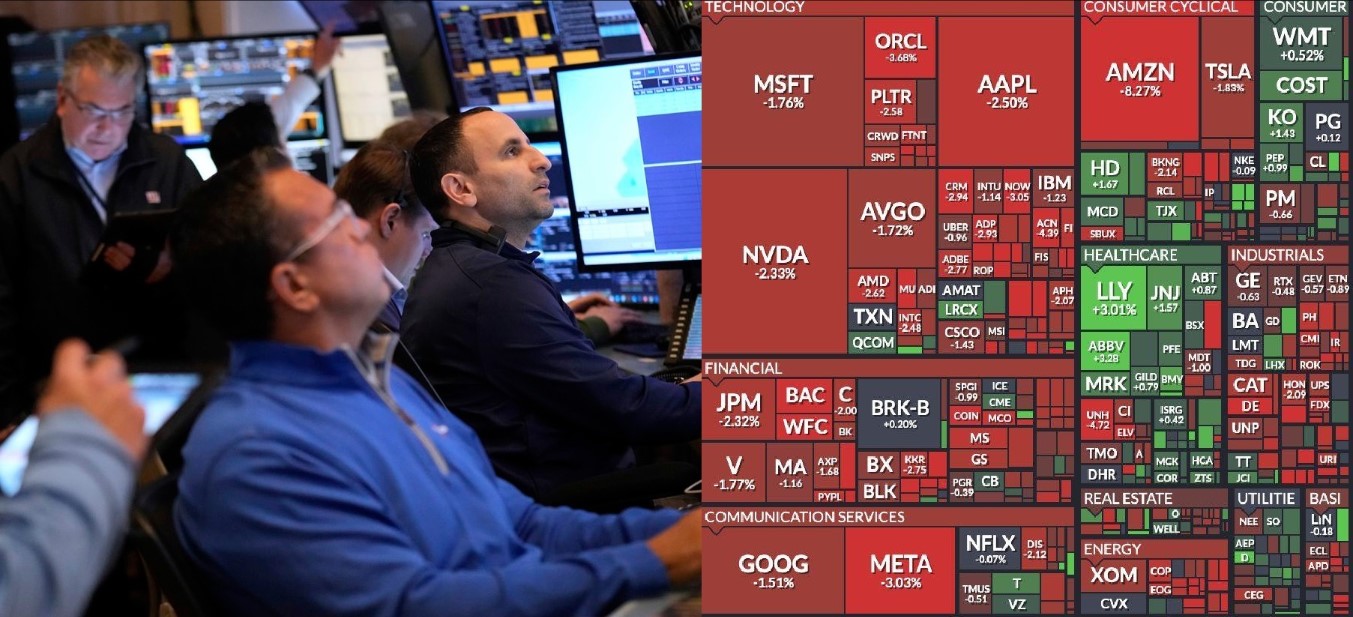
In a staggering one-day rout, the U.S. stock market lost over $1 trillion in market capitalization on August 1, 2025, driven by a confluence of economic and geopolitical shocks that rattled investor confidence across the board.
Markets reacted sharply after the White House announced a sweeping new tariff regime, including 25% duties on imports from India, raising fears of retaliatory trade actions and rising input costs for U.S. businesses. Simultaneously, Amazon’s second-quarter earnings underwhelmed Wall Street, with cloud growth and profit margins falling short of expectations. Adding to the panic, the July U.S. jobs report showed alarmingly low employment growth and steep downward revisions for previous months.
Market Breakdown
-
The S&P 500 plunged 1.6%,
-
The Nasdaq Composite dropped 2.2%, and
-
The Dow Jones Industrial Average slid 1.2%, losing nearly 770 points by the closing bell.
The sharp sell-off erased over $1.05 trillion in U.S. market value, marking one of the worst single-day losses since 2022.
What Triggered the Crash?
-
New U.S. Tariffs on India and Other Nations
On Thursday morning, the U.S. Trade Representative’s office confirmed the imposition of 25% tariffs on a wide range of Indian exports, including electronics, pharmaceuticals, and automotive components. The move, which also affected Canada and Mexico with tariffs as high as 35% in some sectors, immediately sparked concerns over global supply chains and trade retaliation. -
Amazon Earnings Disappoint
Amazon, one of the market’s tech bellwethers, reported weaker-than-expected growth in its AWS cloud division, sending its stock down more than 8%. The tech giant’s underperformance weighed heavily on the Nasdaq and triggered a sell-off in other major tech names like Apple, Nvidia, and Meta. -
Weak Jobs Report and Economic Revisions
The U.S. economy added only 73,000 jobs in July, sharply missing the forecast of over 200,000. Moreover, May and June’s job creation numbers were revised downward by a combined 258,000 jobs, intensifying concerns that the labor market is slowing rapidly.
Expert Reactions
“Markets were priced for perfection. Instead, they got a trifecta of negative surprises,” said Brian Jacobsen, Chief Economist at Annex Wealth Management. “The combination of geopolitical risk, slowing consumer activity, and now labor market softness has investors fleeing to safety.”
Kevin Gordon, Senior Investment Strategist at Charles Schwab, added, “The downward revisions in employment numbers were particularly shocking. It suggests the economy may be approaching stall speed far faster than previously expected.”
Federal Reserve Watch
With the dismal job numbers and market volatility, Wall Street analysts now see an 85% probability that the Federal Reserve will cut interest rates at its September meeting. Treasury yields also fell sharply, reflecting investor demand for safe-haven assets.
The August 1st collapse serves as a stark reminder of the fragility of global markets in the face of geopolitical uncertainty, weak economic indicators, and big tech disappointments. While a short-term recovery remains possible if the Fed steps in with easing measures, the deeper concern lies in whether these signs point to a prolonged economic slowdown.
As of August 2, 2025, global markets remain on edge as analysts watch closely for India’s potential response to the tariffs and any additional measures from the U.S. Federal Reserve.
✍️ This article is written by the team of The Defense News.