US Space Force to Launch X-37B on August 21 for Space Experiments
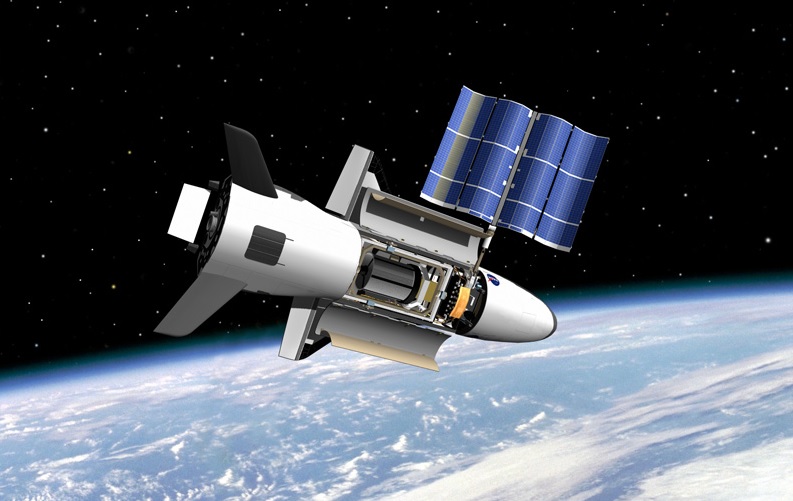
The U.S. Space Force, working with the Air Force Rapid Capabilities Office and SpaceX, is preparing to launch the eighth mission of its secretive X-37B Orbital Test Vehicle on 21 August from Kennedy Space Center, Florida. Designated USSF-36, the mission will lift off atop a SpaceX Falcon 9 rocket and carry an array of advanced experiments aimed at pushing the limits of space technology.
This latest mission will focus on high-bandwidth inter-satellite laser communications — a step toward faster, more secure data transfer between satellites — and advanced space navigation using what is described as the highest-performing quantum inertial sensor ever flown in space. Such navigation technology could eventually allow spacecraft to operate with high precision even when GPS signals are unavailable, which is critical for deep-space missions or in contested environments.
According to officials, the X-37B has become the Space Force’s premier platform for testing the “space technologies of tomorrow.” Its design — part spacecraft, part reusable mini-shuttle — allows it to spend years in orbit before returning to Earth for analysis and refurbishment. This reusability drastically reduces the cost and time needed to test new systems compared to one-time-use satellites.
Since its first flight in April 2010, the X-37B has logged more than 4,200 days in space. Past missions have demonstrated orbital trajectory changes using aerobraking, tested space domain awareness sensors, trialled solar power beaming technology for delivering energy from orbit to Earth, and exposed biological materials — such as plant seeds — to long-term radiation, aiding preparations for future crewed missions to the Moon, Mars, and beyond.
Military analysts note that the X-37B’s versatility makes it valuable for both scientific research and national security. In addition to civilian applications like space-based energy and crop resilience, the spacecraft’s ability to maneuver, change orbit, and stay aloft for extended periods also has potential strategic uses — from inspecting satellites to deploying experimental payloads in secret.
With the USSF-36 mission, the Space Force is not only refining its technological edge but also signaling the increasing role of reusable spacecraft in sustaining U.S. leadership in space. As competition in orbit intensifies, platforms like the X-37B could prove decisive in enabling rapid deployment and testing of innovations that keep pace with both commercial developments and potential adversaries’ capabilities.
✍️ This article is written by the team of The Defense News.