US Space Force Picks 5 Firms to Develop Jam-Proof Military SATCOM Network
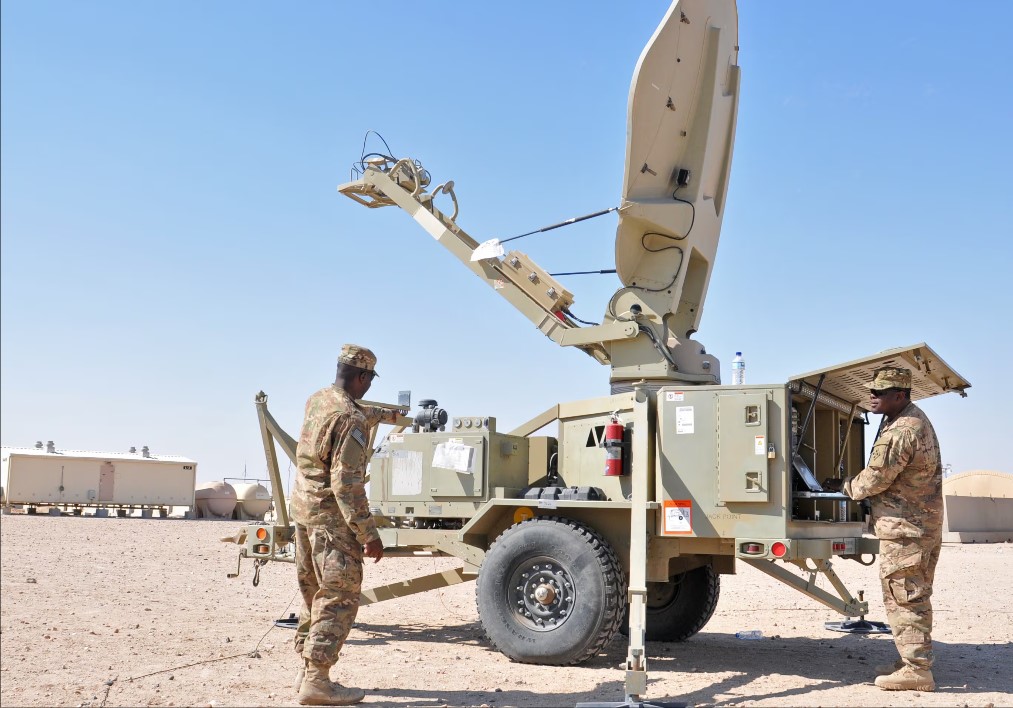
The US Space Force has taken a major step toward building a more secure and reliable satellite communication system for military use. It has awarded $37.5 million in contracts to five companies to develop a prototype for the Protected Tactical SATCOM – Global (PTS-G) system, a next-generation satellite network designed to provide anti-jam, secure communications across the globe.
The companies selected are Viasat, Northrop Grumman, Astranis, Intelsat General, and Boeing. Each firm will take one of its existing commercial satellite designs and adapt it for military needs under the PTS-G project. The goal is to demonstrate how these commercial designs can be used to enhance military capabilities while saving time and resources.
The PTS-G system will rely on small satellites placed in geosynchronous orbit—an orbit where satellites match the Earth’s rotation—to ensure constant, global coverage. These satellites are expected to provide resilient and jam-resistant connectivity, especially important in modern warfare where satellite links are vulnerable to electronic attacks.
Cordell DeLaPena, Jr., the Space Systems Command’s program executive officer for Military Communications and Positioning, Navigation and Timing, said this approach allows the Space Force to move faster. “The incorporation of commercial baseline designs to meet military capability significantly enhances the Space Force’s speed and efficiency to add capability to meet emerging threats,” he stated.
This development effort is just the beginning. Based on the performance of each company’s technical demonstrations, the Space Force will decide who moves forward to the production phase, which is expected to begin with a contract award in 2026. The first satellites are planned for launch by 2028, with a second production batch to follow in 2031.
This move comes as part of a broader effort by the US military to modernize its space-based infrastructure. In July, the Space Force upgraded the GPS control segment with the Next Generation Operational Control System, improving the accuracy and reliability of satellite navigation and timing.
In June, L3Harris delivered the Meadowlands Counter Communications System, a ground-based platform designed to jam or disrupt enemy satellite communications, strengthening the US military’s electronic warfare capabilities.
And earlier in April, Lockheed Martin delivered the GPS III SV08 satellite to the Space Force for final testing before it joins the current 31-satellite GPS constellation already in orbit.
With the PTS-G and other projects, the US is not just maintaining its dominance in space—it’s actively preparing for a future where secure, resilient, and flexible satellite communication could decide the outcome of conflicts.
✍️ This article is written by the team of The Defense News.