U.S. Sets 2027 Deadline for Europe to Take Lead in NATO’s Conventional Defense
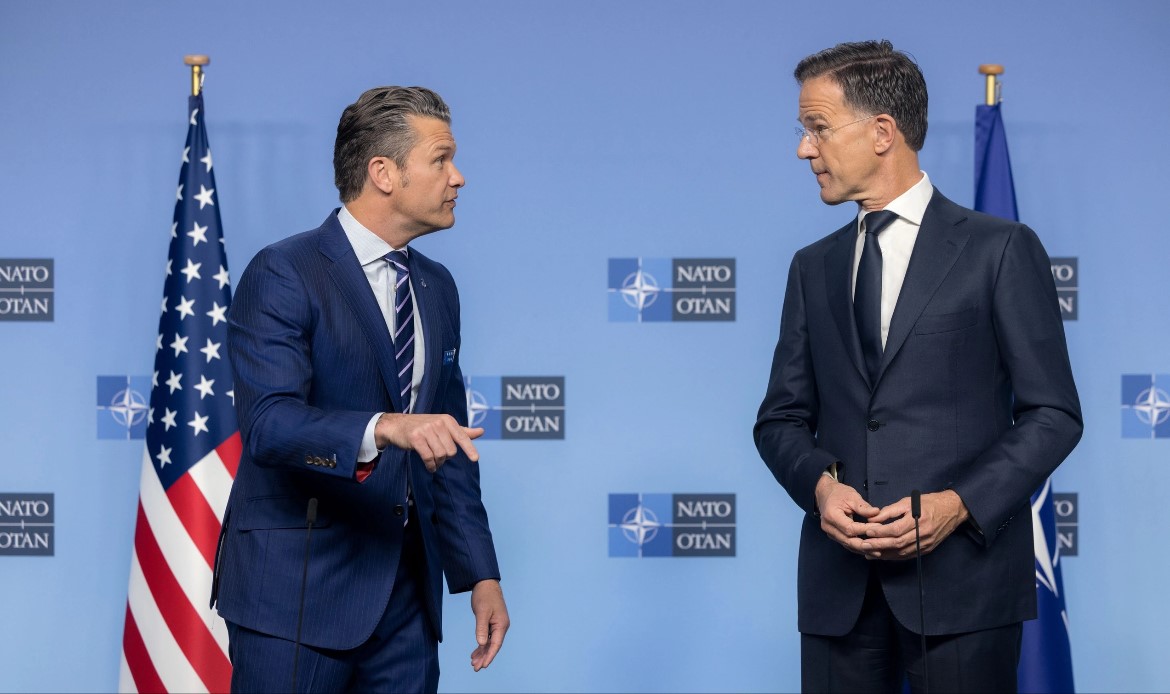
The United States has privately informed European allies that it expects Europe to assume most of NATO’s conventional defense responsibilities by 2027, signalling a major rebalancing of military roles within the alliance. According to diplomats briefed on the discussions in Washington, U.S. officials warned that America may scale back its participation in NATO’s defense planning structures if Europe does not demonstrate significant progress within the coming three years. The message reflects Washington’s deepening concern that NATO’s collective defense architecture remains overwhelmingly dependent on U.S. military power.
Although the United States emphasized that it will maintain its nuclear deterrent and remain committed to NATO’s core mission, the shift is clear: Europe must be prepared to handle the bulk of day-to-day deterrence, force readiness, and operational planning, areas the U.S. has dominated for decades. European officials familiar with the meetings acknowledge the political logic behind Washington’s position but describe the 2027 timeline as extremely difficult given Europe’s industrial capacity and force generation constraints.
Accurate financial data underscores the scale of the imbalance. NATO’s common annual budget—funding headquarters, command systems, and shared programs—was about €3.3 billion in 2024. The United States contributed 15.8% to 16% of that amount, or roughly €520 million, a meaningful but not overwhelming share. Yet this common budget accounts for only a fraction of NATO’s real military strength.
The true asymmetry lies in national defense spending. In 2024, the United States spent nearly US$997 billion on defense, according to SIPRI—representing almost 70% of all NATO members’ combined military expenditure. Through this investment, Washington provides NATO with its most advanced capabilities, including strategic airlift, satellite intelligence, missile defense systems, and forward-deployed high-end forces across Europe.
European NATO members collectively spent US$454 billion in 2024, far below U.S. levels, though spending has been rising sharply since Russia’s invasion of Ukraine. A total of 18 NATO members now meet or exceed the 2% GDP defense benchmark, compared with only six members four years earlier. Despite this progress, Europe still faces major gaps in ammunition production, air defense, long-range strike systems, and the industrial base needed to sustain large-scale operations without American support.
NATO has already set an ambitious long-term financial direction. In 2025, allied leaders endorsed a spending ambition that approaches 3.5% of GDP for core defense and up to 5% of GDP for broader security investments by 2035. These targets are designed to allow Europe to rebuild sufficient military power over a decade. For many European capitals, even achieving those goals by 2035 is challenging; reaching anything close by 2027 is viewed as unrealistic under current conditions.
U.S. officials, however, argue that Europe must accelerate, not delay, major defense investments. The request comes as Washington faces strategic pressures elsewhere, especially competition with China in the Indo-Pacific. The war in Ukraine has also highlighted Europe’s dependence on U.S. intelligence, logistics, and industrial capacity, reinforcing the perception that Europe cannot yet act without American leadership. In the U.S. domestic political arena, debates over NATO burden-sharing have intensified, with critics arguing that allies rely too heavily on Washington’s military capabilities.
This leaves NATO facing a pivotal test. If Europe cannot meet the expectations set for 2027, the United States may adjust its posture and reduce its involvement in NATO’s operational planning—a shift that could alter deterrence dynamics across the alliance’s eastern flank. European officials warn that uncertainty regarding U.S. commitments may embolden adversaries, while others view Washington’s message as a necessary catalyst for Europe to assume real strategic responsibility for its own defense.
What remains clear is that the alliance is entering a decisive phase. As Washington pushes for a more balanced transatlantic defense architecture and Europe races to expand its military capabilities, the next few years will determine whether NATO can adapt to a new burden-sharing reality—or whether long-standing structural imbalances will create deeper strategic tension within the alliance.
About the Author
Aditya Kumar:
Defense & Geopolitics Analyst
Aditya Kumar tracks military developments in South Asia, specializing in Indian missile technology and naval strategy.