U.S. Sends F-35 Stealth Jets, Amphibious Forces, and Destroyers Closer to Venezuela
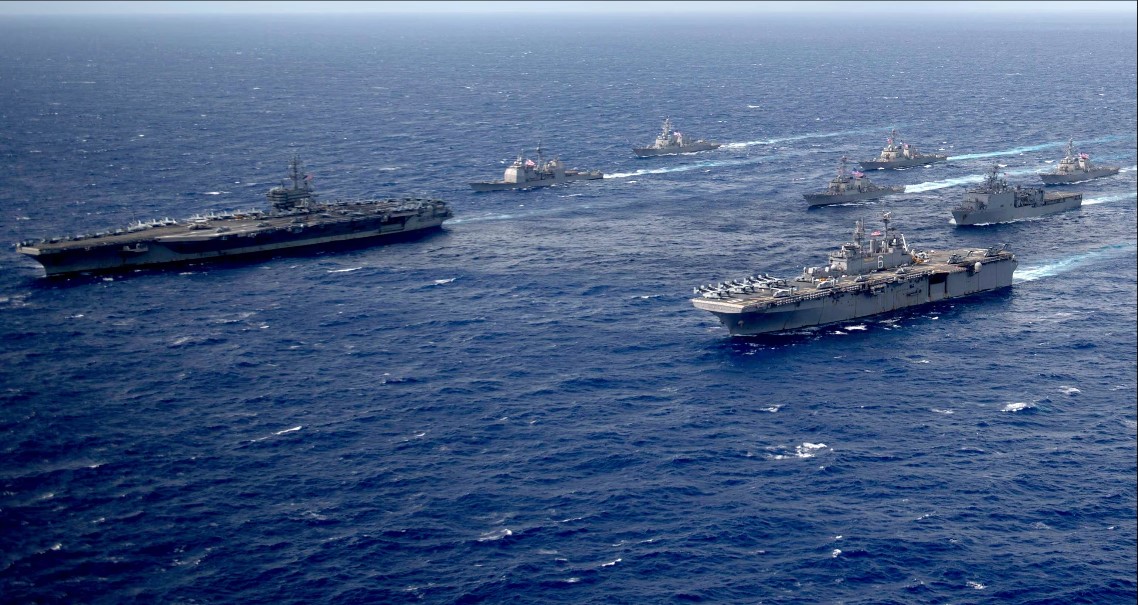
As of mid-September 2025, U.S. Southern Command (SOUTHCOM) has markedly increased its military footprint in the Caribbean Sea and adjacent waters, focusing especially on Venezuela and associated cartel networks. The deployment appears aimed at counter-narcotics operations but includes many of the same assets characteristic of strike readiness, prompting concern in Caracas and debates in Washington about how far the mission may extend.
What Is Confirmed
These are elements verified by multiple credible sources:
-
Iwo Jima Amphibious Ready Group / 22nd Marine Expeditionary Unit (MEU)
On 14 August 2025, the Iwo Jima ARG with the 22nd MEU (Special Operations Capable) deployed from Norfolk, Virginia, to the southern Caribbean. The group includes the assault ship USS Iwo Jima, and the San Antonio-class transport docks USS San Antonio and USS Fort Lauderdale, carrying some 4,500 sailors and Marines. -
Counter-narcotics mission declared “not training”
U.S. Defense Secretary Pete Hegseth visited Puerto Rico aboard USS Iwo Jima in early September and publicly emphasized that the units are performing a real mission, not mere exercises. -
Destroyer presence
The U.S. Navy has deployed several Arleigh Burke-class guided-missile destroyers — USS Jason Dunham, USS Gravely, and USS Sampson — to the Caribbean / southern Caribbean waters. These destroyers are part of the U.S. push against narcotics trafficking networks. -
Naval actions over fishing boat / interdiction claims
The USS Jason Dunham has been involved in controversial actions. For example, U.S. personnel associated with the Jason Dunham boarded a Venezuelan fishing vessel purportedly in search of contraband, found none, and released the vessel. The Venezuelan government protested, claiming the boarding violated their Exclusive Economic Zone. -
F-35 deployment
Multiple sources indicate that 10 F-35 jets have been or are being positioned in Puerto Rico to support operations targeting drug cartels.
What Is Unverified or Disputed
Here are claims from initial reports that are not fully supported or may be exaggerated, misattributed, or speculative at this point:
-
Destroyer Tomahawk missile strike readiness
Claims that each destroyer has “more than 90 vertical launch cells capable of firing Tomahawk cruise missiles, surface-to-air interceptors, and anti-submarine weapons” is generally plausible for an Arleigh Burke class ship, but there is no public record confirming that these specific ships are fully loaded with Tomahawks or pre-armed for immediate strike missions against hardened or defended targets in Venezuela. -
Additional naval units (cruisers, littoral combat ship, nuclear-powered subs) in the region
The deployment of USS Lake Erie (a guided-missile cruiser), a littoral combat ship Minneapolis-St. Paul, and at least one U.S. fast-attack submarine are claimed in unverified or rumor sources. Open sources do confirm Lake Erie is part of SOUTHCOM naval assets, but not precise operational locations or missions. -
Special Operations presence doing high-value raids, sabotage, deep penetration missions against radars, airbases, etc.
While the U.S. public posture supports “enhanced counter-narcotics operations,” there is no open source confirmation of orders or deployment of SOF teams for cross-border raids into Venezuela, sabotage, or targeting state air defense systems. Such missions would be sensitive and likely classified, so public confirmation is absent. -
Legal authorizations / classified directive
The idea that a “classified presidential directive signed in July” gives authority for cross-border strikes vs. governments enabling cartels is plausible under existing foreign-terrorism and counter-narco-terror frameworks discussed in media, but no public unclassified document with those exact terms is verified.
What Is Plausible / Highly Likely Based on Known Reporting
-
The U.S. build-up is meant to provide flexibility: able to move from counter-drug interdiction to more kinetic options if political leadership orders them.
-
Training and readiness operations are likely happening in Puerto Rico and nearby islands in parallel with counter-narcotics patrols. Terrain, climate, and proximity to Venezuela make Puerto Rico an ideal staging area.
-
Venezuelan government response (flyovers, diplomatic protests, claims of violations of EEZ) is consistent with what has already occurred.
What Remains Disputed or Unclear
-
Whether all the naval and air assets listed (e.g. submarine, littoral combat ship, certain cruisers) are simultaneously present off the Venezuelan coast or if they are in transit or in supporting positions.
-
Whether the U.S. has begun executing strikes targeting state infrastructure (radars, airbases) inside Venezuelan territory — public sources so far suggest interdiction at sea, show-of-force flyovers, but not full-scale cross-border bombing or seizure.
-
The precise chain of command and legal authority for cross-border operations remains murky.
Assessment & Potential Scenarios
Given verified deployments (ARG/MEU, destroyers, F-35s to Puerto Rico, increased patrols, public statements by U.S. defense leadership), the U.S. appears to be in a posture of escalation with built-in flexibility. The posture allows several possible pathways:
-
Containment / interdict drug trafficking — increased maritime patrols, surveillance, seizures at sea; minimal kinetic action on Venezuelan soil.
-
Limited strikes — if intelligence identifies specific cartels, boats, clandestine airstrips; could see airstrikes or missile strikes in international waters or possibly even inside Venezuela if justified.
-
Fuller military pressure — suppression of air defense, disabling radar, attacks on state bases — but that would risk major escalation, international outcry, and possibly conflict with Venezuelan military forces.
Why This Matters
-
The U.S. is increasingly treating cartels and narcotics trafficking as national security threats on par with terrorism. Deploying advanced assets (stealth fighters, amphibious groups) reflects a shift from law-enforcement dominated to military-empowered strategy.
-
Venezuela has rejected many of the U.S. claims or actions, citing sovereignty, EEZ infringement, and disputes over evidence. Claims of U.S. warships boarding vessels in Venezuela’s EEZ and the flyovers of the Jason Dunham have added diplomatic tension.
-
Local publics (Puerto Rico, Caribbean neighbours) are concerned about militarization, risk of spillover, legality, and potential unintended consequences.
The narrative that the U.S. has fully mobilized a strike group with all the capabilities listed (deep‐penetration missions, ready cruise missile strikes, amphibious assaults, SOF raids inside Venezuela) is not fully supported by open evidence as of September 2025. What is supported, however, is that the U.S. has deployed a significant force posture:
-
Amphibious Readiness, including thousands of Marines, deployed in the Caribbean.
-
Forward positioning of F-35s in Puerto Rico.
-
Multiple guided-missile destroyers near Venezuela.
-
Increased surveillance and counter-narcotics operations with real mission declarations from leadership.
These factors together do create a credible threat envelope. Whether this will expand into direct strikes on Venezuelan state infrastructure or deeper military operations depends upon political decisions, legal authorizations, and Venezuelan responses.
✍️ This article is written by the team of The Defense News.