U.S. Seizes China-Linked Oil Tanker Carrying Venezuelan Crude in International Waters
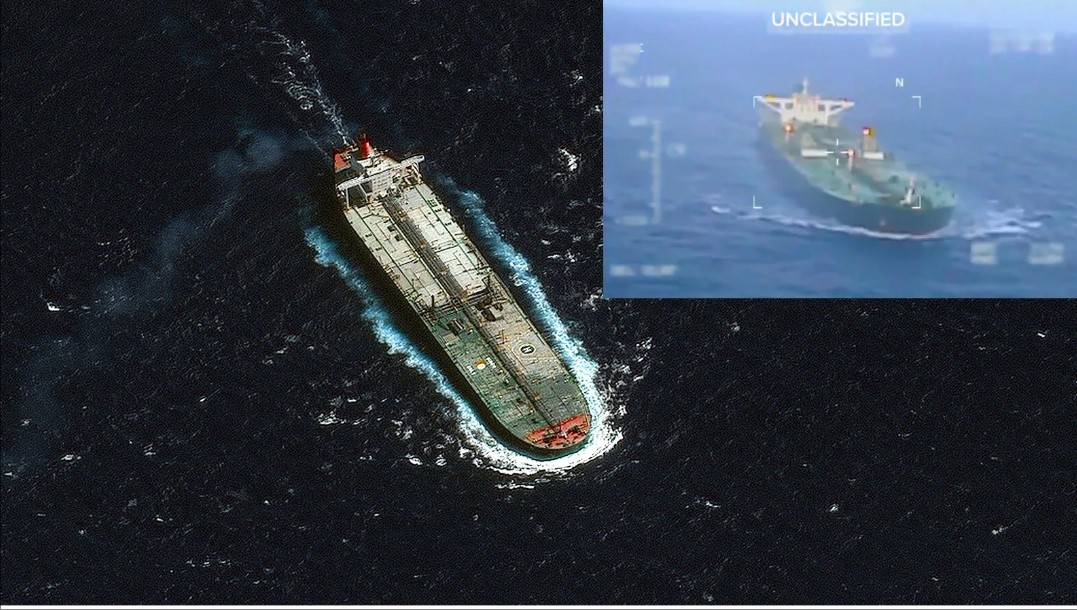
The United States has seized a second merchant oil tanker carrying Venezuelan crude in international waters, intensifying its blockade of Venezuela’s oil trade and deepening legal, diplomatic and security tensions across the Caribbean Sea.
According to the US Department of Homeland Security, U.S. forces intercepted the vessel early Saturday in a pre-dawn operation, marking the latest step in Washington’s effort to choke off Venezuela’s oil exports, most of which are destined for Asia, particularly China.
Second Interdiction in Weeks
The stoppage follows the December 10 seizure of another oil tanker off Venezuela’s coast. Both vessels were en route to Asian markets, underscoring the growing reach of U.S. enforcement actions far beyond American territorial waters.
The British maritime risk management firm Vanguard told Reuters that the intercepted ship was believed to be the Panama-flagged tanker Centuries, which was stopped east of Barbados in the Caribbean. Shipping and sanctions databases show that Centuries is not listed among U.S.-sanctioned vessels, a fact that analysts say represents a significant escalation in Washington’s blockade.
Pre-Dawn Boarding Operation
In a post on X, Kristi Noem, the U.S. Secretary of Homeland Security, said the U.S. Coast Guard, working alongside the U.S. Department of Defense, halted the tanker during a “pre-dawn action.”
“The United States will continue to pursue the illicit movement of sanctioned oil that is used to fund narco-terrorism in the region,” Noem wrote. “We will find you, and we will stop you.”
According to industry and defense sources, U.S. military helicopters were used to place armed Coast Guard officers aboard the vessel. The officers proceeded to the bridge, detained the crew, and assumed control of navigation, diverting the ship from its original course.
Escalation of the U.S. Blockade
The Trump administration has increasingly suggested that any vessel transporting Venezuelan oil could be subject to U.S. interdiction, even if the ship itself is flagged, insured, and unsanctioned. Officials are also working to expand the list of sanctioned tankers, particularly those linked to Venezuela’s so-called “shadow fleet.”
The tanker seized earlier this month was on the sanctions list and was described by the White House as a “sanctioned shadow vessel known for carrying black-market oil.” The seizure of Centuries, which was not formally sanctioned, signals a broader interpretation of U.S. authority at sea.
Trump, Maduro, and the Risk of Conflict
The latest developments come amid sharply escalating rhetoric between Donald Trump and Nicolás Maduro. Maduro has urged Venezuela’s navy to escort oil tankers, openly defying what U.S. officials describe as the largest American naval deployment in the region in decades.
After the first tanker seizure, the Venezuelan government accused Washington of “blatant theft” and labeled the action “an act of international piracy.”
In an interview with NBC News broadcast Friday, Trump declined to rule out open conflict with Venezuela. “I don’t rule it out, no,” he said when asked whether military action against Maduro’s government was possible.
Pressure Campaign Intensifies
This week, Trump further escalated pressure on Caracas, accusing Venezuela of taking U.S. oil and energy investments. “They took all of our energy rights. They took all of our oil,” he said, ordering a “total and complete blockade” of all sanctioned oil tankers entering or leaving Venezuela.
U.S. military operations in the region have also intensified. On Thursday, U.S. forces carried out a lethal strike on a vessel they said was engaged in drug trafficking in the eastern Pacific, killing four people. Since September, U.S. strikes on alleged trafficking boats have killed 99 people, according to official figures. Maduro has claimed the campaign is aimed at regime change, not drug interdiction.
International Concern Grows
Mexico’s president, Claudia Sheinbaum, weighed in on Wednesday, criticizing the United Nations for its silence. She said the UN was “nowhere to be seen” and urged it to act to “prevent any bloodshed.”
Jeremy Paner, a former U.S. sanctions investigator, told Reuters that Saturday’s seizure “marks a further increase in Trump’s pressure on Venezuela.” He added that it contradicts earlier statements suggesting the blockade would target only sanctioned vessels.
Impact on Oil Markets and China
Since the first tanker seizure, Venezuelan crude exports have fallen sharply, analysts say. While many vessels lifting Venezuelan oil are sanctioned, others — including ships authorized to carry oil for Chevron — are not.
China, Venezuela’s largest customer, buys roughly 4% of its crude imports from the South American country. December shipments were on track to exceed 600,000 barrels per day, according to analysts. For now, global markets remain well supplied, with millions of barrels stored on tankers near China’s coast. However, analysts warn that a prolonged blockade removing close to one million barrels per day could eventually push oil prices higher.
Shadow Fleet and the Centuries Cargo
Since U.S. energy sanctions were imposed in 2019, traders have relied heavily on a dark or shadow fleet — vessels that disguise their locations or operate under false identities. Shipping analysts say these tankers are increasingly exposed to punitive U.S. measures.
According to internal documents from PDVSA, Centuries loaded approximately 1.8 million barrels of Merey crude oil in Venezuela. The tanker allegedly sailed under the false name “Crag”, departed Venezuelan waters on Wednesday, and was briefly escorted by the Venezuelan navy, according to satellite images obtained by TankerTrackers.com.
The crude was purchased by Satau Tijana Oil Trading, one of several intermediaries supplying Chinese independent refiners, the documents show.
Of more than 70 shadow fleet tankers currently operating in Venezuelan waters, around 38 are under U.S. Treasury sanctions, according to TankerTrackers.com. At least 15 of those vessels are fully loaded with crude or fuel.
A Test of Maritime Power
As Centuries remains under U.S. control, the seizure has become a defining test of how far Washington is prepared to go in enforcing sanctions on the high seas — and how rival powers, particularly China, may respond.
With legal challenges looming, diplomatic tensions rising, and oil markets watching closely, the incident underscores how Venezuela’s oil trade has become a flashpoint in a much broader geopolitical struggle.
✍️ This article is written by the team of The Defense News.