U.S. Says Türkiye Could Rejoin F-35 Program in Four to Six Months After Shift on S-400
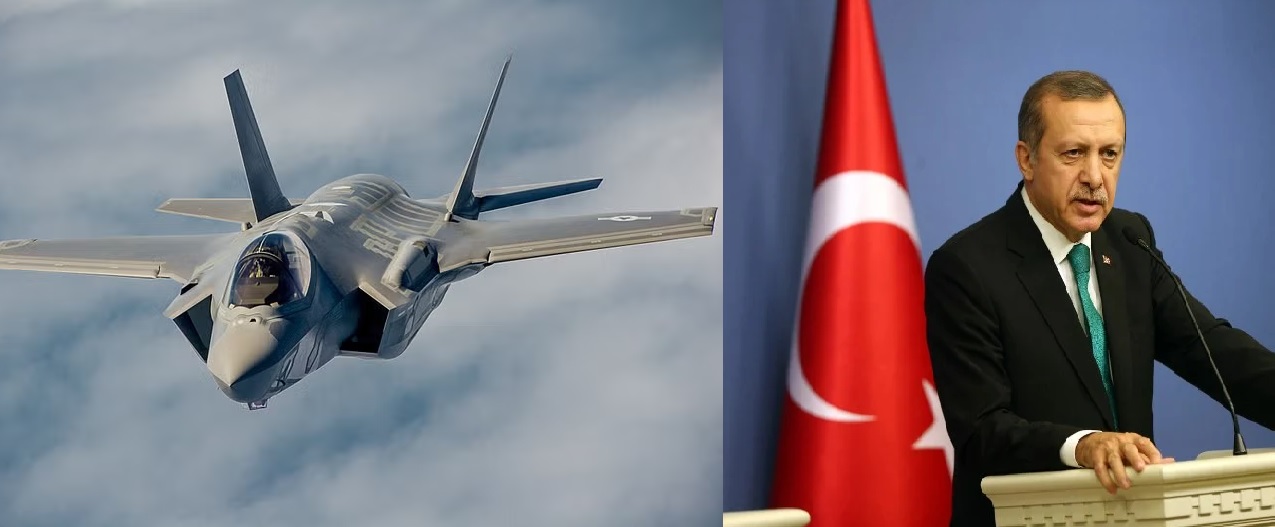
Türkiye is edging closer to a possible return to the U.S.-led F-35 stealth fighter program, according to U.S. Ambassador to Türkiye Tom Barrack, who says Ankara is “close” to removing the main obstacle that got it expelled in the first place: the Russian-made S-400 air defense system.
In recent remarks reported in Turkish and defense-focused outlets, Barrack said Washington now views the S-400 “operability” problem as largely resolved because the system is not being used, even if it remains on Turkish soil. He added that he expects the dispute to be settled within four to six months and confirmed that Ankara is moving closer to giving up the Russian system altogether.
If that optimistic timeline holds, it could open the door for Türkiye to rejoin the program it helped build—but any final decision will have to overcome legal and political resistance in Washington.
From Partner to Outcast: How Türkiye Lost the F-35
Türkiye was once a core industrial and customer partner in the F-35 Joint Strike Fighter program. Turkish firms produced hundreds of components for the jet, and Ankara planned to buy at least 100 aircraft.
That changed after Ankara signed a 2017 deal to acquire four batteries of the Russian S-400 “Triumf” long-range air defense system, defying repeated warnings from the U.S. and other NATO allies. Washington argued that operating S-400s alongside F-35s would give Russia a window into the jet’s stealth profile and tactics.
In July 2019, the Pentagon formally removed Türkiye from the F-35 program and later imposed CAATSA sanctions on Turkish defense officials and entities over the S-400 purchase, freezing deliveries of jets and blocking further participation in the supply chain.
Since then, successive U.S. administrations have repeated the same public red line: no F-35 return as long as S-400s remain in Turkish hands and potentially usable.
Making the S-400 “Inoperable” – The Emerging Compromise
What has changed now is not that Türkiye has physically removed the S-400s, but that it has effectively mothballed them.
Turkish officials have previously said the system is non-operational and not integrated into Türkiye’s wider air defense network, even though they insist it could be activated quickly if needed. President Recep Tayyip Erdoğan has publicly stated that the S-400 can be brought online within hours, a way of signaling to domestic audiences that Ankara has not bowed completely to U.S. pressure.
Behind the scenes, however, the U.S. and Türkiye have explored a range of workarounds over the past two years, including:
-
Placing the S-400s in storage on Turkish territory under strict technical controls.
-
Declaring key components “inoperable” or dismantled to satisfy CAATSA requirements without a politically explosive public “return” or sale to Russia.
-
Earlier, more radical ideas like transferring the system to a third country or a U.S.-controlled sector of İncirlik Air Base were floated but never accepted by Ankara.
Barrack’s latest comments suggest Washington is now prepared to treat “not being used” and possibly being sealed under agreed technical arrangements as sufficient to call the S-400 problem “solved,” even if the hardware physically remains in Türkiye for now.
Political Hurdles in Washington: Congress Is Not Convinced
Even if the Pentagon and the White House are inching toward a compromise, U.S. Congress remains a major obstacle.
Bipartisan groups of lawmakers have pushed to permanently block Türkiye’s reentry into the F-35 program, citing not just the S-400 issue but also Ankara’s strained relations with other NATO members and its open engagement with groups like Hamas.
Some members argue that allowing Türkiye back into the program with S-400s still on its territory—operational or not—would undermine the credibility of CAATSA sanctions and send the wrong message to other U.S. partners considering purchases of Russian hardware. Others worry about rewarding Ankara while disputes continue over Syria policy, Eastern Mediterranean tensions, and human rights.
Any full restoration of F-35 sales, and especially any renewed industrial workshare, would require Congressional approval or at least acquiescence, meaning Barrack’s “four to six months” forecast depends on more than just technical fixes.
Türkiye’s Broader Fighter Jet Strategy: F-16s, Eurofighters and KAAN
Part of the urgency on both sides comes from the fact that Türkiye’s air force is aging, while Ankara is pursuing multiple parallel options.
-
A large F-16 Block 70/72 modernization package worth tens of billions of dollars has been under negotiation, with the Trump administration signaling openness to move forward if the S-400 issue can be neutralized.
-
In July 2025, Türkiye signed a preliminary agreement with the UK for the potential purchase of Eurofighter Typhoon jets, a move seen both as leverage in talks with Washington and as a hedge against a long-term breakdown in F-35 negotiations.
-
At the same time, Ankara is investing heavily in its indigenous KAAN fifth-generation fighter, which Turkish officials say could be operational by around 2028, though analysts expect delays typical of complex fighter programs.
For Ankara, regaining access to the F-35 would restore lost prestige, recover sunk investments in the program, and give its air force a top-tier stealth capability while KAAN matures. For Washington, keeping Türkiye anchored to Western platforms is seen as vital to NATO interoperability and to preventing Ankara from drifting further toward Russian or Chinese defense ecosystems.
What Happens Next?
Barrack’s prediction of a four-to-six-month window for resolving the F-35 dispute appears to reflect several converging tracks:
-
Negotiations on how exactly the S-400s will be kept inoperable, verified, and possibly reconfigured or partially dismantled.
-
A broader package involving sanctions relief, F-16 sales, and perhaps a phased path back into the F-35 program, contingent on milestones.
-
A political effort by the administration to persuade skeptical lawmakers that Türkiye is again a reliable NATO partner and that the S-400 chapter is effectively closed.
Even if an understanding is reached at the executive level, any return to full F-35 production work for Turkish industry is likely to be gradual, as many components originally made in Türkiye have since been re-sourced to other suppliers.
For now, Barrack’s comments mark the clearest signal yet that Washington and Ankara are actively looking for a face-saving formula: one that lets Türkiye quietly step away from the S-400, resurrect its F-35 ambitions, and reset a relationship that has been stuck in a sanctions-driven stalemate since 2019.
Whether the next few months deliver a genuine breakthrough—or simply another round of optimistic statements—will depend on how far both sides are willing to go on the S-400, and how much political capital the U.S. administration is ready to spend in Congress to bring Türkiye back into the F-35 fold.
About the Author
Aditya Kumar:
Defense & Geopolitics Analyst
Aditya Kumar tracks military developments in South Asia, specializing in Indian missile technology and naval strategy.