US Reportedly Deploys B61-12 Nuclear Bombs to UK for First Time Since 2008
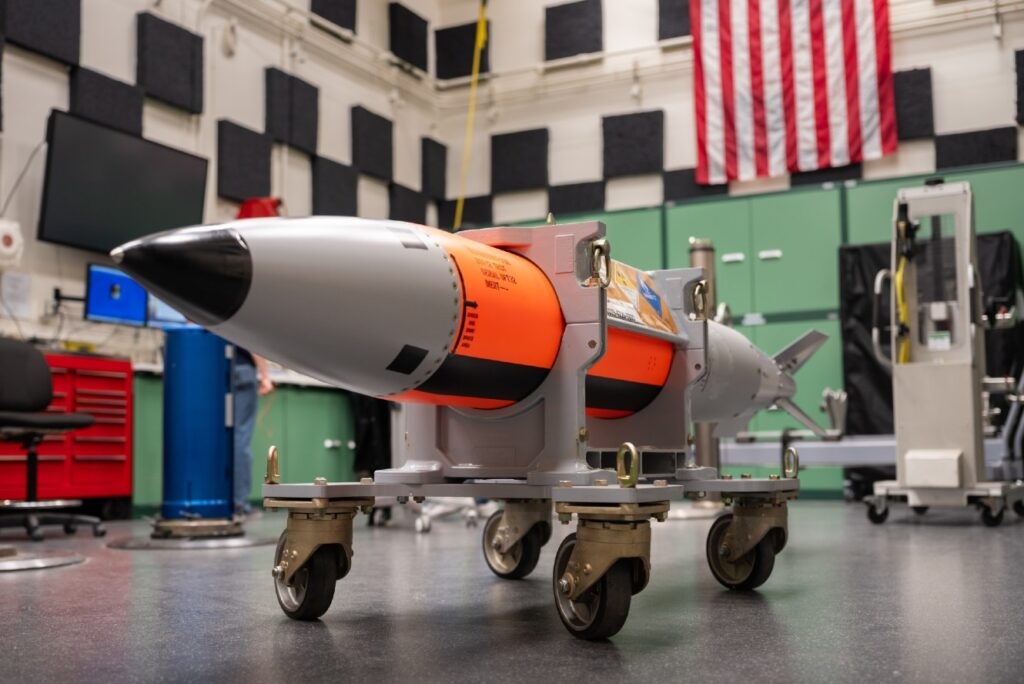
The United States Air Force has reportedly delivered B61-12 nuclear gravity bombs to RAF Lakenheath in the United Kingdom, marking the first such deployment since their removal in 2008. The development, if confirmed, would signal a notable shift in NATO’s nuclear posture amid rising tensions with Russia.
The delivery was tracked by defense watchers after a US Air Force C-17 Globemaster III, operated by the 62nd Airlift Wing, flew from Kirtland Air Force Base in New Mexico — the headquarters of the Air Force Nuclear Weapons Center — to the UK airbase. RAF Lakenheath, located in Suffolk, hosted US nuclear weapons during the Cold War and has been undergoing major infrastructure upgrades since January 2024 to support “high-value assets”.
Although there is no official confirmation from either the US or UK governments, multiple sources suggest that the B61-12 bombs were offloaded at Lakenheath and the aircraft returned to routine operations in the US afterward. “It looks like it went to England, dropped off those weapons, and then it went back to regular operations,” said William Alberque, former director of NATO’s nuclear non-proliferation center.
This move comes as part of a broader pattern. According to Hans Kristensen, Director of the Nuclear Information Project at the Federation of American Scientists, similar deployments of B61-12 bombs to other European bases have taken place quietly since January 2025. Kristensen suggests that this could represent a shift in NATO strategy, indicating that the alliance may be responding more assertively to Russia’s nuclear rhetoric and actions.
If these reports are accurate, it would be the first time the US has increased its tactical nuclear weapons presence in Europe since the end of the Cold War. The move also coincides with recent UK defense announcements, including the procurement of 12 additional F-35A fighter jets, which are capable of carrying B61-12 bombs. These aircraft are operated by the 493rd and 495th Fighter Squadrons at RAF Lakenheath, both of which are nuclear-certified units.
The UK Ministry of Defence declined to comment, sticking to the usual policy of neither confirming nor denying the presence of nuclear weapons. However, the Campaign for Nuclear Disarmament has raised concerns. Its Chair, Tom Unterrainer, called on Prime Minister Keir Starmer to explain the UK’s role in what he described as “a dangerous escalation.”
The B61-12, part of a nuclear family that has served for over five decades, recently completed a $9 billion life extension program. The new version includes advanced guidance systems and can deliver variable explosive yields, ranging from 0.3 kilotons to 50 kilotons — potentially three times more powerful than the bomb dropped on Hiroshima.
In today’s context of rising global nuclear tensions, especially involving Russia and NATO, the reported deployment of these weapons adds a strategic layer to Western deterrence in Europe. Whether or not the move becomes public policy, it signals that the US and its allies may be preparing for a more nuclear-sensitive security environment.
✍️ This article is written by the team of The Defense News.