U.S President Trump Say Muslim Brotherhood to Be Declared Terrorist Organization
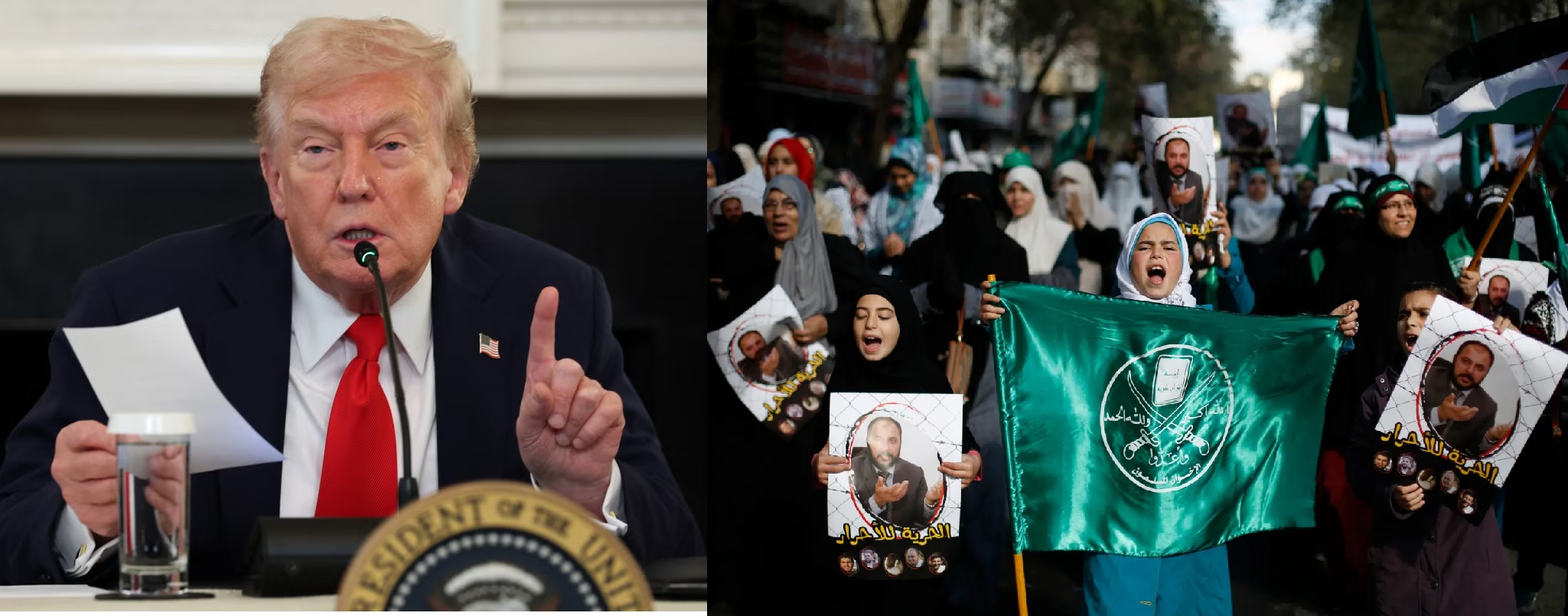
U.S. President Donald Trump has confirmed that his administration is moving ahead with plans to designate the Muslim Brotherhood as a Foreign Terrorist Organization (FTO), a step that could reshape U.S. relations across the Middle East and have far-reaching consequences for Muslim communities and political movements worldwide.
“It will be done in the strongest and most powerful terms. Final documents are being drawn,” Trump said in recent remarks, echoing what the White House and conservative allies have been signaling for months.
The announcement follows a similar move at the state level by Texas Governor Greg Abbott, who last week designated both the Muslim Brotherhood and the Council on American–Islamic Relations (CAIR) as terrorist and transnational criminal organizations under Texas law.
What the U.S. Terrorist Designation Would Mean
If the Muslim Brotherhood is formally designated as an FTO by the U.S. State Department, the group and any entities officially linked to it would face sweeping penalties:
-
Asset freezes of any funds or property under U.S. jurisdiction
-
Criminal liability for anyone providing “material support,” including funding, training, or services
-
Bank and financial de-risking, making it extremely difficult for associated organizations to operate in the global financial system
Critics of the Brotherhood have long argued that such a move is overdue, pointing to the group’s ideological links to Hamas, the Palestinian militant organization that the U.S. has designated as a terrorist group since 1997. Hamas is historically considered a Palestinian offshoot of the Muslim Brotherhood.
Supporters of the move inside the administration and in Congress say it would send a clear message that Washington will treat Islamist movements that inspire or enable violence the same way it treats armed terrorist groups.
What Is the Muslim Brotherhood?
The Muslim Brotherhood, founded in Egypt in 1928, began as a religious and social reform movement advocating a return to governance based on Islamic law. Over the decades it evolved into a transnational Islamist network with branches, affiliates, or sympathizers across the Middle East, North Africa, and parts of Europe and North America.
While its original leadership and many of its branches have at times renounced violence and participated in elections, the Brotherhood’s ideology has also inspired more radical offshoots, including groups that turned to armed struggle. Analysts widely describe it as the “ideological mother” of Hamas and of multiple radical Islamist currents around the world.
How Brotherhood “Damages” the United States
Muslim Brotherhood threatens U.S. security and social cohesion in several ways:
-
Ideological Incubation
Brotherhood writings provide the ideological framework for modern jihadist movements, even where the organization itself does not engage directly in violence. They argue that its teachings on political Islam and strict implementation of Sharia law help legitimize anti-Western narratives that extremists later weaponize. -
Influence Networks in the West
U.S. officials and analysts claim that Brotherhood-linked figures have built networks of mosques, charities, student groups, and advocacy organizations in North America and Europe that, in their view, promote a gradualist strategy—working through institutions, media, and civil society to reshape laws and public opinion in line with Islamist goals. -
Potential Threat to Law Enforcement and Counterterrorism
Brotherhood-inspired organizations in the U.S. obstruct counterterrorism efforts, discourage cooperation with law enforcement, or frame security measures as “Islamophobic,” which they say can hinder authorities from tracking genuine radicals. These claims are heavily contested by civil liberties groups. -
Alleged Links to Extremist Financing
Past investigations in the U.S. and Europe have probed Brotherhood-connected charities for suspected money flows to Hamas or other militants, although many of those cases ended without terrorism convictions. Supporters of Trump’s move say a terrorist label would give law enforcement stronger tools to cut off suspicious funding channels.
Muslim organizations strongly dispute these arguments, insisting that the Brotherhood’s U.S.-connected entities largely operate within the law, participate in democratic processes, and often publicly condemn terrorism.
How Many Countries Are Affected by the Brotherhood?
The Muslim Brotherhood’s reach is global, with political branches, affiliated parties, or ideological allies active—or recently active—in dozens of countries across the Middle East, North and East Africa, and Europe.
At the same time, several governments already treat the Brotherhood as a terrorist or banned organization:
-
Egypt — The movement’s birthplace; after the military ousted President Mohamed Morsi in 2013, Cairo banned the Brotherhood and declared it a terrorist organization.
-
Saudi Arabia, the United Arab Emirates, and Bahrain — These Gulf monarchies view the Brotherhood as a direct threat to their political systems and have formally listed it as a terrorist group.
-
Russia — Banned the Muslim Brotherhood as a terrorist organization in 2003, accusing it of aiding Islamist insurgents in the North Caucasus.
-
Libya (Tobruk-based House of Representatives) — Designated the Brotherhood as a terrorist organization in 2019 amid civil war and competing governments.
-
Kenya — In 2025, Nairobi moved to designate the Muslim Brotherhood as a terrorist group, citing concerns about radicalization and regional security.
Beyond these formal designations, Brotherhood-linked or inspired parties and movements have shaped politics in Jordan, Tunisia, Morocco, Kuwait, Yemen, Sudan, and elsewhere, sometimes participating in parliaments, sometimes facing bans or repression. Analysts estimate that tens of millions of people live in countries where the Brotherhood is either a key political actor or a priority security concern.
The U.S. joining the list of states that formally label the organization as terrorist would significantly raise the stakes for any government that continues to host or cooperate with Brotherhood-aligned groups.
Supporters Hail a “Necessary Security Step”
Conservative lawmakers and allies of the president quickly applauded Trump’s confirmation of the move. House Republican leaders who have long backed legislation such as the “Muslim Brotherhood Terrorist Designation Act” called it a “long overdue step” that, in their view, will make it easier to target extremist networks and close the space for what they see as Islamist subversion in Western democracies.
They argue that by formally aligning U.S. policy with countries like Egypt, Saudi Arabia, and the UAE, Washington would present a united front against Islamist movements they blame for decades of instability, radicalization, and conflict.
Rights Groups Warn of a “Witch-Hunt”
On the other side, a broad coalition of Human-rights organizations, Muslim civil-liberties advocates, strongly opposes the designation:
-
A coalition including the Brennan Center for Justice, Human Rights Watch, Amnesty International, and the ACLU has warned that a blanket terrorist label could trigger a “witch-hunt against Muslim civil society” in the U.S.
-
Analysts at institutions like the Carnegie Endowment and Center for American Progress argue that while some Brotherhood members have engaged in violence, the movement as a whole does not meet the established legal criteria for an FTO and that such a designation could fuel extremism rather than prevent it.
They warn that mosques, charities, student groups, and civic organizations could find themselves smeared by association, with ordinary Muslims potentially facing surveillance, banking restrictions, or even criminal charges for routine interactions later interpreted as “material support.”
Global Repercussions: Allies Divided, Rivals Watching
Internationally, Trump’s announcement is likely to deepen existing rifts:
-
Egypt, Saudi Arabia, UAE, and Bahrain are expected to welcome the decision, seeing it as validation of their own crackdowns on Islamist movements and as a blow to their regional rival Qatar, which has hosted Brotherhood figures and media sympathetic to them.
-
Turkey and Qatar, which have historically given political backing or refuge to Brotherhood leaders, are likely to criticize the move as an attack on political Islam and a dangerous conflation of non-violent Islamists with armed extremist groups.
-
European governments, where Brotherhood-linked entities operate legally but under scrutiny, may face pressure—both from Washington and domestic politics—to tighten restrictions, even if they stop short of replicating a full terrorist designation.
In regions from North Africa to Southeast Asia, local Islamist parties that are ideologically close to the Brotherhood but formally independent may also find themselves under new pressure from their governments, which could feel emboldened to clamp down using the U.S. move as justification.
What Happens Next
For Trump’s pledge to become reality, the State Department must complete a formal process to determine that the Muslim Brotherhood:
-
Is a foreign organization,
-
Engages in terrorist activity or retains the capability and intent to do so, and
-
Threatens the security of U.S. nationals or the national security of the United States.
Previous administrations—Republican and Democratic—looked at the same question and ultimately declined to designate the group, citing legal and practical obstacles.
This time, with Trump publicly committed to acting “in the strongest and most powerful terms,” the debate over the Muslim Brotherhood’s role in the world—and whether it is a terrorist movement, a political force, or something in between—is set to become one of the defining foreign-policy battles of his second term.
About the Author
Aditya Kumar:
Defense & Geopolitics Analyst
Aditya Kumar tracks military developments in South Asia, specializing in Indian missile technology and naval strategy.