U.S Officially Launched $151 Billion SHIELD ‘Golden Dome’ Project to Defend Against Hypersonic and Ballistic Missiles
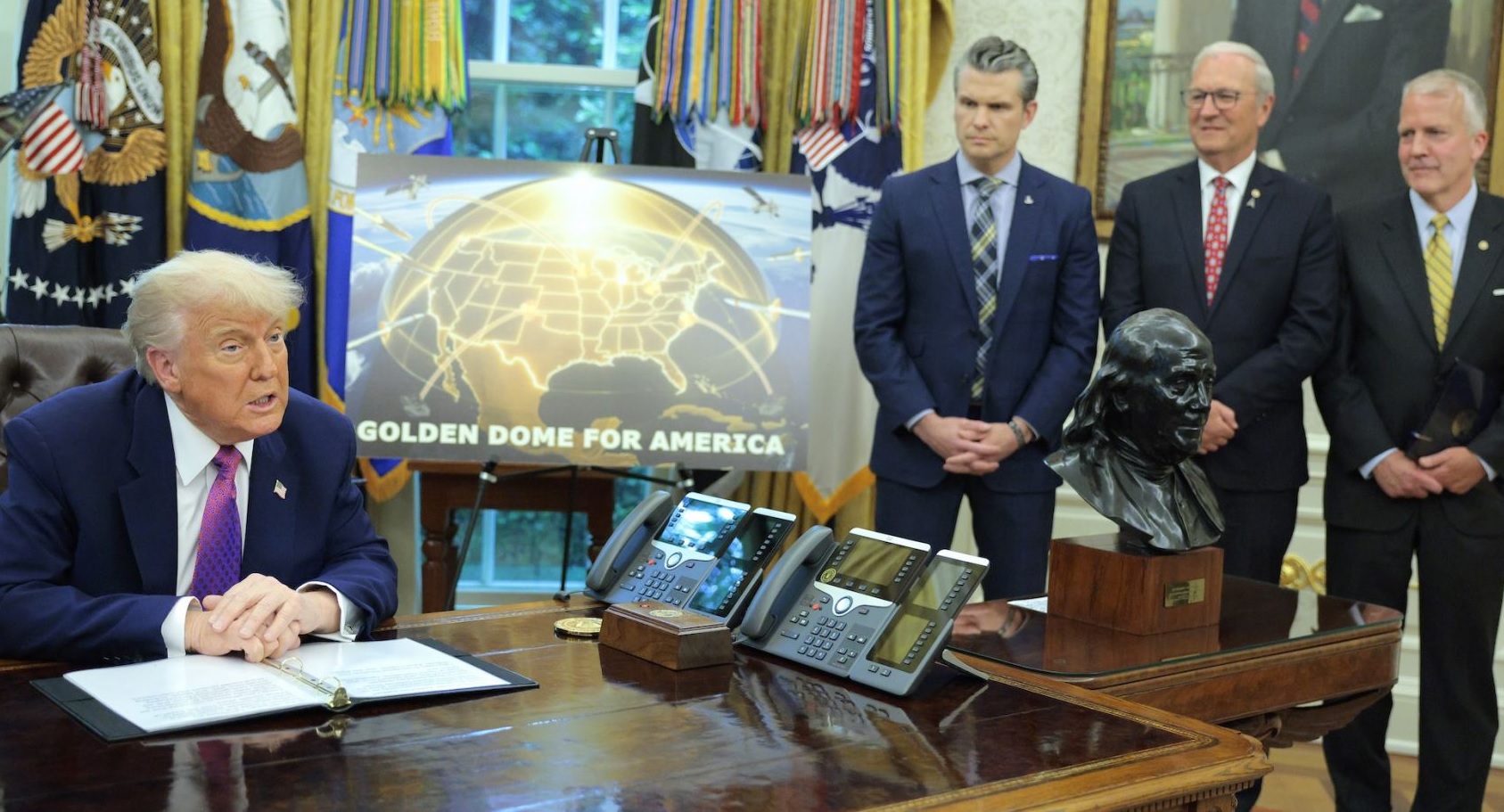
The United States has officially launched a massive $151 billion missile defense initiative called SHIELD (Scalable Homeland Integrated Ecosystem for Layered Defense) — also known as the “Golden Dome” — to protect the American homeland from growing missile threats, especially hypersonic weapons. The program, announced on July 25, 2025 in Financial Times, marks the most ambitious homeland missile defense plan in U.S. history.
At its core, SHIELD aims to build a multi-layered network of land-based interceptors, space-based sensors, AI-powered command systems, and cutting-edge radar arrays. This system will cover the entire continental United States, with the goal of detecting and intercepting missiles at all stages of flight — whether they are ballistic, cruise, or the more advanced and harder-to-detect hypersonic missiles.
A starting budget of $13 billion has already been committed to set up the basic framework and infrastructure. Retired U.S. Space Force General Michael Guetlein will lead the program through a new federal missile defense authority based at Redstone Arsenal in Huntsville, Alabama, a key hub for U.S. missile defense development.
The move comes in response to rapid advancements by U.S. adversaries in missile technologies. Nations like China, Russia, North Korea, and Iran are either deploying or testing weapons that can travel at hypersonic speeds (Mach 5+) or carry multiple nuclear warheads. These include China’s DF-17 glide vehicle, Russia’s Avangard and Kinzhal hypersonic systems, North Korea’s Hwasong-17 ICBM, and Iran’s evolving precision-strike missile platforms.
These weapons are especially dangerous due to their speed, maneuverability, and low radar visibility, making them extremely difficult to detect and intercept using legacy systems like the Ground-Based Midcourse Defense (GMD) or THAAD. Hypersonic missiles, for instance, can change course mid-flight and travel below radar coverage, giving defenders only a few minutes to respond.
In contrast to existing systems that focus on midcourse or terminal interception, SHIELD is designed to neutralize threats in all three phases of flight — boost, midcourse, and terminal — using a layered, integrated approach. The project also includes plans for cybersecurity, research and development, and integration of new weapons systems.
Major U.S. defense companies like Lockheed Martin, Raytheon, Northrop Grumman, and General Atomics are expected to bid for contracts under the SHIELD program. However, commercial space companies such as SpaceX and Amazon’s Project Kuiper are not part of the initial phase, raising discussions over whether private-sector satellite technology should play a larger role.
According to the U.S. Missile Defense Agency, proposal requests for system components will be issued soon, as the government seeks to build a network capable of handling next-generation missile threats. Over the next decade, the $151 billion budget will be distributed across multiple areas — including interceptor development, sensor networks, battle management, and support infrastructure.
With SHIELD, the U.S. is fundamentally shifting its defense strategy — no longer depending solely on regional or single-domain systems, but instead creating a nationwide, fully connected defense shield. This initiative could become the future blueprint for missile defense not just in the U.S., but globally, especially as hypersonic weapons reshape modern warfare.
Once complete, the Golden Dome will stand as a powerful symbol of U.S. technological readiness and commitment to homeland protection in an era of high-speed, high-stakes missile threats.
✍️ This article is written by the team of The Defense News.