U.S. Navy Upgrade More Tomahawk Missiles with Anti-Ship Hunting Capabilities
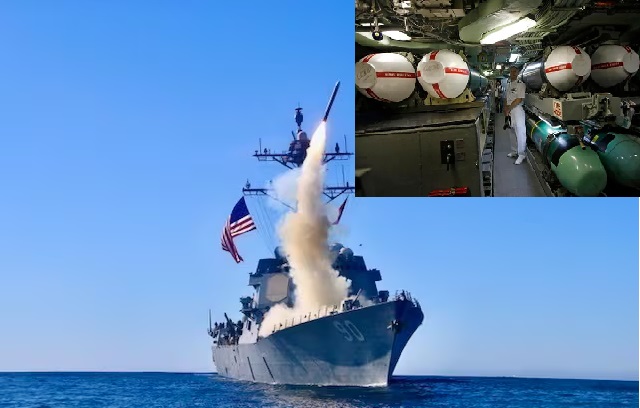
U.S. Navy is preparing to upgrade dozens of Tomahawk cruise missiles with new anti-ship capabilities, giving the long-range weapons a sharper set of eyes and a deadlier punch against enemy vessels.
The Navy plans to enhance between 35 to 96 existing Tomahawk missiles by installing advanced maritime seekers—specialized sensors that allow the missile to detect, track, and hit moving ships at sea. This shift marks a revival of the Tomahawk’s older anti-ship role, which had been phased out over the years as the missile became more focused on land targets.
Originally designed during the Cold War, the Tomahawk is a low-flying, long-range cruise missile known for its ability to sneak through enemy defenses and strike with precision. The upgraded version—known as Block V—comes with modern navigation systems, improved communication links, and two key sub-variants:
-
Block Va, the Maritime Strike Tomahawk (MST), brings back its ship-hunting power, and
-
Block Vb, featuring a Joint Multiple Effects Warhead, designed to tackle a variety of hardened or high-value targets.
So, what’s the difference between Tomahawks with anti-ship capabilities and those without?
The older versions, including the Block IVs, were mainly designed to hit stationary land targets, relying on GPS and pre-programmed routes. But anti-ship Tomahawks can identify and pursue moving warships in real time, adjusting their path mid-flight. The seeker upgrade is what enables this shift—from blind precision to smart pursuit.
According to Navy documents, up to 3,992 Block IV Tomahawks are eligible for recertification to Block V, giving the Pentagon the option to expand the program even further if Congress provides more funding. For now, RTX (formerly Raytheon) is expected to handle the modernization, as it already manufactures the missiles and has been awarded multiple contracts, including a $400 million deal for 131 new Block V missiles shared among the U.S., Australia, and Japan.
This upcoming contract, likely to be awarded in Q2 of Fiscal Year 2026, will also include the development of new maritime seekers and upgrades to missile production and testing facilities.
The U.S. Navy’s move comes as global navies pivot back toward maritime conflict readiness, particularly in the Indo-Pacific, where peer competitors like China are investing heavily in anti-ship missile technologies. By upgrading its Tomahawk fleet, the U.S. is sending a clear message: its sea-launched firepower is not just long-range—but now also highly adaptive and lethal against targets on both land and water.
✍️ This article is written by the team of The Defense News.