U.S. Navy Successfully Tests Ramjet on BQM-34 Drone, Paving Way for Future High-Speed Missiles
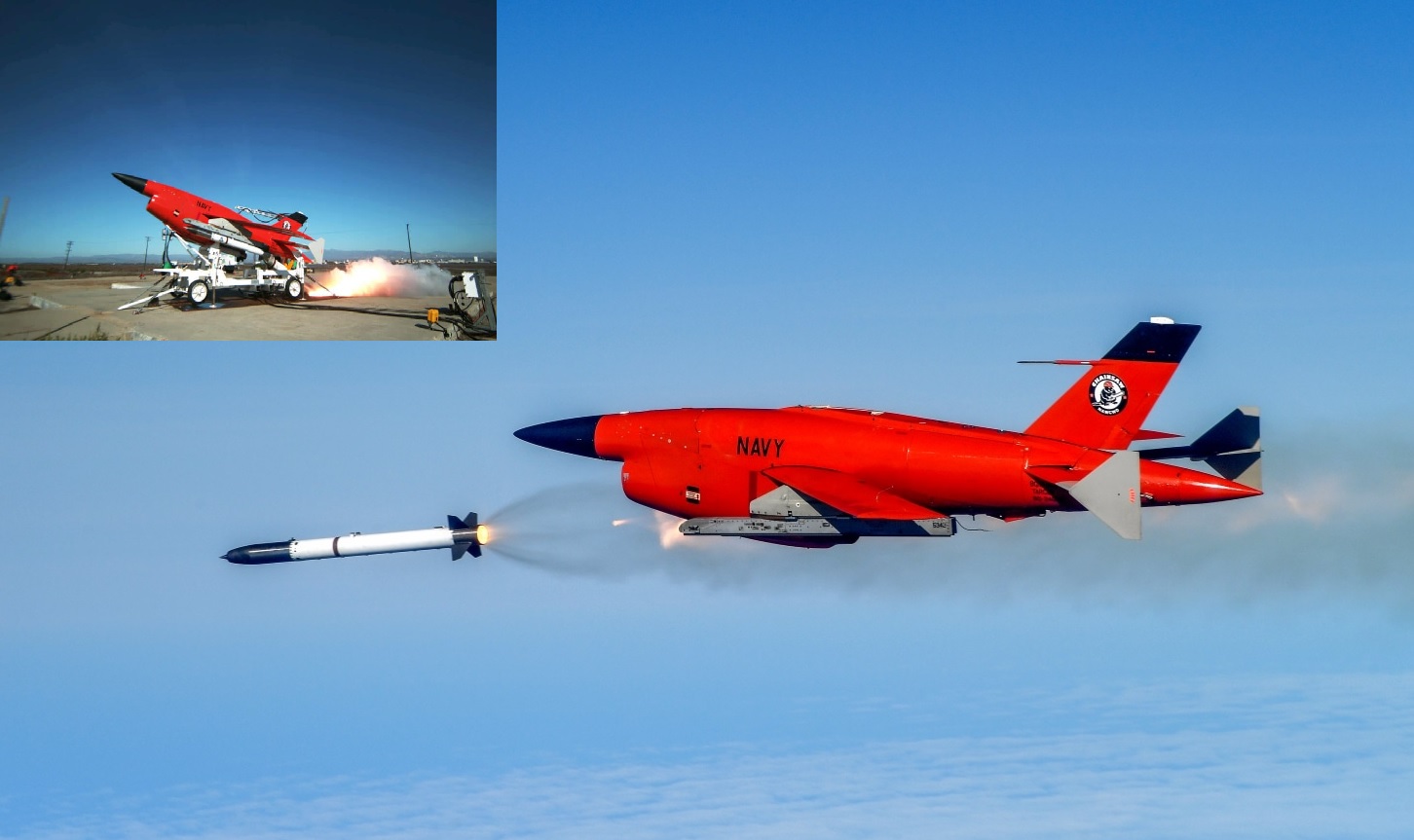
In a major step towards developing next-generation high-speed missiles, the U.S. Navy has successfully completed a solid fuel ramjet test using a BQM-34 Firebee drone, according to newly released documents and official statements. The test was conducted by the Naval Air Warfare Center Weapons Division (NAWCWD) as part of its ongoing research under the Capacity High Altitude Naval Strike Weapon (CHAINSW) program.
This program, detailed in the FY2026 U.S. Navy budget, focuses on turning earlier solid fuel ramjet (SFRJ) technologies into operationally relevant propulsion systems that could eventually power future air-launched weapons. While still in the research and development stage, this effort could feed into a range of future missile programs—both existing and in planning.
The highlight of this effort came earlier this year when NAWCWD engineers developed and flight-tested a ramjet-powered demonstrator called the Solid Fuel Integral Rocket Ramjet (SFIRR). Impressively, the entire system was built and tested within just 12 months, marking a significant achievement for a field that usually requires years of development.
The first flight test, which took place at Point Mugu, California, was the first air launch of a solid fuel ramjet from an unmanned platform in 70 years. Though the initial test faced some in-flight hardware failures, the second test was successful, achieving both primary and secondary test objectives. Navy officials said a second failure could have delayed the program by up to a year, underscoring how critical the test was.
While the Navy has not shared further details on the exact missile systems that could benefit from this development, experts believe the CHAINSW ramjet work could support future systems like:
-
HALO (Hypersonic Air-Launched Offensive) missile, which was initially part of the OASuW Increment 2 (Offensive Anti-Surface Warfare) program before its cancellation,
-
and ACME (Advanced Capacity Maritime Effector), a future naval capability weapon that aims to be mass-producible and optimized for internal carriage on F-35C stealth fighters.
The Office of Naval Research has already indicated interest in using new propulsion technologies for time-sensitive strike missions, and ACME’s goals include entering engineering and manufacturing development by FY2030 with early operational capability by FY2031.
Adding a human touch to the achievement, Todd Douglas, a test conductor with NAWCWD’s Threat Target Systems Department, received the Dr. Twain C. Lockhart Memorial Award. The award honors significant contributions to target system development, with Douglas being recognized for his role in using the BQM-34 drone to carry out the groundbreaking ramjet launch.
Although more specific details remain classified or unavailable, the success of the CHAINSW program and its recent ramjet tests signal the Navy’s push towards faster, longer-range weapons that can match or outpace emerging threats—especially in contested maritime zones.
As the Navy continues to evolve its high-speed strike capabilities, this effort marks a quiet but significant turning point in the future of missile propulsion technology.
✍️ This article is written by the team of The Defense News.