U.S. Navy Successfully Tests At-Sea Missile Reloading System in Major Naval Exercise
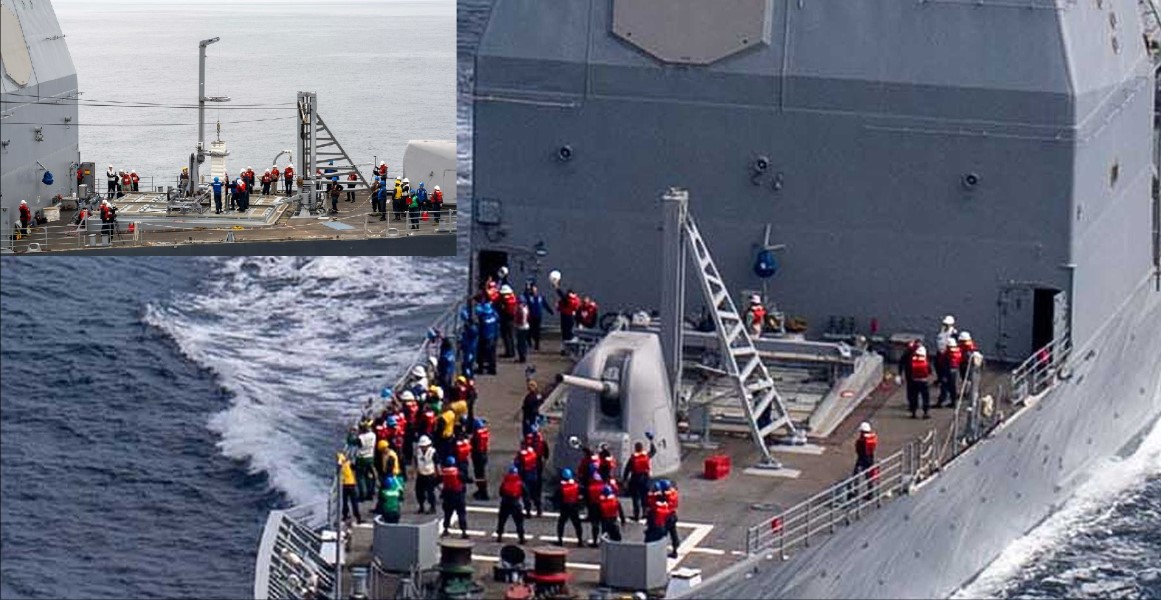
U.S. Navy has tested a new system for reloading missiles at sea—a move aimed at keeping warships armed and ready without needing to return to port. This test, part of Large Scale Exercise 2025, was conducted off the coast of Norfolk, Virginia, and involved the guided-missile destroyer USS Farragut (DDG 99) and the Ready Reserve crane ship SS Gopher State (T-ACS 4).
Until now, reloading the Mark 41 Vertical Launch System (VLS)—the missile system on many U.S. Navy destroyers and cruisers—could only be done at a pier. That process is slow, risky, and pulls critical warships out of the fight just when they’re needed most. Each missile cell can take over 30 minutes to reload, and destroyers like the Arleigh Burke-class have up to 96 missile cells. If a ship has to sail back to port just to reload, it becomes vulnerable and delays operations—especially dangerous in tense areas like the Red Sea or the Indo-Pacific.
This new test was different.
The USS Farragut received missiles in both its front and rear VLS banks using two different techniques. In the front, Navy personnel used a traditional crane method, but in the back, they tried something new—a frame-style reloader. This frame was set over the missile cells, and a special mechanism carrying two missile canisters at a time was moved from the Gopher State using its powerful cranes. This is a big improvement over older tests and shows the potential to reload faster and more efficiently during missions.
The Navy has been working on this for a while. Former Secretary of the Navy Carlos Del Toro had already called at-sea reloading a "game-changing" development, especially after a successful 2023 demonstration using a transferable reloading arm mechanism (TRAM) aboard the cruiser USS Chosin. Last week’s test built on that by using more advanced gear and faster techniques, resembling systems like the Speed Reloader by defense contractor Leidos, which was shown earlier this year.
Reloading at sea isn’t a new idea—it was tested during the Cold War—but those efforts were stopped due to safety issues and the belief that such capabilities weren’t needed anymore. Now, with rising tensions and great-power competition returning, especially with countries like China and Iran, the U.S. Navy is taking a fresh look at ways to keep its ships in the fight longer.
"This is a critical warfighting capability," said Lt. Cmdr. John Sefcik, weapons officer aboard the Farragut, explaining how being able to reload at sea boosts the fleet’s "lethality and operational reach." And Rear Admiral Charles Kirol, who leads the Navy Expeditionary Logistics Support Group (NAVELSG), emphasized that this step makes it harder for any enemy to challenge U.S. forces in a real conflict.
The test was part of a broader command-and-control drill involving multiple branches of the military and international allies. Personnel from NAVELSG and Navy Cargo Handling Battalion One played key roles in handling and moving the massive missile containers.
While there’s still work to do before this becomes a standard practice, the U.S. Navy’s latest test shows serious progress. If perfected, this system could keep warships armed and fighting for longer stretches—no matter where they are in the world.
✍️ This article is written by the team of The Defense News.