U.S. Navy Receives Next-Generation Flight III Destroyer USS Ted Stevens to Strengthen Its Fleet
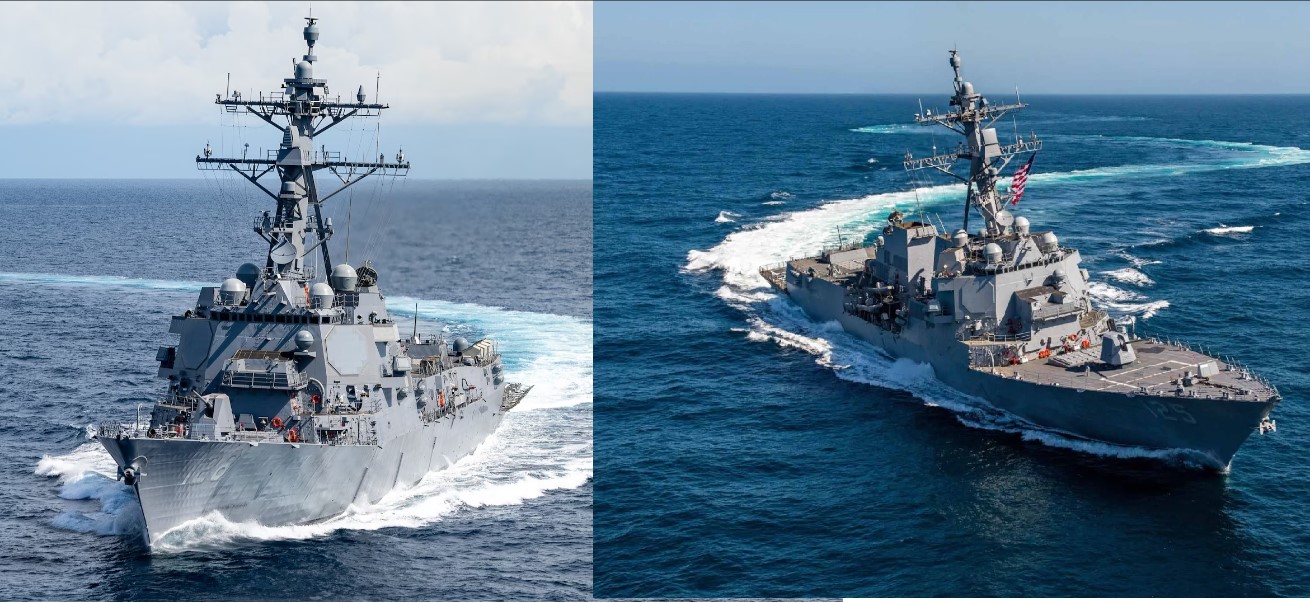
PASCAGOULA, Mississippi : On 29 December 2025 The United States Navy has formally taken delivery of the guided-missile destroyer USS Ted Stevens (DDG-128), marking another significant step in the service’s effort to modernise its surface fleet and strengthen high-end naval combat capability. The ship was handed over by Huntington Ingalls Industries, through its Ingalls Shipbuilding division, at the company’s Pascagoula shipyard in Mississippi.
The delivery of Ted Stevens reinforces the Navy’s expanding Flight III Arleigh Burke-class destroyer programme at a time of intensifying maritime competition and growing demand for advanced air and missile defence assets. Navy officials described the handover as a critical milestone in enhancing fleet readiness and supporting Distributed Maritime Operations, the operational concept guiding future U.S. naval warfare.
A Key Addition to the Flight III Programme
Ted Stevens is one of the most advanced variants of the Arleigh Burke-class, the longest-running destroyer production programme in U.S. Navy history. More than 80 ships of the class have been delivered, are under construction, or are planned, underscoring its central role in American naval power.
Flight III ships represent a major generational upgrade over earlier Flight IIA destroyers. While retaining the proven hull, propulsion and weapons architecture of the DDG-51 family, the Flight III design introduces substantial improvements in sensors, power generation and cooling capacity, enabling the integration of next-generation combat systems and significantly improving survivability in contested environments.
SPY-6 Radar Brings Step-Change in Capability
At the core of Ted Stevens’ enhanced combat capability is the AN/SPY-6(V)1 Air and Missile Defense Radar, the most capable radar ever deployed on a U.S. Navy surface combatant. Built using scalable gallium nitride (GaN) technology, SPY-6 offers up to a 30-times increase in sensitivity compared with the legacy SPY-1 radar.
This capability allows the destroyer to simultaneously detect, track and discriminate among ballistic missiles, cruise missiles, aircraft and surface threats, even in dense electronic warfare conditions. The radar’s modular design also improves resilience and long-term upgrade potential as threat profiles evolve.
Aegis Baseline 10 and Expanded Warfighting Roles
The radar is paired with the Aegis Baseline 10 combat system, enabling Flight III destroyers to function as theatre-level air and missile defence nodes. Baseline 10 supports full integration of advanced weapons such as the SM-6 missile, alongside next-generation electronic warfare and command-and-control capabilities.
Together, these systems allow ships like Ted Stevens to conduct complex, multi-domain engagements across wide maritime battlespaces, extending their role beyond traditional escort duties to become central elements in joint and allied defence architectures.
Industrial Momentum at Pascagoula
Ingalls Shipbuilding officials highlighted the delivery as evidence of sustained production momentum at the Pascagoula yard. The shipbuilder is currently constructing multiple Flight III destroyers in parallel, including DDG-129 Jeremiah Denton, DDG-131 George M. Neal, DDG-133 Sam Nunn and DDG-135 Thad Cochran.
To support this increased tempo, Ingalls has expanded its distributed shipbuilding model, spreading fabrication and outfitting work across partner facilities to stabilise schedules, manage workforce demand and accelerate delivery timelines. With Ted Stevens, Ingalls has now delivered 36 Arleigh Burke-class destroyers to the U.S. Navy.
Honouring a National Figure
The destroyer is named after Ted Stevens, the long-serving U.S. Senator from Alaska whose career spanned four decades and who was a prominent advocate for national defence and military readiness. Navy leaders have said the ship will carry forward that legacy through decades of operational service.
Strengthening Fleet Readiness
As the U.S. Navy confronts increasingly sophisticated missile threats and contested maritime domains, the induction of USS Ted Stevens underscores a clear strategic direction: sustained investment in high-end surface combatants capable of operating at the centre of modern naval warfare. With Flight III destroyers entering service in growing numbers, the Navy is positioning its surface fleet to retain technological and operational advantage well into the coming decades.
✍️ This article is written by the team of The Defense News.