US Navy Plan to Retire Four Ohio-Class SSGN Submarines As Virginia Block V Submarines Take Over
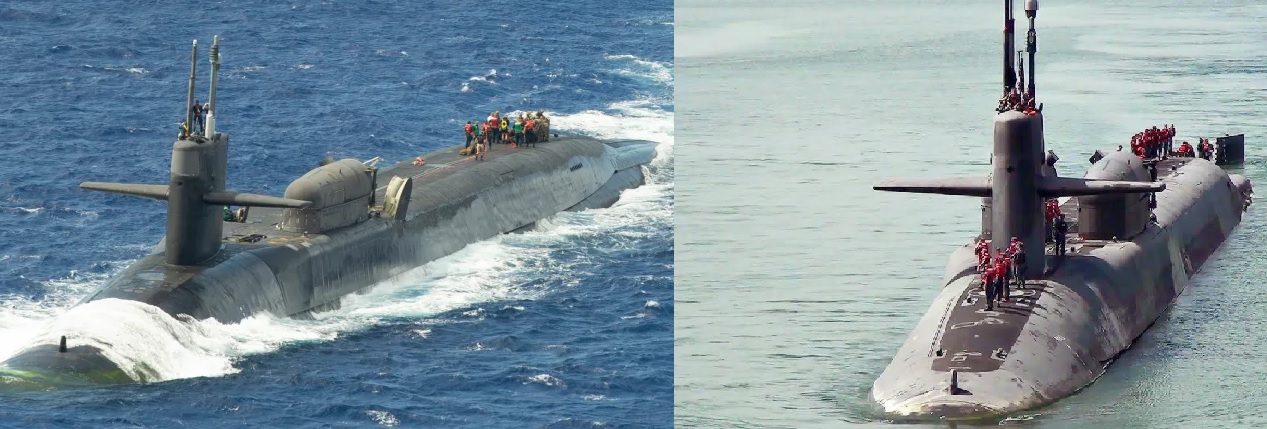
The United States Navy is preparing to retire four Ohio-class guided-missile submarines by 2028, a move that will phase out nearly half of the Navy’s undersea Tomahawk cruise-missile strike capacity and significantly reshape how the service delivers conventional firepower from beneath the sea.
The submarines—USS Ohio, USS Michigan, USS Florida, and USS Georgia—were originally built as nuclear ballistic-missile submarines during the Cold War before being converted in the 2000s into guided-missile submarines (SSGNs). Each Ohio-class SSGN can carry up to 154 Tomahawk land-attack missiles, giving the four-boat fleet a combined maximum payload of more than 600 missiles and making it the Navy’s most powerful conventional strike asset underwater.
Retirement and Capacity Impact
As the Ohio-class SSGNs approach the end of their extended service lives, the Navy plans to decommission them later this decade. Their retirement will remove more than half of the Navy’s submarine-based vertical-launch missile capacity, resulting in an immediate reduction in the ability to conduct large-scale, stealthy strike operations from the sea.
Unlike attack submarines or surface warships, the Ohio-class boats were designed to concentrate massive missile firepower in a single platform, allowing commanders to deliver massed strikes early in a conflict without relying heavily on surface forces.
Virginia Block V as the Successor
The Navy plans to replace the Ohio-class strike role with the latest versions of the Virginia-class submarines, beginning with the Block V variant. These submarines are equipped with the Virginia Payload Module (VPM), an added hull section that significantly increases missile capacity through four large payload tubes.
A Virginia Block V submarine can carry roughly 40 Tomahawk missiles in its vertical-launch systems—far fewer than an Ohio-class SSGN, but substantially more than earlier Virginia-class boats. The Navy estimates that it will require many Block V submarines operating together to replace the strike capacity lost when the four Ohio-class submarines leave service.
Transition Gap and Production Challenges
The shift from Ohio-class SSGNs to Virginia Block V submarines is expected to take close to a decade. Submarine construction delays and shipyard capacity constraints mean the Navy is unlikely to field enough Block V boats quickly to fully offset the retiring Ohio-class platforms in the near term.
During this transition, the Navy is expected to face a temporary gap in undersea strike capacity, reducing the volume of cruise missiles it can deploy from submarines at any one time.
Hypersonic Weapons and Payload Tradeoffs
Future payload decisions could further affect missile numbers. The Navy plans to integrate hypersonic weapons into its submarine force, but these larger, space-intensive missiles will occupy more payload volume than Tomahawks, potentially reducing overall missile counts aboard each submarine.
Strategic Significance
The retirement of the Ohio-class SSGNs marks a major shift in U.S. naval strike power. While Virginia Block V submarines are expected to eventually restore much of the lost capability, the Navy faces a critical transition period marked by reduced undersea missile capacity as it moves from a small number of extremely high-capacity platforms to a more distributed, lower-volume strike force.
✍️ This article is written by the team of The Defense News.