U.S. Navy Plan to Arm Surface Fleet With Hypersonic Strike Weapons
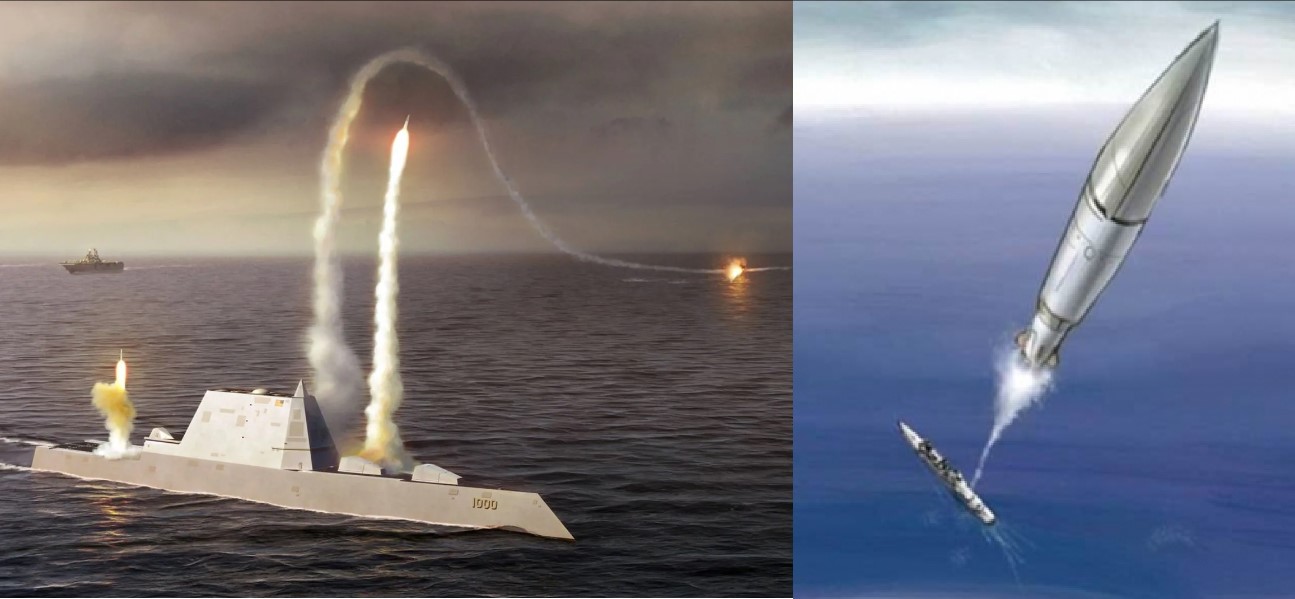
WASHINGTON : The U.S. Navy is preparing for its most significant shift in surface-fleet firepower in decades, moving to distribute hypersonic strike capability across its most powerful warships as part of a broader effort to restore long-range, stand-off lethality at sea.
Senior Navy officials disclosed at the Surface Navy Symposium 2026 that the service intends to expand deployment of the hypersonic Conventional Prompt Strike (CPS) missile beyond submarines, embedding the weapon deeply into the future surface fleet. The strategy, outlined by Derek Trinque, the Navy’s Director of Surface Warfare (N96), reflects growing concern that existing surface combatants lack the space and power margins required for next-generation weapons.
Re-arming the Surface Fleet
For the first time since the Cold War, the Navy envisions surface ships carrying a true long-range hypersonic strike option capable of penetrating advanced air defenses at extreme speed. At present, the surface force fields no operational hypersonic stand-off weapon, a gap Navy planners increasingly see as a critical vulnerability in a conflict against a peer adversary.
That gap is set to close with the arrival of a new class of large surface combatants, informally described as Trump-class Guided Missile Battleships, or BBG(X). Early design concepts call for each ship to carry 12 CPS missiles housed in dedicated bow cells, separate from the ship’s traditional vertical launch system. Navy officials argue the size of these vessels is not a luxury but a necessity, driven by the physical demands of hypersonic weapons and future high-energy systems.
Lessons from DDG(X)
The decision to pursue larger hulls follows hard lessons learned during the now-revised DDG(X) next-generation destroyer program. According to Trinque, internal design trade-offs forced planners into an untenable choice between preserving enough Mk-41 Vertical Launch System (VLS) cells and retaining a traditional naval gun.
“I want very much to have CPS in our most capable surface ship,” Trinque said. “But we went and found ourselves in a weird situation where, in order to keep an adequate amount of Mk-41 VLS cells, we were going to have to make a choice between a gun weapon system and Conventional Prompt Strike.”
Rather than sacrifice either capability, Navy leadership opted to rethink surface-combatant scale entirely, concluding that future ships must be significantly larger to avoid similar constraints.
The Trump-Class Vision
Initial models of the lead ship, USS Defiant, depict a heavily armed platform designed around power generation and internal volume. Beyond its 12 CPS cells, the ship is expected to field 128 Mk-41 VLS cells for air defense, land-attack, and anti-surface missions, alongside an advanced railgun, mounts for directed-energy weapons, and layered close-in defenses.
While still conceptual, the design underscores a shift toward surface ships as missile arsenals and power hubs, rather than incremental evolutions of existing destroyers.
Hypersonics in the Near Term
Before any new battleship enters the fleet, the Navy’s first operational CPS deployment will arrive aboard an existing platform. The Zumwalt-class destroyer USS Zumwalt (DDG-1000) is set to become the first U.S. Navy surface vessel — and the first ship of any type in the fleet — to field a hypersonic weapon.
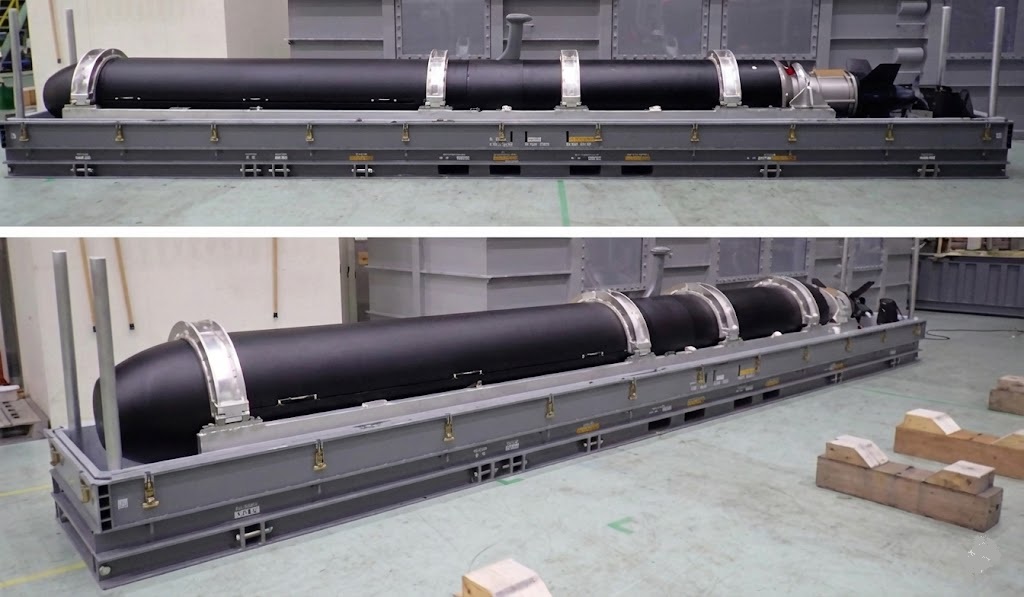
The ship is currently completing a major refit that removes both of its Advanced Gun Systems (AGS), which never achieved operational viability due to the cancellation of their specialized ammunition. In their place, the forward gun position will house four CPS launch cells, each capable of carrying three missiles, for a total of 12 hypersonic rounds. Space vacated by the second gun mount is being repurposed for future systems.
Navy officials say Zumwalt is expected to depart the shipyard later this year, marking a milestone in surface-fleet strike capability. Her sister ships, USS Lyndon B. Johnson (DDG-1002) and USS Michael Monsoor (DDG-1001), will follow the same modernization path, with Monsoor scheduled to enter dry dock in 2027 after the first two conversions are largely complete.
Subsurface Expansion
Beyond surface combatants, CPS remains central to the Navy’s undersea strategy. The next platforms to carry the weapon will be Block V Virginia-class submarines, enabled by the Virginia Payload Module (VPM). The VPM adds four large missile tubes to each boat, dramatically increasing payload capacity and allowing storage of CPS rounds alongside other strike weapons.
The first Block V submarine under construction is the future USS Oklahoma, laid down in 2022 and projected for delivery in 2028. Once operational, these submarines will provide a stealthy, survivable complement to surface-launched hypersonic strikes.
A Broader Strategic Shift
Taken together, the Navy’s plans signal a decisive move toward distributed hypersonic firepower across multiple domains. By pairing submarines with large, heavily armed surface ships, the service aims to complicate adversary defenses while restoring the surface fleet’s relevance in high-end conflict.
As Trinque and other leaders emphasized at SNA 2026, the challenge now lies less in whether the Navy can field hypersonic weapons, and more in ensuring future ships are built large and flexible enough to carry them without compromise.
About the Author
Aditya Kumar:
Defense & Geopolitics Analyst
Aditya Kumar tracks military developments in South Asia, specializing in Indian missile technology and naval strategy.