U.S. Navy Expands P-8 Poseidon’s Strike Capabilities with AGM-158C LRASM Integration
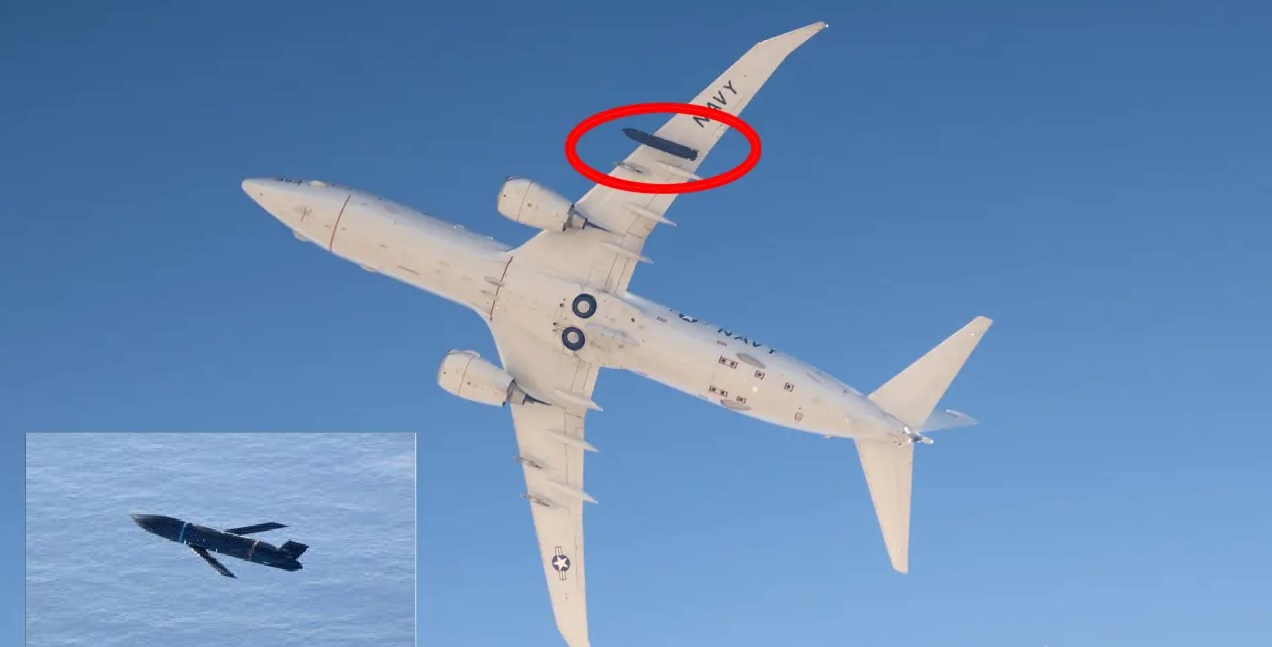
The U.S. Navy has officially confirmed the integration of the AGM-158C Long Range Anti-Ship Missile (LRASM) onto its P-8A Poseidon maritime patrol aircraft, offering the first official images of the missile slung beneath the wing of the aircraft. This development marks a significant milestone in enhancing the U.S. Navy’s long-range strike capabilities from its existing fleet of surveillance platforms.
Initial sightings of the P-8A carrying an LRASM were reported earlier by military observers, but the U.S. Navy’s recent confirmation underscores the progress made since the first fit checks conducted in July 2020 at Naval Air Station (NAS) Patuxent River. These early tests involved verifying the aerodynamic compatibility and structural integrity of mounting the missile on the aircraft's wing pylons. Over the last few years, flight tests have been carried out to ensure safe and effective deployment, signaling a deepened commitment to expanding the LRASM’s launch platforms.
The P-8A Poseidon has been a cornerstone of the Navy’s maritime patrol and reconnaissance efforts since its induction in 2012. Replacing the aging P-3 Orion aircraft—which had served the U.S. Navy since the 1960s—the P-8A is a Boeing 737-800 airframe extensively modified for anti-submarine warfare, anti-surface warfare, and intelligence, surveillance, and reconnaissance missions. Its sensor suite includes air-dropped sonobuoys, advanced surface search radars such as the AN/APY-10, and other electronic surveillance systems that enable it to detect, track, and engage threats across vast ocean expanses.
Until now, the P-8A has been armed with weapons like the MK-54 lightweight torpedo and the AGM-84 Harpoon anti-ship missile. The addition of the AGM-158C LRASM considerably extends its lethality by enabling strikes at standoff distances exceeding 200 nautical miles. This capability allows P-8A crews to engage high-value maritime targets from beyond the range of enemy air defenses, significantly improving mission survivability and operational flexibility.
Enhanced Reach with LRASM
The AGM-158C LRASM is a next-generation anti-ship missile developed by Lockheed Martin as an advanced variant of the Joint Air-to-Surface Standoff Missile Extended Range (JASSM-ER). The LRASM combines stealth design features, advanced seekers utilizing radio-frequency and infrared guidance, datalink capabilities for real-time updates, and sophisticated onboard navigation systems to evade detection and intercept heavily defended naval targets.
The latest AGM-158C-3 variant expected to enter service this fiscal year builds on earlier versions with improved beyond-line-of-sight targeting, enhanced electronic counter-countermeasures, and software updates to further increase mission effectiveness. With these enhancements, the LRASM can engage targets in complex, contested environments where GPS jamming and electronic warfare are prevalent.
Currently, the LRASM is deployed on the Air Force’s B-1B strategic bomber and the Navy’s F/A-18 E/F Super Hornet. Integration is also underway for the F-15 and B-52 bomber fleets, as well as the Marine Corps’ and Navy’s F-35 Lightning II variants. The missile’s growing adaptability is part of a broader effort to diversify launch platforms and strengthen multi-domain warfare capabilities across the U.S. military.
Aligning with JADC2 Goals
The decision to integrate LRASM onto the P-8A Poseidon reflects the Navy’s broader push to enhance its long-range precision strike options while maintaining operational flexibility across contested maritime regions. By arming the P-8A with the LRASM, the Navy reinforces its ability to conduct networked warfare, allowing aircraft to work in coordination with other platforms, including drones, surface ships, and allied forces.
This integration aligns with the Joint All-Domain Command and Control (JADC2) framework, an initiative aimed at connecting sensors, shooters, and decision-makers across air, sea, land, space, and cyber domains. The ability to conduct complex, networked engagements from stand-off ranges ensures that maritime forces can respond swiftly to evolving threats while preserving force survivability.
Future Outlook
The U.S. Navy has confirmed that additional flight tests are planned to further validate the integration of LRASM with the P-8A. As the Navy accelerates its adoption of long-range precision weapons, the P-8A’s enhanced strike capabilities will complement surface vessels and other aircraft in countering advanced maritime threats.
With tensions rising in regions such as the Indo-Pacific, where near-peer adversaries are fielding increasingly capable naval assets and air defense systems, the deployment of LRASM on the P-8A will give the U.S. Navy a decisive edge. It bolsters the ability to deter aggression, project power, and maintain sea control over critical maritime chokepoints.
The successful integration of LRASM on the P-8A Poseidon marks a transformative step in the evolution of naval warfare, marrying advanced sensor technologies with long-range precision strike capabilities to meet the challenges of modern combat. The U.S. Navy’s ongoing tests and eventual deployment of this capability will undoubtedly redefine how maritime patrol aircraft contribute to multi-domain operations in the years ahead.
✍️ This article is written by the team of The Defense News.