US Navy Advances Future Air Combat as F-35 Controls Collaborative Combat Aircraft in Digital Warfighting Trial

Patuxent River, Maryland — The Naval Air Warfare Center Aircraft Division (NAWCAD) has completed a tactical demonstration that marks a significant step forward in integrating the F-35 Lightning II with the US Navy’s emerging Collaborative Combat Aircraft (CCA) fleet. Conducted inside the Joint Simulation Environment (JSE), the event validated new concepts for fifth-generation crewed aircraft operating alongside uncrewed combat systems in complex, high-threat scenarios.
The demonstration showcased how advanced modelling and high-fidelity simulation are being used to rapidly develop, test, and refine next-generation air combat tactics without the cost and constraints of live-flight exercises. Navy officials described the event as a critical enabler for future distributed maritime operations and manned-unmanned teaming.
A Digital Range for Future Air Warfare
The Joint Simulation Environment is the US Department of Defense’s most advanced digital test and training range, engineered by NAWCAD to replicate real-world combat conditions with extreme accuracy. Unlike traditional open-air ranges, the JSE allows frequent, repeatable, and classified training events, including scenarios that cannot be safely or realistically recreated in live exercises.
“Modern warfare is demanding more from our aviators,” said Rear Adm. Todd Evans, Commander of NAWCAD. “This milestone shows the Joint Simulation Environment’s impact on equipping them with the advanced tactics they need to win future battles.”
F-35 Pilots Control Multiple Uncrewed Wingmen
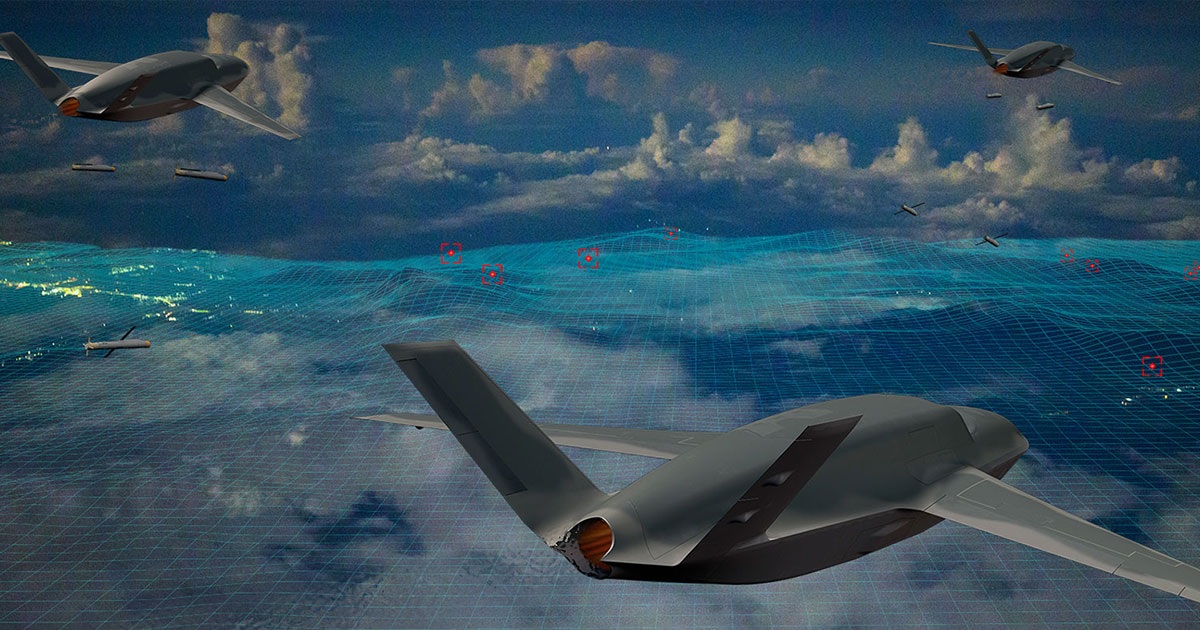
During the demonstration, F-35 pilots used secure touch-screen tablets inside the simulator to command and control multiple Collaborative Combat Aircraft simultaneously. The CCAs acted as force multipliers, extending sensor reach, carrying additional weapons, and absorbing risk in highly contested airspace.
Within the virtual battlespace, pilots employed advanced operational communications, networked sensors, and precision-guided weapons to counter integrated air-defence systems, airborne threats, and dynamic targets. The environment allowed aircrews and engineers to observe decision-making, timing, and workload, then immediately adjust tactics and command relationships.
According to NAWCAD, this approach significantly accelerates the tactics-development cycle, enabling new concepts to move from simulation to operational units far faster than traditional methods.
Why Collaborative Combat Aircraft Matter
The Navy’s CCA concept is built around attritable and survivable uncrewed aircraft designed to operate alongside crewed fighters like the F-35. When networked together, the combination delivers greater lethality, deeper reach, and improved survivability—all while keeping pilots farther from the most dangerous threats.
In the JSE demonstration, CCAs were used for forward sensing, electronic support, and weapons delivery, allowing the F-35 to remain the command node while exploiting the strengths of uncrewed platforms. Officials noted that this model aligns closely with future Indo-Pacific and high-end conflict requirements.
Expansion Planned for Fiscal Year 2026
NAWCAD confirmed that the Joint Simulation Environment will expand further in fiscal year 2026, integrating additional frontline naval aviation platforms. Planned additions include the E-2D Advanced Hawkeye, the F/A-18E/F Super Hornet, and the EA-18G Growler.
Beyond naval aviation, the JSE is also expected to support broader US Navy and US Air Force training, linking multiple bases and units into shared, large-scale synthetic exercises. This cross-service integration is seen as essential for preparing forces for joint and coalition operations.
A Blueprint for the Next Era of Combat Aviation
The successful F-35–CCA tactical demonstration underscores a broader shift in US military training philosophy—away from platform-centric thinking and toward networked, software-driven combat ecosystems. By combining fifth-generation fighters, autonomous systems, and digital test ranges, the Navy is laying the groundwork for faster adaptation and battlefield overmatch.
As NAWCAD continues to evolve the Joint Simulation Environment, officials say the goal is clear: give aviators realistic experience against tomorrow’s threats—before they ever face them in the real world.
About the Author
Aditya Kumar:
Defense & Geopolitics Analyst
Aditya Kumar tracks military developments in South Asia, specializing in Indian missile technology and naval strategy.