U.S. Military Downs Fiber-Optic Drone for First Time Using Leonidas Microwave System
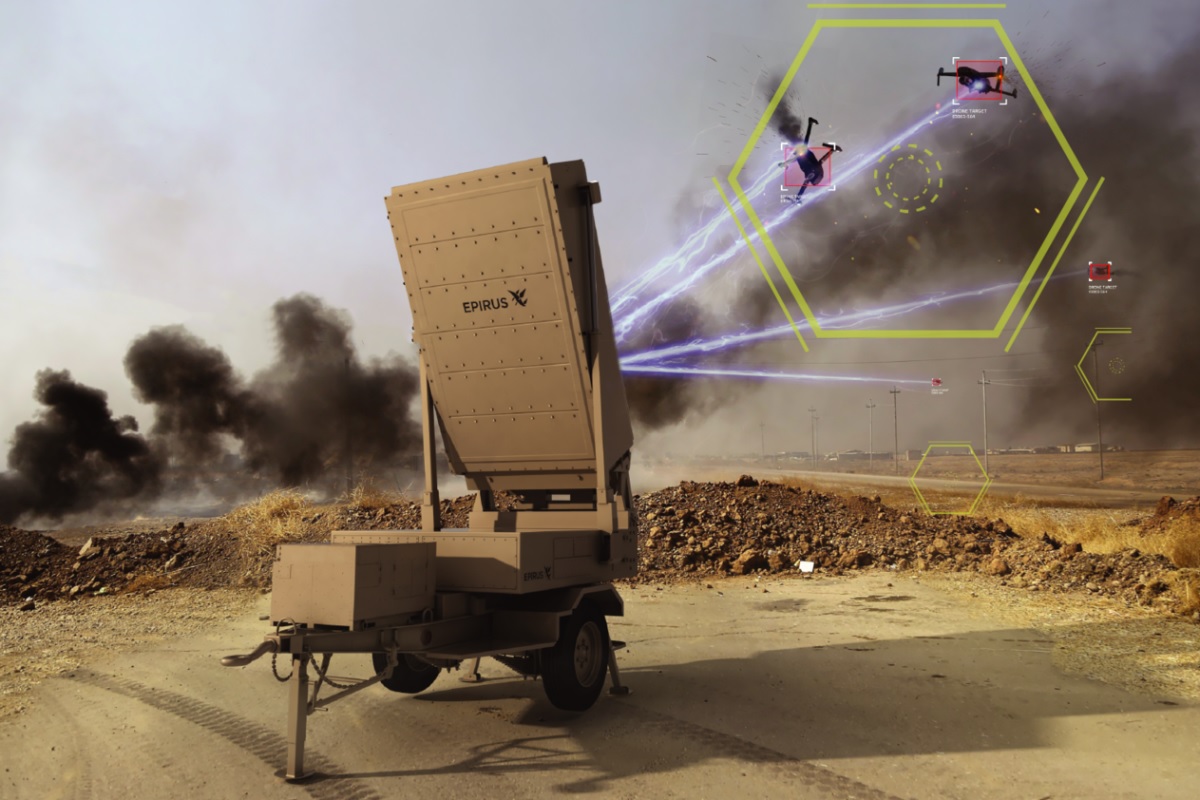
WASHINGTON : The United States military has, for the first time, successfully neutralized a fiber-optic–controlled drone, marking a major turning point in the rapidly evolving contest between unmanned systems and air defense technology.
The milestone was publicly confirmed on January 13, when Epirus released video footage showing its Leonidas VehicleKit high-power microwave system disabling a fiber-optic-guided unmanned aerial system during a live-fire demonstration conducted in December 2025 at a U.S. government testing site. The previously undisclosed trial took place at a closed United States Army range and had remained classified until the video’s release.
According to Epirus, the Leonidas system emitted a focused burst of high-power microwave energy that overwhelmed the drone’s onboard electronics, causing it to lose control and crash, despite its fiber-optic command link remaining physically intact.
Defense analysts say the engagement represents a significant leap forward in counter-drone warfare, as fiber-optic UAVs have long been considered among the most difficult aerial threats to defeat using non-kinetic means.
A New Class of Drone, a New Kind of Threat
Unlike conventional UAVs that rely on radio-frequency links, fiber-optic drones transmit commands and video signals through an ultra-thin physical cable spooled out behind the aircraft. This design eliminates radio emissions, making the drone nearly invisible to traditional jamming systems and resistant to most forms of electronic interference.
Such drones have proliferated rapidly on modern battlefields, particularly in the Ukraine theater of operations, where they have proven effective against armored vehicles, air defense radars, and fixed military positions. In a 2024 assessment, the U.S. Army described fiber-optic UAVs as one of the most serious emerging threats to contemporary air defense and counter-UAS doctrine.
Until now, defeating them required kinetic interception or physical destruction of the cable—options that are often impractical in fast-moving combat conditions.
Leonidas Crosses a Critical Threshold
Epirus confirmed that the December test was the first verified instance in which a non-kinetic system disrupted a fiber-optic drone’s operation. According to the company, Leonidas used a focused burst of high-power microwave energy to overwhelm onboard electronics, rendering the aircraft uncontrollable despite its wired command link.
The achievement builds on earlier demonstrations in which Leonidas neutralized large groups of conventional UAVs. In previous trials, the system successfully defeated a coordinated swarm of 49 drones, but those targets relied on radio control. The fiber-optic engagement, company officials say, proves the system can counter a far broader spectrum of unmanned threats.
Epirus’ chief executive described the mass adoption of fiber-optic drones as a defining inflection point in unmanned warfare, exposing a dangerous vulnerability in existing air defense architectures. Leonidas, he said, was developed specifically to close that gap.
Second-Generation System and Army Investment
The breakthrough comes amid growing U.S. military investment in directed-energy solutions. In 2025, Epirus was awarded a $43.5 million contract to deliver two second-generation Leonidas systems to the Army.
The upgraded variant features more than double the effective engagement range of the original system, a roughly 30 percent increase in output power, integrated high-energy batteries, and reduced reliance on external power sources. These improvements significantly enhance mobility and operational flexibility, enabling deployment closer to the front line.
The system has been designed for integration across multiple platforms, including the Stryker armored vehicle family, light tactical vehicles, and other mobile ground platforms, allowing commanders to protect maneuver units as well as fixed sites.
Implications for Future Warfare
Military experts say the successful engagement signals a shift in the balance between drones and defenses. As adversaries increasingly turn to low-cost, hard-to-detect UAVs to offset conventional military advantages, systems like Leonidas could become central to layered air defense strategies.
For the U.S. Army and its allies, the ability to counter fiber-optic drones without expending missiles or exposing forces to close-range threats offers both tactical and economic advantages. For drone developers, the test underscores that even the most recent innovations in unmanned warfare may not remain uncontested for long.
With directed-energy weapons moving from experimental trials to operational reality, the contest between offense and defense in the skies appears set to enter a new and more technologically intense phase.
About the Author
Aditya Kumar:
Defense & Geopolitics Analyst
Aditya Kumar tracks military developments in South Asia, specializing in Indian missile technology and naval strategy.