US Military Confirms First Combat Use of F-35C Fighter Jets in Yemen
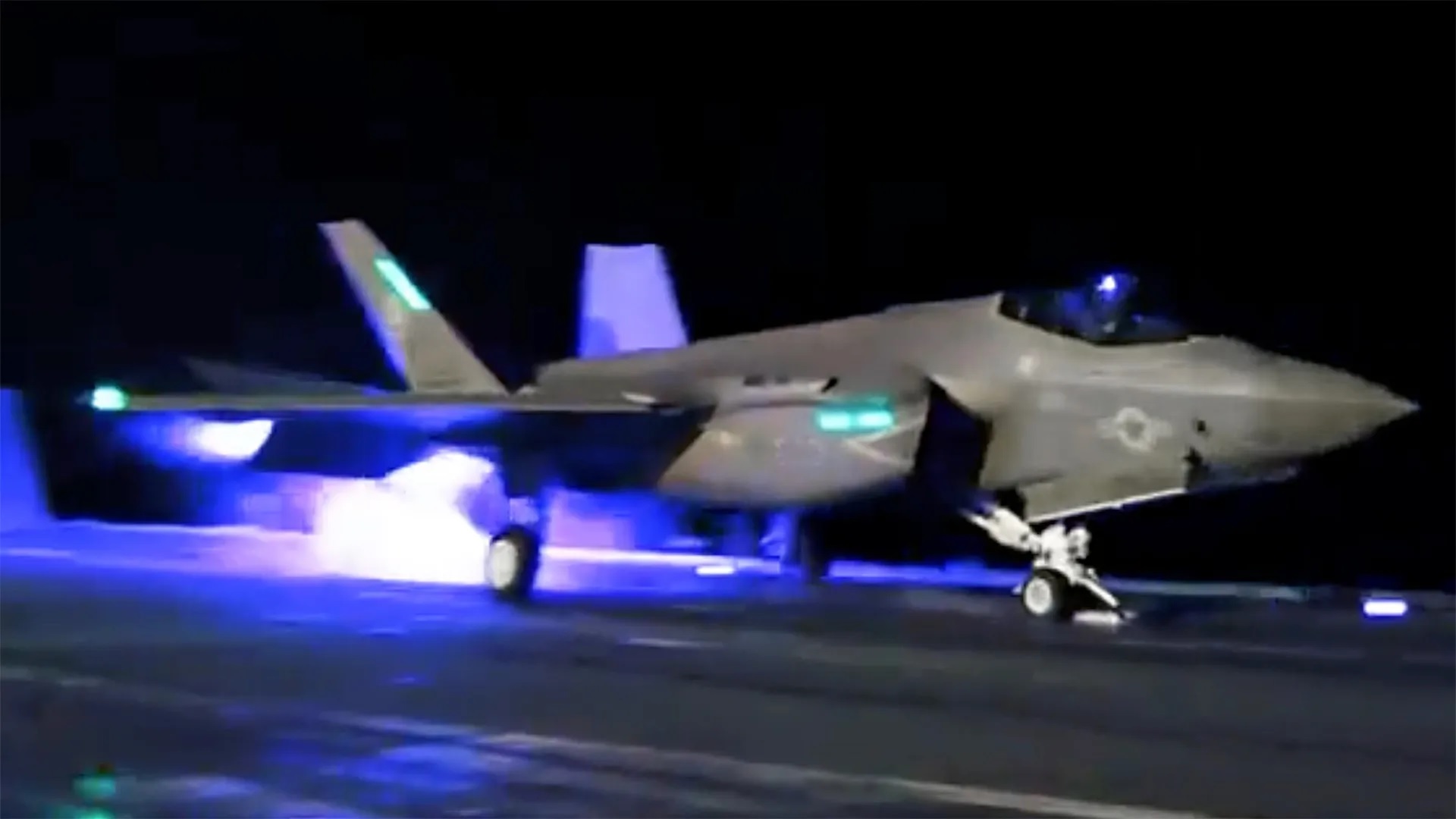
The United States military recently marked a significant milestone with the first combat deployment of its F-35C Lightning II, a carrier-capable stealth fighter jet. This groundbreaking mission saw the advanced aircraft engaging Houthi targets in Yemen, specifically aimed at disrupting anti-ship missile storage facilities. These weapons have been used by Houthi forces to target military and civilian vessels navigating the Red Sea, a strategic waterway critical for international trade and security.
The Combat Operation
The mission was carried out by the U.S. Marine Fighter Attack Squadron (VMFA-314), also known as the "Black Knights," operating from the aircraft carrier USS Abraham Lincoln. Over multiple days in November, the F-35C demonstrated its unique capabilities by penetrating contested airspace and precisely striking targets deep within Houthi-controlled regions. The strikes were a direct response to escalating Houthi attacks, including incidents involving drone and missile strikes against U.S. Navy vessels in the Bab al-Mandab Strait and other Red Sea areas.
Lt. Col. Jeffrey Davis, commanding officer of VMFA-314, emphasized the historical significance of the operation, stating, “The F-35C demonstrated its warfighting advantage... My Marines are honored to be first to fight with the F-35C.”
A Game-Changer in Aerial Combat
The F-35C Lightning II, developed by Lockheed Martin, represents the pinnacle of modern aerial warfare technology. Engineered specifically for carrier-based operations, it features foldable wings for efficient storage and specialized landing gear designed for catapult launches and arrested recoveries. The F-35C also boasts a larger fuel capacity, enabling extended range operations critical for missions like those in Yemen.
The jet's stealth capabilities, coupled with advanced avionics and sensor suites, allow it to perform a range of roles, from precision strikes to electronic warfare and intelligence gathering. This versatility cements its position as a game-changer in U.S. military operations, with Marine officials and Carrier Air Wing leaders touting its transformative impact on the carrier strike group's overall capabilities.
Broader Strategic Context
The deployment of the F-35C underscores a strategic shift in U.S. military operations to counter threats in volatile regions like the Red Sea. Beyond targeting weapons storage, the mission reflects a broader effort to secure global maritime routes against Houthi aggression, which has claimed lives and threatened international shipping. The deployment also highlights the U.S.'s commitment to leveraging cutting-edge technology in response to emerging threats.
This operation further differentiates the F-35C from its variants, the F-35A and F-35B, which had previously seen combat in the Middle East. While the F-35A debuted in 2019 against ISIS in Iraq, and the F-35B was first used in 2018 in Afghanistan, the F-35C's carrier-based nature offers unprecedented operational flexibility.
Future Implications
The success of this mission is likely to accelerate the broader integration of the F-35C into U.S. Navy and Marine Corps operations. As part of long-term aviation strategies, the Marines plan to fully transition to F-35 variants by 2030, retiring older aircraft such as the F/A-18 Hornet and AV-8B Harrier. With its proven capabilities, the F-35C is poised to play a central role in U.S. military operations worldwide.
The deployment also sends a clear message about the U.S.'s technological and operational superiority, signaling its readiness to address threats in critical regions with unparalleled precision and efficiency.
✍️ This article is written by the team of The Defense News.