U.S. Marines Select Northrop Grumman to Operationalize XQ-58A Valkyrie Under CCA Program
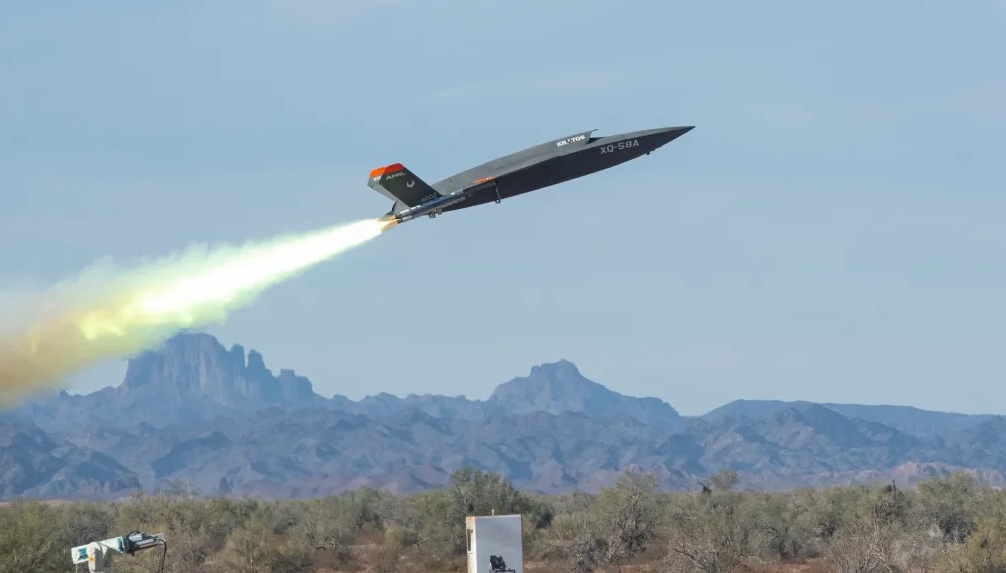
Washington : The United States Marine Corps has taken a significant step toward reshaping its future air combat force, selecting Northrop Grumman to lead the operational integration of the XQ-58A Valkyrie as part of its Collaborative Combat Aircraft (CCA) initiative. The decision underscores a growing emphasis on autonomous, attritable airpower designed to survive and fight inside highly contested environments, particularly across the Indo-Pacific.
On January 8, 2026, the Marine Corps competitively awarded Northrop Grumman the Marine Air-Ground Task Force (MAGTF) Uncrewed Expeditionary Tactical Aircraft (MUX TACAIR) CCA contract. Under this award, the Valkyrie—originally conceived as an experimental demonstrator—will be transformed into a fully missionized, combat-capable CCA integrated into Marine aviation operations.
From Experimental Drone to Operational “Loyal Wingman”
The contract marks a pivotal transition for the Valkyrie program. Developed by Kratos Defense & Security Solutions, the XQ-58A emerged from the U.S. Air Force’s low-cost attritable aircraft concept and was designed to operate alongside crewed fighters as a “loyal wingman.” Its selection by the Marine Corps confirms that such concepts are rapidly moving from experimentation into structured force development.
The Valkyrie airframe brings inherent advantages to the CCA role. Its low-observable shaping, internal payload carriage, and optimized signatures are intended to reduce detectability in contested airspace. The aircraft is now being adapted for conventional takeoff and landing, broadening its deployability from established airfields while retaining the expeditionary ethos central to Marine operations.
A defining feature of the platform is its modular payload architecture, allowing rapid reconfiguration for multiple mission sets. This flexibility enables the aircraft to support intelligence, surveillance and reconnaissance missions, electronic warfare, decoy operations, and strike support, depending on payload selection.
Advanced Mission Systems And Autonomous Combat Capability
Northrop Grumman will integrate its Advanced Mission Kit onto the Valkyrie, combining advanced sensors, open-architecture avionics, and software-defined systems. According to the company, this suite is designed to deliver both kinetic and non-kinetic effects, allowing the aircraft to conduct surveillance, targeting support, electronic attack, and direct combat missions.
Central to this capability is Northrop Grumman’s Prism autonomy software, previously demonstrated on the company’s Model 437 Vanguard, also known as Beacon. Prism is now being migrated to the Valkyrie to enable mission-level autonomy, including dynamic targeting and coordinated operations in environments where communications may be degraded, denied, or actively contested.
Northrop Grumman has stated that the program builds on more than 20 successful flight demonstrations conducted in operationally relevant environments. These demonstrations are intended to reduce technical risk and accelerate the transition from prototype testing to an operationally deployable MUX TACAIR capability.
A Foundation Laid by Years of Experimentation
The Valkyrie’s operational maturity is rooted in years of testing under the Air Force Research Laboratory Low-Cost Attritable Strike Demonstrator program. Initially focused on runway-independent launch and recovery concepts, the aircraft has since evolved through Marine Corps experimentation into a configuration better suited for sustained expeditionary operations.
For the Marines, the MUX TACAIR CCA is envisioned as a force multiplier for the Marine Air-Ground Task Force, extending sensor reach, increasing magazine depth, and complicating adversary targeting without placing aircrews at direct risk.
Strategic Implications For Future Conflicts
The award to Northrop Grumman signals a broader doctrinal shift within the Marine Corps toward distributed, autonomous airpower. By pairing crewed aircraft with uncrewed CCAs like the Valkyrie, the Marines aim to enhance survivability, reduce operational costs, and maintain combat effectiveness against advanced air defense networks.
As development moves forward under the MUX TACAIR framework, the XQ-58A Valkyrie’s progression from experimental drone to operational combat aircraft highlights a clear trend: autonomous “loyal wingman” systems are no longer theoretical concepts but emerging pillars of future U.S. military airpower.
About the Author
Aditya Kumar:
Defense & Geopolitics Analyst
Aditya Kumar tracks military developments in South Asia, specializing in Indian missile technology and naval strategy.