U.S. Government Shutdown Grounds Over 2,100 Flights and Delays 7,000 Across Americ
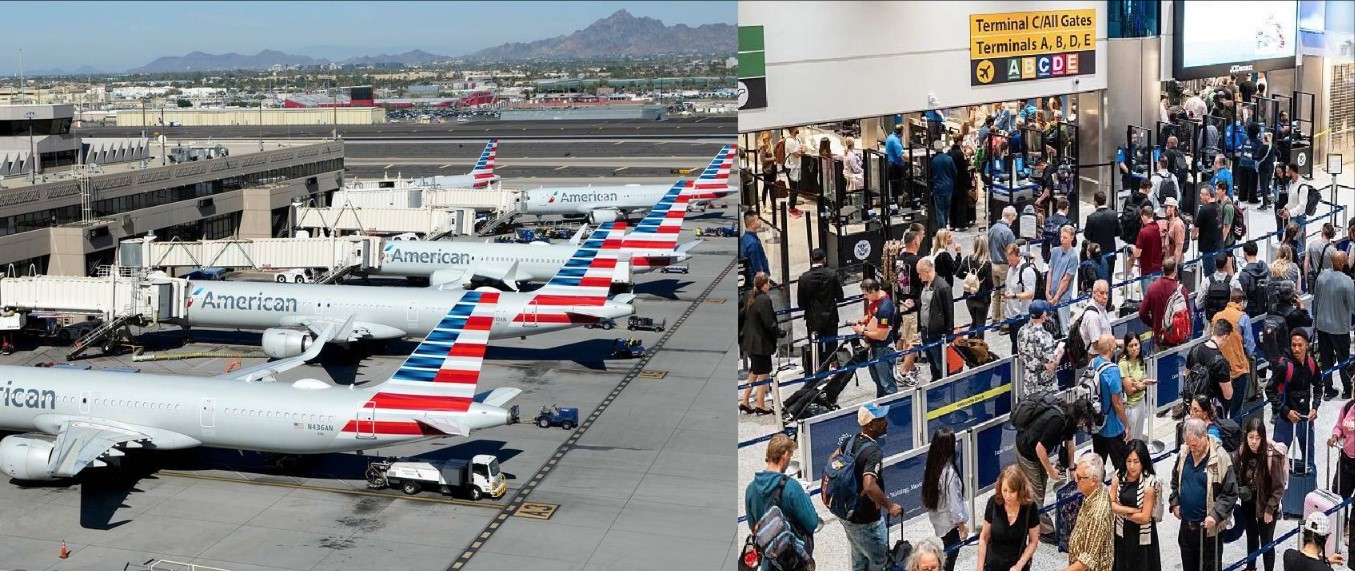
The United States faced its worst air travel chaos in years on Sunday, as more than 2,100 flights were canceled and around 7,000 more delayed nationwide. The main reason: the federal government shutdown and an FAA (Federal Aviation Administration) order to reduce air traffic because of staff shortages.
The situation is now entering its third day of disruption and is spreading across the country, affecting millions of passengers. According to flight-tracking website FlightAware, this is the most severe day of flight cancellations since the FAA began ordering reductions last week.
Why So Many Flights Were Canceled
The trouble began when the government shutdown forced thousands of federal workers, including air traffic controllers, to work without pay. After weeks of going unpaid, many controllers have stopped showing up for work, creating a major shortage in one of the most critical jobs in aviation.
To maintain safety in the skies, the FAA ordered airlines to cut their flight schedules. The cuts started at 4% on Friday and are expected to rise to 10% by November 14 — and possibly even 20% if more controllers stop working.
This means that fewer flights are allowed to take off and land during the day, especially at busy airports between 6 a.m. and 10 p.m.
Which Airports Are Most Affected
Some of the country’s busiest airports have been hit the hardest.
-
Atlanta’s Hartsfield-Jackson International Airport had the most cancellations Sunday, with 173 flights canceled.
-
Newark Liberty International Airport in New Jersey followed with 115 cancellations.
-
LaGuardia Airport in New York saw average delays of about 75 minutes, as staffing shortages slowed departures.
Other airports, including Detroit Metropolitan Airport, were eerily quiet Sunday morning — not because of smooth travel, but because many flights simply never took off.
What Officials Are Saying
Transportation Secretary Sean Duffy warned that if the government shutdown continues into the Thanksgiving travel period, air travel could “slow to a trickle.”
“As I look two weeks out, as we get closer to Thanksgiving, air travel could nearly stop as more controllers don’t come to work,” Duffy said on Fox News Sunday.
He added that the FAA’s decision to cut flights was not political, but necessary for safety:
“I needed to take action to keep people safe. I’m doing what I can in a mess that politics created.”
Duffy also revealed that 15 to 20 controllers are retiring every day, worsening an already short-staffed system. The U.S. has struggled for years to train and retain enough controllers, and the shutdown has made the situation much worse.
Airlines and Industry Impact
The trade group Airlines for America said that air traffic control shortages have caused more than 3,000 hours of delays on Saturday alone — the worst single day so far.
Since October 1, when the government shutdown began, controller shortages have disrupted over 4 million passengers.
Airlines have been forced to cancel thousands of flights even before departure times, trying to adjust to FAA limits and avoid overloading already stressed airspace.
The economic impact is growing too. Analysts say the travel chaos could cost the U.S. hundreds of millions of dollars a day, especially if it continues through the busy Thanksgiving season.
What Passengers Should Do
For travelers, the situation means uncertainty and long waits. Experts recommend:
-
Check flight status early — Airlines are changing schedules frequently.
-
Expect long delays and possible cancellations.
-
Consider alternative airports or routes if your main hub is heavily affected.
-
Look for travel waivers — most airlines are offering flexible rebooking and refunds during the shutdown period.
What Happens Next
If Congress fails to end the shutdown soon, the FAA may extend or deepen flight cuts. Officials warn that by mid-November, flight reductions could reach 20%, meaning one in every five flights could be canceled nationwide.
Military air traffic controllers have offered to help, but it’s unclear whether they’re trained or certified to manage civilian airspace.
For now, the outlook remains grim. With Thanksgiving just two weeks away, the combination of staff shortages, unpaid workers, and increased demand could create one of the most difficult travel seasons in modern U.S. history.
About the Author
Aditya Kumar:
Defense & Geopolitics Analyst
Aditya Kumar tracks military developments in South Asia, specializing in Indian missile technology and naval strategy.