U.S. Firm Builds Realistic Replica of China’s HQ-22 Missile System to Boost U.S Military Training
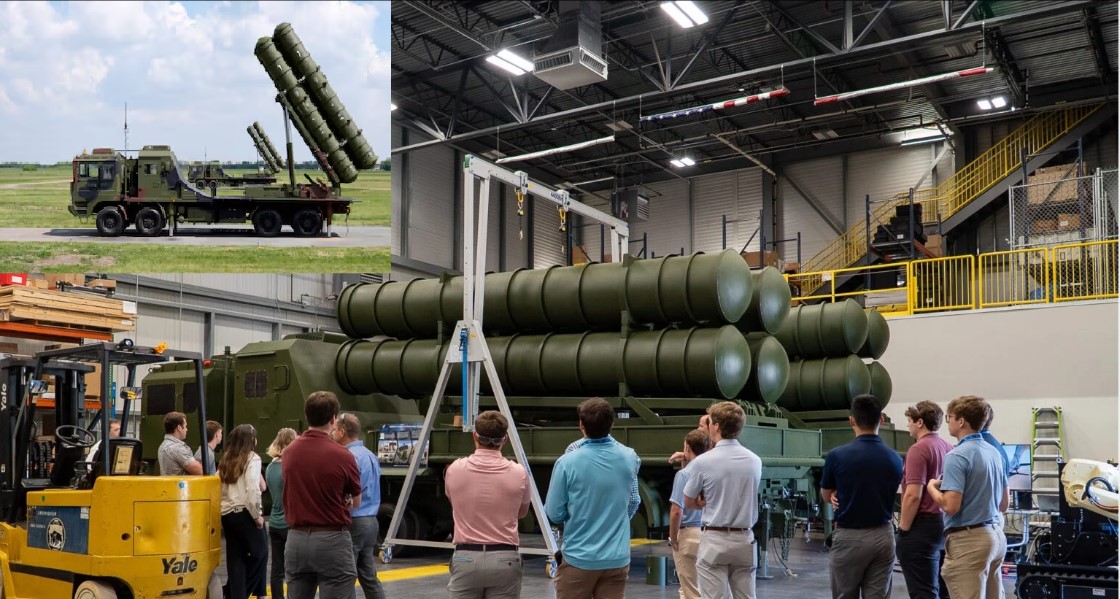
In a strategic move to enhance the realism of its military training, a U.S. defense contractor has developed a high-fidelity replica of China’s HQ-22 surface-to-air missile (SAM) system. The project is being led by Torch Technologies at its Integration and Prototyping Center (TIPC), located in Huntsville, Alabama.
This non-operational but highly detailed replica is part of a broader Pentagon initiative to prepare U.S. and allied forces for potential high-threat scenarios, especially those involving advanced air defense systems used by near-peer adversaries like China.
According to Torch Technologies, the goal is to replicate not just the physical appearance of the HQ-22 but also the radar signature, thermal profile, and battlefield behavior of the original system. These decoys help simulate the layered radar tracking and missile engagement zones that the actual HQ-22 is known for.
The HQ-22, also known as FK-3 for export, is a Chinese long-range SAM system designed to counter fixed-wing aircraft, helicopters, drones, and ballistic missiles. It is often compared to systems like the Russian S-300 and American Patriot due to its extended engagement range and multi-target tracking capability. The HQ-22 uses a combination of semi-active radar and radio-command guidance, making it a significant threat in contested airspace.
Torch’s replica will play a vital role in U.S. Air Force training, allowing pilots and mission planners to practice identifying, tracking, and defeating these types of defenses in a safe but realistic environment. These surrogates are especially important for electronic warfare training, where understanding how foreign radar systems operate is key to mission success.
This isn’t the first Chinese system being copied for training purposes. In July, the U.S. Air Force also unveiled a replica of the Chinese HQ-16 system during the AirVenture show in Oshkosh, Wisconsin. Like the HQ-22 mock-up, it is part of a growing library of surrogate foreign weapons platforms.
What sets the HQ-22 decoy apart is its upgraded design accuracy. The fabrication process ensures the model matches the real HQ-22 in size, shape, and signature, even though it doesn’t function as a weapon. The decoy can also simulate realistic radar emissions, allowing aircrews to practice detection and engagement protocols as they would in a real combat zone.
These kinds of high-fidelity threat systems are usually placed on dedicated test and training ranges and integrated into large-scale exercises, including joint drills with NATO and allied forces. They’re essential tools in preparing for Suppression or Destruction of Enemy Air Defenses (SEAD/DEAD) missions, where accurate identification and targeting of air defense systems is critical.
With the HQ-22 now joining the HQ-16 in production, the U.S. military is building a robust and diverse portfolio of simulated adversary equipment. This development reflects a broader trend in U.S. defense strategy: training not just harder, but smarter, with a clear focus on preparing for future conflicts in highly contested environments.
✍️ This article is written by the team of The Defense News.